Core visitor experience
Core visitor experience
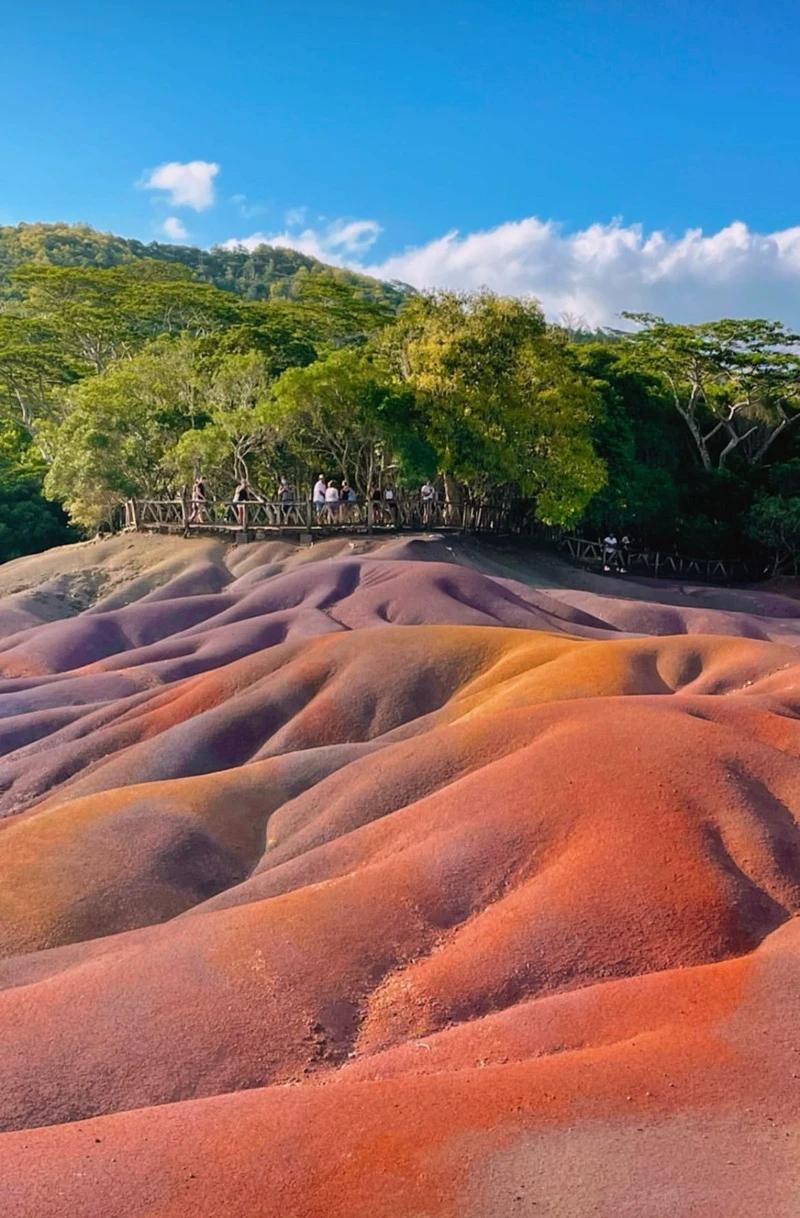
See the island's volcanic past written in the earth.
Location
Chamarel
South West Mauritius
Opening Hours
8:30 AM - 5:00 PM
Confirm before visiting
Best Time to Visit
Plan ahead
Weather conditions may vary
Admission
Paid entry
Local conditions may apply
Seven Coloured Earth is a natural geological formation in Chamarel, southwest Mauritius, where weathered volcanic rock creates bands of red, brown, violet and other colours. It suits families, photographers and geology lovers. Allow around 45–90 minutes and combine it with Chamarel Waterfall in the same Geopark.
The Seven Coloured Earth in Chamarel is one of the clearest places in Mauritius to see the island’s volcanic history written directly into the landscape. Instead of a conventional viewpoint or mountain trail, the attraction centres on an exposed, undulating formation where the earth shifts through shades of red, brown, violet, green, blue, purple and yellow.
The colours are natural, but they do not look identical every day. Sunlight, cloud, moisture and viewing angle can make some shades appear stronger than others. That is worth knowing before visiting: expect an unusual geological landscape rather than perfectly separated rainbow stripes.
The experience is self-guided, with marked visitor paths and interpretation explaining how geology, climate and erosion shaped the site. Rather than rushing directly to the main viewpoint for a photograph, walk around the viewing area and compare the formation from different angles.
The visit also includes more than the coloured earth itself. The Geopark incorporates Chamarel Waterfall, the Aldabra Tortoise Park, an endemic garden and the coloured-earth promenade, making it easy to turn the dunes into part of a broader nature stop.
The Aldabra giant tortoises are especially popular with families, but they are not endemic to Mauritius. The species originates from the Seychelles, an important distinction for travellers interested in the island’s wildlife.
Allow roughly 45 minutes to 1.5 hours if your focus is the coloured earth and tortoise area. Spend longer if you want to explore the wider Geopark more slowly. MauritiusExplored already identifies the attraction as particularly suitable for families, first-time visitors, photography and geology.
It is a particularly worthwhile stop for travellers exploring Chamarel, Le Morne and the southwest highlands. Visitors looking for hiking or a high-energy activity may find the attraction relatively short; its value lies in geology, landscape, photography and understanding another side of Mauritius beyond the coast.
Facts About Seven Coloured Earth
The coloured-earth formation covers about 7,500 m². Its geology comes from the deep weathering of basaltic volcanic rock under Mauritius’ tropical conditions. Iron and aluminium-rich compounds contribute to the different colours, while erosion has shaped the visible patterns over time. The phenomenon was documented by the Royal Society of Arts and Sciences of Mauritius in 1879. It is not simply a deposit of coloured volcanic ash.
Core visitor experience
South-West Mauritius setting
Current access to confirm
Combine Seven Coloured Earth with nearby viewpoints and the wider Mauritius landscape for a more rewarding day.
Easy viewpoint
Start with the established viewpoint and get context for the highland landscape.
Explore stop →Main experience
Make this place the central stop, with enough time to explore without rushing.
You are here ↑Panoramic stop
Continue the nature theme with broad views across protected forest and valleys.
Explore stop →Optional extension
Extend the day into the southwest for more scenery and major visitor attractions.
Explore stop →Keep the visit simple: allow enough time, prepare for local conditions and pair it with nearby stops that suit your day.
It is a natural geological formation in Chamarel, southwest Mauritius, where weathered volcanic rock displays several distinct earth colours.
Long-term weathering of basalt left mineral-rich material containing iron and aluminium compounds. These, together with erosion and climatic conditions, contribute to the different visible shades.
No. Scientific research describes the formation as weathered basaltic rock and soil rather than a deposit of volcanic ash.
The attraction is conventionally described using seven shades: red, brown, violet, green, blue, purple and yellow. Their intensity varies with natural light, moisture and viewing conditions.
Around 45–90 minutes works well for the coloured-earth viewing areas and tortoises. Allow more time if exploring other areas of the Geopark.
Yes. The Geopark has Aldabra giant tortoises, a species originating from the Seychelles.
The current Geopark experience includes access to Chamarel Waterfall as well as the coloured-earth area and other attractions within the site.
It is particularly worthwhile for first-time visitors, families, photographers and anyone interested in Mauritius’ volcanic landscape. Travellers primarily looking for hiking or adventure may prefer to combine it with other southwest attractions.
Good combinations include Chamarel Waterfall, Ebony Forest, Chamarel village, Black River Gorges viewpoints and Le Morne.
It suits families, photographers and travellers exploring Chamarel.
Check current access and weather; light and moisture can change how strongly the colours appear.
Continue exploring nearby Mauritius places instead of ending your journey at a single attraction.
Connect places, viewpoints, beaches and activities into a fuller south west Mauritius day.