Endemic forest conservation landscape
Endemic forest conservation landscape
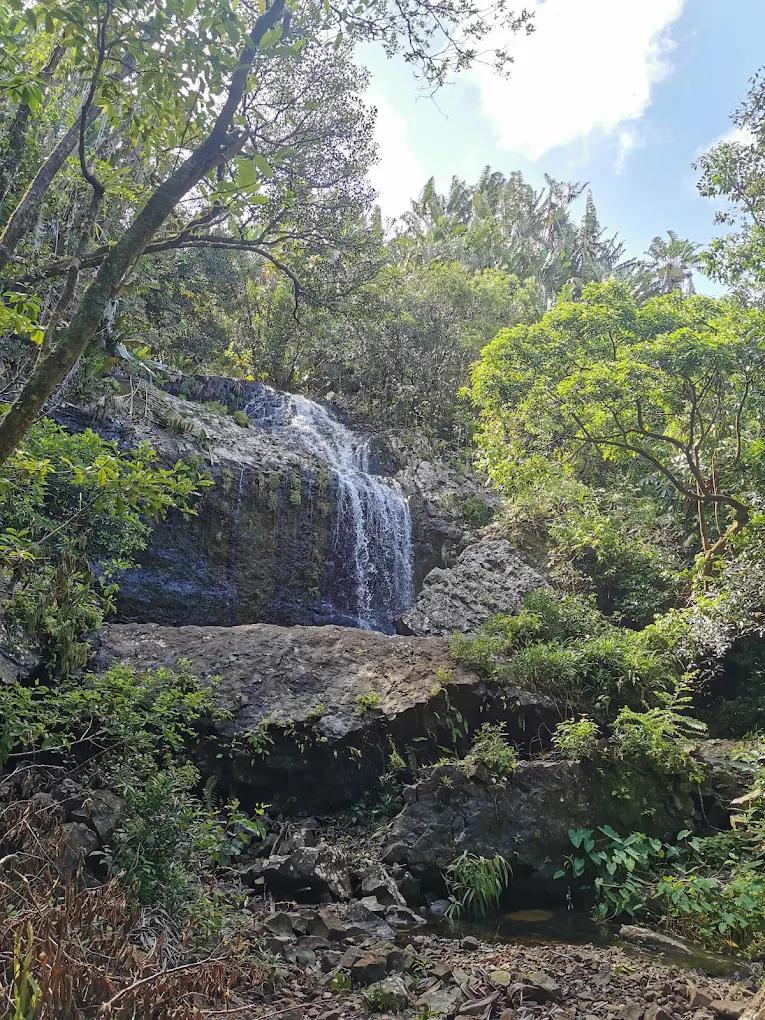
A mountain valley where Mauritius' endemic forest still survives.
Location
South
South Mauritius
Opening Hours
pam - 4pm
Confirm before visiting
Best Time to Visit
Plan ahead
Weather conditions may vary
Admission
Check access
Local conditions may apply
Vallée d'Osterlog Endemic Garden is a 275-hectare conservation landscape at Le Val in the Grand Port mountain region. The valley protects sub-humid mountain forest between the surrounding peaks and is dedicated to conserving and restoring native Mauritian biodiversity.
The nature track moves through a greener, more enclosed landscape than many roadside viewpoints, with forest, streams, mountain scenery and sections where endemic plants are the main focus. The site forms part of the small remnant of native and endemic forest that survives in Mauritius.
Rare native plants recorded in the valley include tambalacoque, bois clou, vacoas and other threatened species. Native birds and bats have also been inventoried there, reinforcing the site's role as a conservation area rather than a landscaped botanical garden.
Key details include a 275-hectare endemic garden, Grand Port mountain scenery, remnant native forest, conservation work, streams and natural walking tracks.
Endemic forest conservation landscape
Nature track through mountain vegetation
Rare Mauritian plant species
Combine Vallée d'Osterlog with nearby viewpoints and the wider Mauritius landscape for a more rewarding day.
Easy viewpoint
Start with the established viewpoint and get context for the highland landscape.
Explore stop →Main experience
Make this place the central stop, with enough time to explore without rushing.
You are here ↑Panoramic stop
Continue the nature theme with broad views across protected forest and valleys.
Explore stop →Optional extension
Extend the day into the southwest for more scenery and major visitor attractions.
Explore stop →Keep the visit simple: allow enough time, prepare for local conditions and pair it with nearby stops that suit your day.
It is a 275-hectare endemic garden and conservation area protecting sub-humid mountain forest in southeast Mauritius.
It is at Le Val in the Grand Port mountain region of Mauritius.
The valley protects remnants of native and endemic forest, including several rare and threatened Mauritian plant species.
It is better understood as a conservation landscape and endemic garden with natural forest tracks rather than a formal ornamental garden.
Expect mountain forest, native plants, streams, changing vegetation and conservation areas.
Continue exploring nearby Mauritius places instead of ending your journey at a single attraction.
West · Hideaways
Step into a small piece of Mauritian history.

Various · Cultural
Where architecture, faith and local history meet.
South East · Adventure
Follow a local product back to where it begins.
Connect places, viewpoints, beaches and activities into a fuller south Mauritius day.