5 Day Mauritius Itinerary: The Perfect Travel Plan (2027 Guide)
Mauritius 5 Day Itinerary 2027: A Balanced First-Time Travel Plan
Last checked: 20 September 2026.
Five days is the length people book when they are adding Mauritius to something else, or when annual leave will not stretch further. It works. What does not work is treating it like a short version of a longer trip and trying to fit every coast into it.
This plan uses one base and no hotel move, puts the lagoon day where the weather can still be worked around, and is honest about the fact that five days buys you three full days out. The part most guides skip is which region you give up. This one says so on the first screen.
Is 5 Days Enough in Mauritius?
Yes, if you stay in one place. Five days is really three full days plus two halves, which is enough for the west coast, one lagoon day and one scenic day inland — from a single base, with no hotel move. What it will not also fit is the north, the east and the wild south. Pick the half of the island you want and let the rest go.
Quick Facts
— Days — 5 days, 4 nights
— Bases — 1. The west for all four nights. No move, at this length
— Full days out — 3. Days 1 and 5 belong to the flights, whatever time they run
— Route days — 1 mapped route in the default plan, 2 if you swap Day 4 for the north. Plus one boat day
— Boat days — 1, on Day 3, leaving from the west coast rather than across the island
— Driving intensity — moderate. There is no base change at all and two of the five days need almost no car, but Day 4 is a high-driving day whichever version of it you take
— Best for — first-time visitors who want one hotel, a real lagoon day and no cross-island driving
— What gets cut — the north, the east and the wild south. Day 4 tells you how to buy one of them back
5-Day Mauritius Itinerary at a Glance
Four nights, one base, one boat day. Distances are the end-to-end figures from our route pages and do not include the leg back to your hotel — which matters on Day 2 and Day 4, and not at all on Day 3. Driving intensity is relative to Mauritius, where almost nothing is more than about ninety minutes away.
— Day 1 — Arrival and your first beach. Settle in, swim, eat locally. Base: west. Stops: none. Driving: airport transfer only.
— Day 2 — The west coast: Albion to Le Morne. Lighthouse, beaches, Tamarin, sunset. Base: same. Stops: 8 over 49.7 km, plus the run back. Driving: medium.
— Day 3 — On the lagoon. Catamaran from Black River to Île aux Bénitiers and Crystal Rock. Base: same. Stops: by boat. Driving: the short run to the jetty.
— Day 4 — Chamarel, Black River Gorges or Le Morne. The scenic day — or swap it for the north. Base: same. Stops: Chamarel plus one of two, or 8 over 35 km in the north. Driving: high.
— Day 5 — Slow morning and departure. Breakfast, one last swim, airport. Stops: none. Driving: airport transfer, optionally along the south coast.
Plan Days 1 and 5 as travel days rather than short days, and move nothing into them. At five days the temptation to squeeze an excursion into departure day is strongest, and it is still the single most common way the trip goes wrong.
Best Area to Stay for This Itinerary
At seven days or more, splitting your stay costs you nothing. At five it costs you most of a day — packing, checking out, driving, checking in, finding your feet again — out of three. So this plan does not move you, and the base you pick is therefore the most consequential decision on the page.
The west: Flic en Flac, Tamarin or Wolmar
— This is the default, and it is not close. Day 2's route starts on your doorstep, Day 3's boat leaves from Black River, about twenty minutes down the coast, and Day 4's Chamarel and Le Morne cluster begins at the end of Day 2's road. Three of your three full days start from the same stretch of coast.
— It is the driest coast, which matters more on a five-day trip than a ten-day one, because you have no spare day to lose to weather.
— The cost is the north: Pamplemousses, Grand Baie and Cap Malheureux sit at the far end of the motorway, so they are a whole day rather than an afternoon.
The north: Grand Baie, Pereybère or Trou aux Biches
— Take this instead if the north is what you came for — restaurants and shops within walking distance, boat operators on the doorstep, and the calmest swimming beaches on the island.
— It inverts the plan. The north becomes a half day rather than a full one, and the west coast, Le Morne and Chamarel all become long days out. You would be trading two good days for one.
— Honest verdict: the north is the better base for a holiday that is mostly about the hotel and the beach. The west is the better base for the itinerary on this page.
The east and south-east
Blue Bay, Belle Mare or Trou d'Eau Douce put you next to Île aux Cerfs and fifteen minutes from the airport, which sounds efficient until you notice that Le Morne, Chamarel and the whole west coast are then an hour and a half away, each way, on your only three full days. At seven days that trade works, because you get a second base. At five it does not. If Île aux Cerfs is non-negotiable, base east and accept that this becomes an east-coast trip — see the FAQ below.
Before You Start: Car, Driver, Transfers or Tours?
With one base and three days out, this decision is simpler than it is on a longer trip, and it comes down to whether you want to drive on two of the three.
— Hire car. The right default. Days 2 and 4 are multi-stop routes that no single organised excursion strings together, and Day 3's boat leaves from a jetty you have to reach anyway. Driving is on the left. Main roads and the motorway are good; village roads are narrow and winding. Petrol is a fixed national price — Rs 70.65 a litre, effective 15 August 2026 per the State Trading Corporation — so fuel over four nights is a rounding error.
— Private transfers only. More viable at five days than at ten, because the list is short: two airport transfers, a driver for Day 2, a driver for Day 4, and a short return run to the Black River jetty on Day 3. Published 2026 airport tariffs are per vehicle, not per person — around €35 for a sedan to Flic en Flac, about €45 to Le Morne or Bel Ombre, around €55 for a minivan. A full day with a driver is a different product priced differently, so ask for a day rate rather than assuming the transfer tariff applies.
— Driver for the day. The best single use of one is Day 4, which has the most winding road and the most stops. Agree the price and the route before you set off — taxis here are rarely metered.
— Organised excursions. Day 3 only. Everything else on this itinerary is better done at your own pace.
— Buses. Cheap, from around Rs 12, and a good way to see how the island actually works — but too slow to build any of these three days around.
Day 1 — Arrival, West Base, First Beach
Why this day is worth doing properly: because doing nothing on it protects the two that matter. Most European flights land in the morning after an overnight, and everyone arrives more tired than they feel. The airport is in the south-east and your base is in the west, so allow for the drive.
Clear the airport, complete your transfer, check in. The one thing worth doing is finding your nearest swimmable beach and getting in the water. Most people find that daylight and a swim help more than a dark room does; either way, eat somewhere local rather than at the hotel and go to bed early rather than late.
— Stops and distance: no route today. Airport transfer only, across the island to the west.
— Must do: check in, swim, eat locally, sleep.
— Optional add-on: a walk along the coast road at sunset, to work out what is within walking distance for the next four days.
— Driving: the transfer only. Allow longer than the map suggests.
— Plan B: if it rains, this is by far the best day of the five for it to happen.
Day 2 — The West Coast: Albion to Le Morne
Why: the whole west coast runs in one line, it starts at your hotel, and it ends at the most photographed mountain in Mauritius. No backtracking, no decisions, and the gentlest possible first full day while you are still adjusting.
Work south down the coast. Albion Lighthouse and its caves open the route, then Albion village beach and Flic en Flac — long, flat and swimmable, with restaurants behind it. Tamarin is where the surf culture lives and where the dolphin boats go out. Les Salines salt pans and La Preneuse break up the drive, the giant banyan tree at La Gaulette is worth the five minutes, and the route finishes at Le Morne, which is where Day 4 starts.
— Stops and distance: 8 stops, 49.7 km, following our Road Trip West route. That figure is Albion down to Le Morne; the drive back up to a Flic en Flac base adds roughly half of it again, in the dark if you stay for the sunset.
— Must do: Flic en Flac, Tamarin, and the Le Morne stretch at the end of the day.
— Optional add-on: none needed. This is the day to find out how far things really are before you plan anything ambitious.
— Lunch: Flic en Flac or Tamarin. Both have real choice; the Le Morne end has far less.
— Driving: medium. The route itself is gentle and entirely coastal — the return leg is the part people forget.
— Plan B: works in cloud. The west is the driest coast, which is one of the reasons the whole plan sits here.
Day 3 — On the Lagoon: Île aux Bénitiers and Crystal Rock
Why: a first trip to Mauritius without a day on the water is a trip you will have to come back and finish. This is also the one day that weather can cancel, which is why it sits in the middle of the trip with a land day either side of it.
The west-coast catamaran is the version that fits this itinerary, because it leaves from your own coast rather than from the far side of the island. A published example departs Black River at 09:00 and returns around 15:00, about six hours, taking in the Tamarin bay dolphins, snorkelling stops, Crystal Rock and time ashore on Île aux Bénitiers, with a light breakfast and a barbecue lunch on board. It runs €64 per adult and €44 per child aged 3 to 11, with under-threes free, checked 20 September 2026.
— Stops and distance: the legs here are by boat, not road. On land it is only the twenty-minute run down to the jetty at Black River.
— Must do: the boat. Book it before you travel — this is the one thing on a five-day trip that both sells out and moves for weather.
— Optional add-on: an afternoon on your own beach afterwards. Six hours on the water is enough of a day.
— Driving: minimal, and none of it while you are tired.
— Plan B: if the sea is rough, swap this with Day 4 and take the land day instead. That swap is the only weather insurance a five-day trip has, and it exists because the boat sits in the middle rather than at either end. Two things move with it: a Chamarel lunch table and, if you are not driving, the day driver. Book both refundable, or hold them until the forecast is clear. The boat itself may not be rebookable at short notice, so ask the operator what happens to a weather cancellation before you pay.
Know the dolphin rules before you book, because a great many trips are sold as though they did not exist. The Tourism Authority (Dolphin and Whale Watching) Regulations 2012 set the framework. Dolphin and whale watching is permitted only between 06:00 and noon; watching combined with swimming with dolphins is permitted only between 06:00 and 09:00. The regulations define a prohibited zone within 50 metres of the closest dolphin, which craft must stay out of; where swimming is allowed at all, no more than three people including a life-saver may be in the water at once, and they must be briefed on calm, silent swimming beforehand. The practical consequence for this itinerary is simple: a catamaran that leaves at 09:00 is a dolphin-viewing trip, and the one quoted above describes itself that way. Separately, the Tourism Authority's communiqué of 5 July 2024 confirms it is an offence for a skipper to allow anyone on board to swim, dive or snorkel with whales. Enforcement and the detail of these rules have both moved over the years, so check the Tourism Authority's current guidance and ask your operator which permit they hold — and treat a mid-morning dolphin swim as a reason to book elsewhere.
Day 4 — Le Morne, Chamarel and Black River Gorges
Why: this is the most scenically dense corner of Mauritius, and everything in it sits within a short drive of everything else. It is the most winding driving of the trip, so start early and do not add anything.
The Chamarel Seven Coloured Earth Geopark covers the coloured dunes, a tortoise enclosure and the waterfall viewpoint in about an hour; resident and non-resident rates differ and are only shown inside the booking system, so check before you go. Black River Gorges National Park is free to enter, with the Pétrin entrance near Grand Bassin and the Black River visitor centre on the west side; both information centres run roughly 07:00 to 17:00 on weekdays and from 09:00 at weekends. The Gorges viewpoints trail is the accessible option at around two and a half hours.
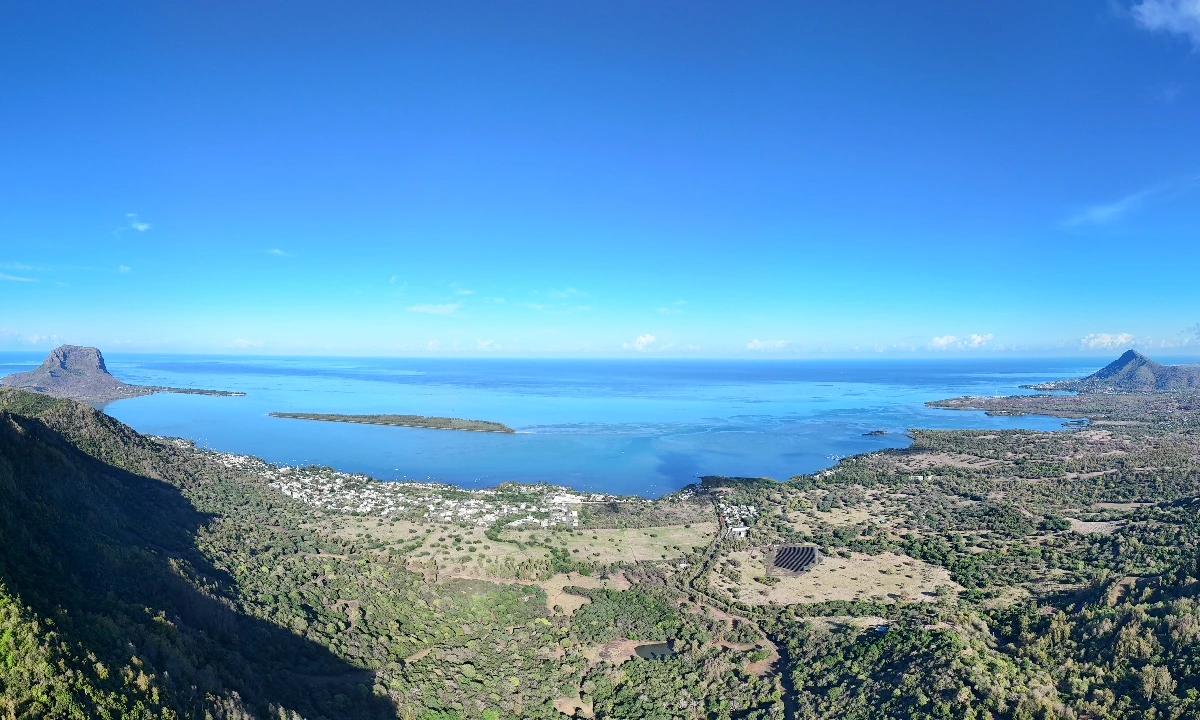
Le Morne Brabant is a UNESCO World Heritage cultural landscape and the most recognisable mountain in Mauritius. The hike is free to access and runs about 3.5 to 4.5 hours return over roughly 5 to 8 km. The first half is a wide, gradual trail; the upper section is technical, exposed and steep enough to need your hands. A guide is strongly recommended for that upper part, and local guiding runs around Rs 2,000 to 2,500. Do not attempt it in heavy rain or on wet rock.
— Stops and distance: one fixed stop and one choice — the Chamarel geopark, then either a Black River Gorges viewpoint or the Le Morne hike. On a five-day trip you will not fit all three. Our nearest mapped route, Roadtrip South West to South East, covers this cluster in 7 stops over 91.5 km end to end; a round trip from a western base is much shorter, but it is all interior road.
— Must do: Chamarel, plus one of the gorges or the mountain.
— Optional add-on: none. This is the day where one more stop is how people end up on interior roads after dark.
— Lunch: Chamarel village. This is the part of the island where a booked table saves you an hour.
— Driving: high, by Mauritian standards. Winding roads through the interior, and the same roads back.
— Plan B: the interior gets around six hours of sunshine a day against 7.5 to 8 on the coast, per the Mauritius Meteorological Services, so cloud here is normal and does not ruin the coloured earth. Actual rain is different: the plateau holds it longer than the coast, and rain on the Le Morne trail ends the hike.
Or swap it: the north instead
If gardens, a proper beach town and the calmest swimming on the island appeal more than mountains and craters, take the north on Day 4 instead. It is the only substitution that leaves Days 2 and 3 untouched. It is also the longest day of the trip, so go in knowing that: the route itself is short, but it sits at the far end of the island from your hotel.
— Stops and distance: 8 stops, 35 km, following our Roadtrip North route, which the route page runs 09:00 to 18:00. The 35 km is only Pamplemousses to Cap Malheureux — it does not include the motorway legs from the west at either end. Check live times for your own base before you commit to this swap; run the full 09:00 to 18:00 and you will leave before breakfast and get back after dark.
— The route: the Sir Seewoosagur Ramgoolam Botanical Garden at Pamplemousses, Château de Labourdonnais, then the coast — Trou aux Biches and Mont Choisy for the calmest, most shaded swimming in Mauritius, Grand Baie for restaurants and shops, Pereybère and Bain Boeuf beyond it, and Cap Malheureux with its red-roofed church at the island's northern tip.
— Port Louis is on the motorway between the two, and it is tempting. Be honest about whether you want a city stop bolted onto a beach day; the capital deserves a day of its own, which is what the ten-day plan gives it.
— Driving: high, because of the motorway legs at each end rather than the route itself. Cut the route short at Grand Baie if you would rather be home in daylight — the last three stops are beaches, and you will have had beaches.
Day 5 — Slow Morning, Then Home
Why: because a rushed departure day undoes a good trip, and because a cancelled excursion on the way to the airport is a real risk.
Breakfast without hurrying, one last swim, pack. Check your late check-out options and, importantly, when the meal plan ends — it frequently stops at breakfast. From the west you are about an hour from the airport, so build in more buffer than you would from the south-east.
— Stops and distance: no route today. Airport transfer only.
— Must do: nothing that has a schedule.
— Optional add-on: there is a south-coast road to the airport as well as the motorway, so if your flight is in the evening and you have a late check-out, Bel Ombre and the Gris Gris cliffs at Souillac can be worked into the transfer. Be clear-eyed about it: it is a longer, slower road, not a shortcut — our Roadtrip South route covers that coast in 6 stops over 95.1 km and the route page runs it 09:00 to 17:00 as a full day. Take two stops from it at most, agree the plan with your driver in advance, and abandon it without hesitation if you are behind. Do not go past the barriers at Gris Gris.
— Driving: the airport transfer, plus whatever you choose to add to it.
— Plan B: none needed, which is the point.
Alternative Routes by Travel Style
These are modifications to the route above, not separate itineraries. The single base and the empty departure day stay in all of them.
Couples and honeymooners
Base at Le Morne or Tamarin rather than Flic en Flac — quieter, more dramatic, and closer to both Day 3's jetty and Day 4's mountain. Swap the shared catamaran for a private charter if the budget allows: a private half-day runs around €465 for the boat before the per-person lunch supplement, against €64 per adult shared, breakfast and barbecue lunch included. For two people that is roughly 3.6 times the headline price for half the time on the water, and more than that once the lunch supplement is added; what you are buying is the route and the absence of forty strangers. Take the Gorges viewpoint rather than the hike on Day 4 and give the afternoon back to the hotel.
Families with children
Keep the west base and take the north on Day 4 — Pamplemousses is deep shade and works in heat, and Trou aux Biches and Mont Choisy are the calmest swimming on the island. On Day 3 the catamaran charges €44 for a child aged 3 to 11 against €64 for an adult, with under-threes free. Twelve is the age at which a child becomes an adult on both lines: the boat's child band runs 3 to 11, so a twelve-year-old pays the adult fare, and the €3 per night tourist fee also starts at twelve. Check the band on any other boat you book, because it is not standardised — the Île aux Cerfs catamaran on the east coast runs its child rate to 12. Use life jackets for children on any boat, whatever the operator offers. Skip the Le Morne hike entirely at this length.
Active and hiking travellers
Two versions, and they are mutually exclusive. The summit: give Le Morne its own Day 4 and accept that Chamarel and the gorges go — the hike is 3.5 to 4.5 hours return, the upper section needs a guide, and it is a full day once you add the drive. The trail: take the Macchabée forest loop or the Mare aux Joncs waterfall walk in Black River Gorges instead, both around three hours and moderate, which does leave you Chamarel in the afternoon. The Parakeet Trail is a seven-and-a-half-hour hard route and has no place in a five-day trip. Trails are free, but the park information centres shut in the late afternoon and being on the wrong side of a closed gate is a real problem — check the day's hours on arrival.
Resort-first and slow travel
Keep Day 3's boat and Day 4's Chamarel, and drop Day 2 to a single sunset run down to Le Morne. Four nights at one property with two good days out is a perfectly respectable version of five days in Mauritius, and a better one than a forced lap of an island you did not come to drive around. This is also the version that survives bad weather best, because almost nothing in it is scheduled.
What to Book in Advance
— The hotel, with the room configuration confirmed in writing. One base for four nights means getting this right matters more than usual.
— The Day 3 catamaran. It is the one thing on this itinerary that sells out and the one that moves for weather.
— The hire car, if you are driving. Check the insurance excess, the mileage policy, the airport surcharge and the delivery terms — these vary sharply between operators.
— Airport transfers, unless you are picking the car up at the airport. From the west, allow more time than the distance suggests.
— A Le Morne guide, if you are hiking the upper section.
— A restaurant table at Chamarel on Day 4 if you want lunch without a wait.
— Travel insurance, bought when you book rather than before you fly, so cancellation is covered for the whole period.
— The Mauritius All-in-One Travel Digital Form, completed before departure at the official government portal. Check the current requirements for your nationality.
What to Do if It Rains or the Sea Is Rough
Five days is short enough that one bad day costs you a third of the trip. The route is built so that the one weather-critical day has somewhere to go.
— Day 3's boat cancelled → swap it with Day 4. This is the whole reason the boat sits in the middle of the trip rather than at either end, and it is the only swap a five-day plan can afford.
— Both Day 3 and Day 4 wet → take Day 4 as the land day anyway. The interior is at its best under cloud, and Chamarel does not need sun.
— Cloud on Day 2 → nothing changes. The west coast works in cloud.
— Heavy rain, not cloud → do not drive inland to escape it. The central plateau holds rain longer than the coast does.
— After heavy rain, lagoon clarity drops and snorkelling the next day disappoints. Wait a day if you still can.
— Indoor options that are genuinely good: Odysseo Oceanarium in Port Louis, Curious Mauritius at Chamarel, L'Aventure du Sucre at Beau Plan, and the Caudan Waterfront.
— February and March are the wettest months and October the driest, per the Mauritius Meteorological Services. Annual rainfall averages 2,010 mm, of which 1,344 mm — about 67% — falls between November and April.
— Cyclone season runs roughly November to May. A Class I warning is issued not less than 36 and not more than 48 hours before gusts of 120 km/h are expected, so you normally have more than a day's notice. Use it: follow the instructions your hotel and the national authorities give, and expect flights, excursions and shops to stop well before the wind arrives.
Driving Times and Route Planning Tips
Mauritius is about 65 km by 45 km and almost nothing is more than roughly ninety minutes from anywhere else. That makes people over-confident, and on a five-day trip over-confidence is expensive. What actually costs time is Port Louis traffic, the winding interior roads around Chamarel, and the temptation to add one more stop.
— Check live drive times for your specific route on the day. Published estimates age badly and roadworks are common.
— The airport is in the south-east and this plan is in the west. Both transfers are around an hour. Build that into Day 1 and Day 5 rather than discovering it.
— Port Louis is the bottleneck. Crossing it at rush hour can double a journey, which is the main argument against bolting the capital onto the north day.
— The motorway runs roughly north to south through the middle of the island and is the fast way between coasts. The coast roads are slower and much better looking.
— Allow more time than the distance suggests through the interior.
— Avoid driving unlit rural roads after dark, particularly after a long day. If you do stay at Le Morne for the sunset on Day 2 — and it is worth staying for — take the main coast road back rather than anything smaller, and take it slowly.
— Agree taxi fares before you get in. Metered taxis are uncommon.
Budget Planning for This Itinerary
Flights and accommodation dominate any Mauritius budget and both move with the season, so no honest guide quotes a single figure. What can be pinned down are the on-island costs. These were checked on 18 and 20 September 2026 and carry their dates in the sources list.
— The tourist fee catches people out. Mauritius has charged €3 per person aged twelve or over, per night, since 1 October 2025. It is collected at check-in and is not included in the room rate. Children under twelve are exempt. For two people over four nights that is €24.
— Airport transfers are per vehicle, not per person: about €35 to Flic en Flac, €45 to Le Morne or Bel Ombre, around €55 for a minivan. You need two.
— The boat day is the biggest single discretionary line. The west-coast catamaran is €64 per adult and €44 per child aged 3 to 11, with breakfast and lunch on board; a private half-day charter is around €465 for the boat, before a per-person lunch supplement.
— Black River Gorges is free, and so are the beaches, the coastal walks, Gris Gris and the viewpoints.
— Eating locally is cheap. A meal in an inexpensive restaurant is around Rs 300, roughly €5.40 at the rate below.
— Petrol is Rs 70.65 a litre. Over two route days, fuel is a rounding error.
— Le Morne guiding runs around Rs 2,000 to 2,500 if you hike the upper section.
— The one-base saving is real. No second hotel deposit, no second check-in, and no day lost to moving — which at this length is worth more than the money.
Our full cost guide breaks down what a Mauritius trip actually costs, with the flight and accommodation lines set out properly. Currency conversions here use the Bank of Mauritius indicative selling rate of 18 September 2026: €1 = Rs 55.48.
5-Day Mauritius Itinerary FAQs
Is 5 days enough in Mauritius?
Yes, for a first trip, if you stay in one place. Five days gives you three full days out plus an arrival and a departure half day. That is enough for the west coast, a lagoon day and the Chamarel and Le Morne scenery. It is not enough to add the north, the east and the wild south as well.
What is the best area to stay for 5 days?
The west — Flic en Flac, Tamarin or Wolmar. All three of your full days start there: the west-coast route runs from your doorstep, the catamaran leaves from Black River, and Chamarel and Le Morne are at the southern end of the same coast. It is also the driest coast, which matters when you have no spare day.
Should I stay in one hotel or split my stay?
One hotel. Splitting a stay costs the best part of a day in packing, checking out, driving and checking in. On a seven- or ten-day trip that is a reasonable price for reaching a second region. On five days you would be spending a third of your usable time to save an hour of driving.
What are the must-see places in 5 days?
The Flic en Flac and Tamarin stretch of the west coast, the drive out to Le Morne, one day on the lagoon, Chamarel, and one of either a Black River Gorges viewpoint or the Le Morne hike. That is a full five-day trip. Note that the last item is a choice, not two entries — anything you add to this list has to come off it somewhere else.
Can I include Île aux Cerfs in a 5-day itinerary?
Only if you base in the east, and it costs you the west. Île aux Cerfs leaves from Trou d'Eau Douce, an hour and a half from a western base, so reaching it eats a full day. From the west, the Île aux Bénitiers catamaran gives you the same kind of lagoon day from a jetty about twenty minutes away. Pick the coast, not the island.
Can I do Le Morne and Chamarel together?
Yes — they are close enough that Day 4 of this plan does exactly that. What you cannot do is hike Le Morne and see the gorges and Chamarel on the same day. The hike alone is 3.5 to 4.5 hours return before you add the drive, so treat it as a choice rather than an addition.
Do I need a rental car for a 5-day trip?
Not strictly. But Days 2 and 4 are multi-stop routes that no excursion replicates, so without a car you are looking at two airport transfers, a driver for two days and a short run to the jetty on Day 3. Ask for a day rate rather than the airport tariff, then price it against four days of car hire — at five days it is closer than people assume.
How much beach time should I leave in a 5-day Mauritius itinerary?
Build in at least one unscheduled afternoon and both half days. This plan leaves Day 1, the back half of Day 3 and all of Day 5 open. If that sounds like a lot of nothing, remember you are choosing between an hour on a beach you flew nine hours to reach and an hour in a car.
Continue Planning Your Mauritius Trip
Different trip length? The itinerary hub holds the shorter plan if you only have three days. With seven days you gain a second base and the whole south-east; with ten you add a rest day, a full Port Louis day and a second boat day. None of those are compressions of this page — they are different plans.
Next steps: the Mauritius Travel Guide 2027 for the overview, best time to visit for the month-by-month picture, and the cost guide for what the whole thing adds up to.
Final Thoughts
This 5 day Mauritius itinerary offers the perfect balance between exploration and relaxation. It covers all major regions of the island while allowing time to enjoy the beaches, nature, and culture. Whether it’s your first visit or a return trip, this itinerary ensures you experience the very best of Mauritius in a short time.
Explore this topic
Get new Mauritius guides by email
Join the Mauritius Explored list for trip ideas, practical updates and downloadable planning help.

Written by the Mauritius Explored editorial team, a Mauritian travel guide focused on beaches, activities, local places, and practical island planning.
Local Mauritius travel research, itinerary planning, and destination coverage since 2011.