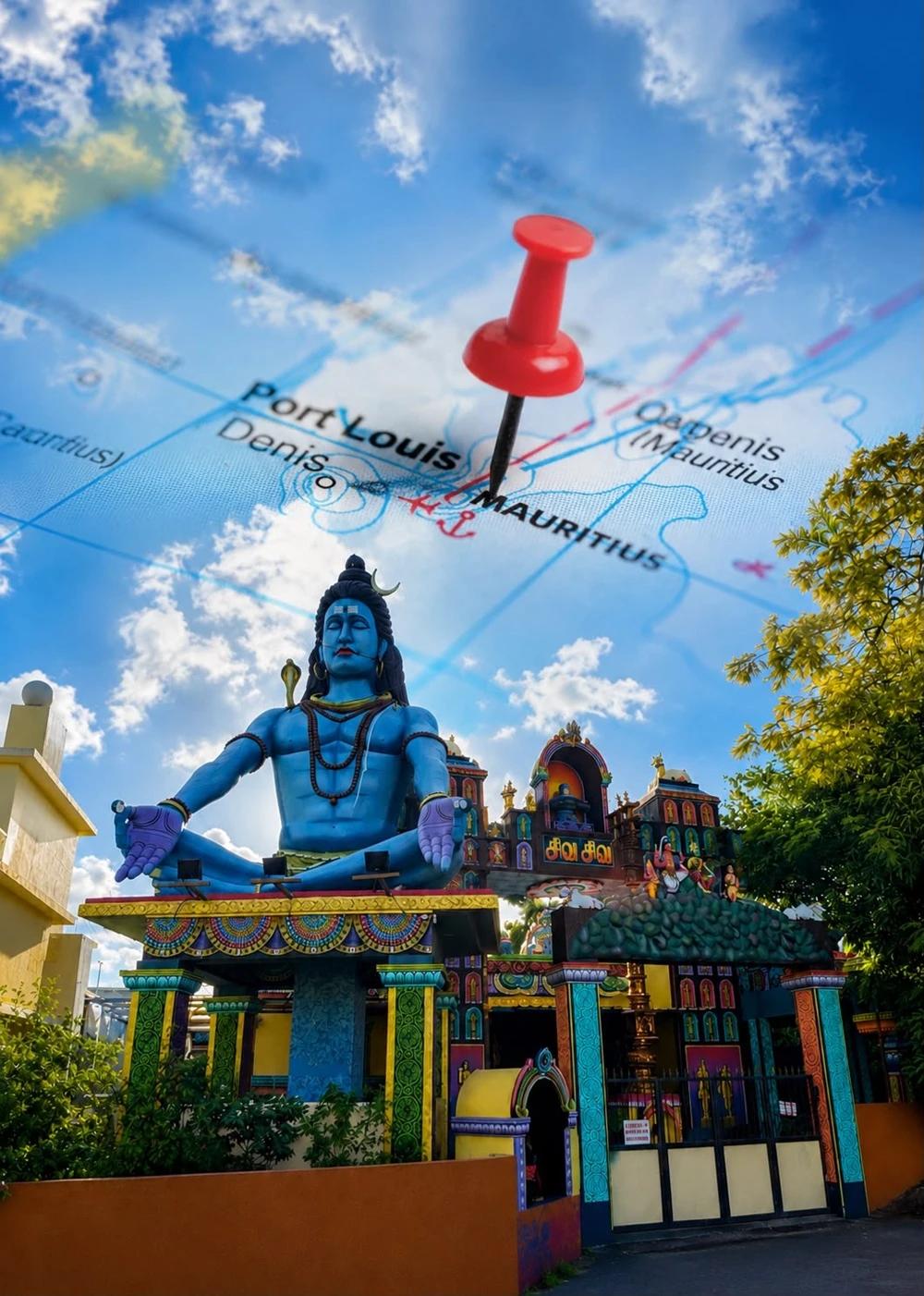
Mauritius Holiday Cost 2027: Budget, Prices & Cheapest Time
Mauritius Holiday Cost 2027: How Much to Budget for Your Trip
Last price check: 18 September 2026. This guide uses observed prices published by suppliers and government bodies, with the source and date recorded against each one, and clearly marked ranges where a figure is an editorial estimate. It does not quote 2027 rates as though they were on sale. Where inventory for 2027 is not yet loaded, currently bookable dates are used as benchmarks and labelled as such.
Currency conversions throughout use the Bank of Mauritius indicative selling rates for bank notes on 18 September 2026: €1 = Rs 55.48, £1 = Rs 64.58, US$1 = Rs 48.29. Rounded working rates of Rs 55, Rs 64.50 and Rs 48 are used throughout. Rates move; the conversion date is stated so you can check how far they have moved since.
The short answer
Mauritius is not a fixed-price destination. Two couples travelling the same week can pay three times apart, and almost all of that gap sits in two lines: the airfare and the room. Everything else — eating, moving around, doing things — is comparatively inexpensive and, unlike the Maldives, genuinely optional. That is the single most useful thing to understand before you start pricing a trip.
What actually drives the difference
Six variables account for nearly all of the spread in Mauritius holiday costs: which month you travel (school holidays in France, the UK, Germany and South Africa all land differently), which country you fly from, the resort category and board basis, per-room versus per-person pricing, trip length, and whether you hire a car. Change any two of those and the total moves by thousands.
1. How Much Does a Mauritius Holiday Cost in 2027?
The honest structure of a Mauritius budget is four blocks, and they are very different in how predictable they are.
— Flights — Roughly 30–45% for European travellers of a typical total. Low. Moves daily, and by several hundred per person between low and peak season. To capture.
— Accommodation — Roughly 35–55% of a typical total. Low to medium. Published offers exist but the real rate sits in a booking engine. To capture.
— Tourist fee — Small but unavoidable of a typical total. Fixed. €3 per person aged 12+ per night, set by law. Observed.
— Ground costs — food, transport, activities — Roughly 10–25% of a typical total. High. Almost everything is published and stable. Observed / indicative.
That is why this guide spends most of its length on the fourth block. It is the part you can actually know in advance, the part where the decisions you make save real money, and the part that almost every other Mauritius cost article estimates rather than checks.
2. Mauritius Holiday Cost at a Glance
The list below is the working framework. The on-island figures are built from observed 2026 prices. The flights and accommodation lines carry the capture protocol reference rather than a number.
— Mid-range, 7 nights, 2 people — 3–4★ half board, hire car, one catamaran excursion, mix of local and restaurant dining. Tourist fee €42 (2 × 7 × €3); other on-island costs ≈ €676. Indicative total: flights + accommodation + €718. Build in section 10.
— Budget, 10 nights, 2 people — Guesthouse or self-catering, local eateries, buses, one catamaran excursion. Tourist fee €60 (2 × 10 × €3); other on-island costs ≈ €608. Indicative total: flights + accommodation + €668. Build in section 10.
— Family, 7 nights, 2 adults + children aged 8 and 13 — Hire car, one catamaran excursion, mix of local and restaurant dining. Tourist fee €63 (3 chargeable × 7 × €3); other on-island costs ≈ €980. Indicative total: flights + accommodation + €1,043. Build in section 10.
— Luxury, 14 nights, 2 people — 5★ resort, private transfers, helicopter flight, private charter, spa. Tourist fee €84 (2 × 14 × €3); other on-island costs ≈ €2,325. Indicative total: flights + accommodation + €2,409. Build in section 10.
Every row above is built line by line in section 10, from the observed prices in sections 6 to 8. "Other on-island costs" excludes the tourist fee, which is shown separately because it is the one figure here that is fixed by law. It is €3 per person aged twelve or over per night — in the family row the eight-year-old is exempt and the thirteen-year-old is not, which is why three people are charged and not four.
3. How Much Are Flights to Mauritius?
Flight cost is the single largest variable for European travellers and the one this guide will not estimate. What it can give you, verified, is the route structure — because whether your market has a nonstop service is the thing that most affects both price and how much of your holiday you spend in transit.
— United Kingdom — Yes, from London Gatwick, operated by Air Mauritius. Around 31 flights a month. Return fare: capture C1.
— France — Yes, from Paris Charles de Gaulle, operated by Air Mauritius (Air France also serves the route). Around 54 flights a month — the densest European link. Return fare: capture C1.
— Germany — Yes, from Frankfurt, operated by Discover Airlines. Around 23 flights a month. Return fare: capture C1.
— Italy — Yes, from Rome Fiumicino, operated by ITA Airways, from 26 October. Seasonal — confirm the operating window for your dates. Return fare: capture C1.
— Switzerland / Austria — Yes, from Geneva and Vienna, operated by Air Mauritius; Austrian. Around 11 flights a month each. Return fare: capture C1.
Route data as listed on FlightsFrom.com for Sir Seewoosagur Ramgoolam International Airport, checked 18 September 2026. Flight time is about 12 hours 35 minutes from London Gatwick and 12 hours 10 minutes from Paris. Schedules change seasonally — confirm directly with the airline for your travel dates.
What actually moves the fare
— Nonstop versus one-stop. Gulf carriers via Dubai, Doha or Istanbul are frequently cheaper than the nonstop, at the cost of four to eight extra hours each way. On a seven-night trip that is a meaningful share of the holiday; on fourteen nights it matters much less.
— Fare class. Long-haul economy is increasingly sold in tiers, and the cheapest one often excludes hold baggage and seat selection. For a two-week beach holiday with a suitcase, compare the fare with a 23 kg bag added, not the headline.
— School holidays in your own country, not in Mauritius. The French, German, British and South African school calendars each create their own demand spike, which is why the cheapest month for a Frankfurt departure is not necessarily the cheapest for a London one.
— Christmas and New Year. The last two weeks of December are the hardest single period to price anywhere in the Indian Ocean, and the first market to sell out.
Compare routes and airlines
Our flights guide covers carriers, layovers, baggage rules and the practical differences between nonstop and one-stop routings for every major market.
4. Mauritius Hotel and Resort Prices
Accommodation is the other capture line, and there is a structural reason it is hard to quote: Mauritian resorts price per room, tour operators price per person, and the two are routinely compared as though they were the same number. Before you compare any two prices, check which of these you are looking at.
— Guesthouse or self-catering apartment — Room or studio, usually inland or a short walk from the beach, kitchen, no resort facilities. Often family-run. Pricing basis: per unit per night, room only. Nightly rate: capture C2.
— Small hotel or 3★ — Beach access or close to it, pool, breakfast usually included, limited dining. Pricing basis: per room, B&B. Nightly rate: capture C2.
— 4★ resort — Beachfront, multiple restaurants, pools, watersports, kids club. Half board is the common default. Pricing basis: per room, half board. Nightly rate: capture C2.
— 5★ resort — Beachfront, extensive dining, spa, full service. Sold half board, full board or all-inclusive. Pricing basis: per room, board basis varies. Nightly rate: capture C2.
— Private villa — Whole property, often with staff. Usually inland or on the west and south-west coasts. Pricing basis: per villa per night, often with a minimum stay. Nightly rate: capture C2.
Five things that move a Mauritian room rate
1. Coast. The north around Grand Baie is the busiest and best-served by restaurants and transport. The east is the classic resort coast. The west is the drier side. The south is the least developed. Rates and what you get for them differ materially between them.
2. Board basis. Moving from bed and breakfast to half board to all-inclusive changes the nightly rate substantially, and whether it saves money depends entirely on where you are staying — see the next section.
3. Room category. Garden, ocean view, beachfront and suite are often several tiers apart at the same property.
4. School-holiday dates in the source markets. Resorts price to European and South African holiday calendars.
5. Per-room versus per-person. A €300 room for two is not the same as €300 per person, and tour-operator packages quote the latter.
The tourist fee is on top of every one of these
The €3 per person per night Tourist Fee is collected at check-in and is explicitly not included in the room rate. It applies to hotels, guesthouses, tourist residences and domaines alike. Budget for it separately, because it will not appear on your booking confirmation.
5. Mauritius All-Inclusive Prices: Is It Worth Paying More?
This is the most consequential single decision in a Mauritius budget, and the answer is genuinely different here than in the Maldives — because in Mauritius you have somewhere else to eat.
— Room only — covers the room. Works well when: you are self-catering, or staying somewhere with restaurants within walking distance — Grand Baie, Flic en Flac, Tamarin, Pereybère. Works badly when: you are on an isolated stretch of coast with no realistic alternative to the hotel restaurant.
— Bed and breakfast — covers room plus breakfast. Works well when: you want to eat out and explore. The most flexible option on a self-drive trip. Works badly when: you are not going to leave the resort, in which case you pay hotel dinner prices every night.
— Half board — covers room, breakfast and dinner. Works well when: the default compromise. Sensible on the east and south coasts where evening options are thinner. Works badly when: you wanted to try Mauritian restaurants — you will end up paying twice on the nights you go out.
— Full board — covers room and three meals. Works well when: you genuinely do not plan to leave the property. Works badly when: almost any other situation. Lunch is the meal most easily and cheaply taken outside.
— All-inclusive — covers room, all meals, and a defined drinks list. Always check which drinks.. Works well when: you drink regularly, you have children, or you want a fixed total with no surprises. Strongest for families and for longer stays. Works badly when: you are a light drinker in a walkable area. You will be subsidising other guests' bar tabs.
The arithmetic that decides it is not complicated. All-inclusive is worth paying for when the daily supplement over half board is less than what you would actually spend on lunch and drinks. Using the observed prices in section 6, a couple eating lunch at a local restaurant and having a few drinks spends perhaps Rs 1,400 to Rs 2,000 a day — roughly €25 to €36 for two. If the all-inclusive supplement is more than that, and you are somewhere with real alternatives, half board plus eating out wins on both cost and experience.
Check the drinks list before you compare
"All-inclusive" is not a regulated term in Mauritius. Some packages cover local spirits and house wine only; others include premium brands, minibar and room service; some exclude certain restaurants entirely or charge a supplement for them. Two packages advertised at the same price can differ by a great deal. Ask for the inclusion list in writing before you compare rates.
Understand what all-inclusive actually covers
Our all-inclusive guide sets out what different Mauritian resorts include, which restaurants carry supplements, and how the packages compare property by property.
6. How Much Does Food Cost in Mauritius?
This is the section where Mauritius separates itself from its competitors. The figures below are taken from dated published price guides rather than estimated — but read the note under the list, because neither source is a supplier price list and they do not meet the Observed standard used elsewhere in this guide.
— Dholl puri, per piece — Rs 15–30 (€0.27–0.55). Creole Mauritius street-food price guide, 7 July 2026.
— Dholl puri, two with fillings — Rs 40–80 (€0.73–1.45). Creole Mauritius, 7 July 2026.
— Farata or roti, per piece — Rs 20–50 (€0.36–0.91). Creole Mauritius, 7 July 2026.
— Gateaux piment — Rs 5–10 each, around Rs 10 for three (€0.09–0.18). Creole Mauritius, 7 July 2026.
— Boulettes, per bowl — Rs 50–100 (€0.91–1.82). Creole Mauritius, 7 July 2026.
— Mine frite from a stall — Rs 75–150 (€1.36–2.73). Creole Mauritius, 7 July 2026.
— Briani, standard portion — Rs 150–250 (€2.73–4.55). Creole Mauritius, 7 July 2026.
— Meal, inexpensive restaurant — Rs 300 (€5.45). Hikersbay cost index, 17 September 2026.
— Three courses for two, mid-range — Rs 2,000 (€36.36). Hikersbay cost index, 17 September 2026.
— Local draught beer, 0.5 l — Rs 100 (€1.82). Hikersbay cost index, 17 September 2026.
— Imported beer, 0.33 l bottle — Rs 150 (€2.73). Hikersbay cost index, 17 September 2026.
— Cappuccino — Rs 122 (€2.22). Hikersbay cost index, 17 September 2026.
— Bottled water, 0.33 l — Rs 32 (€0.58). Hikersbay cost index, 17 September 2026.
The Mauritius figures are a dated editorial price guide published in July 2026.
Resort dining is a different market
A hotel dinner in a four- or five-star Mauritian resort is not priced against the local restaurant down the road; it is priced against the resort next door. The gap between a Rs 300 local meal and a resort à la carte dinner is the largest single swing in the food line of a Mauritius budget, and it is entirely within your control if you are staying somewhere with alternatives nearby.
7. Transport Costs in Mauritius
Mauritius has the most complete independent-transport infrastructure of the three big Indian Ocean destinations, and this is where the budget can be compressed hardest.
— Airport transfer, private to Grand Baie, Flic en Flac, Belle Mare, Trou aux Biches, Port Louis — Sedan €35, premium €45, minivan €55, minibus €80. Per vehicle, not per person. Three people to Grand Baie pay €35 in total. Observed — Taxis Mauritius 2026 tariff, checked 18 Sept 2026.
— Airport transfer, private to Le Morne or Bel Ombre — Sedan €45, premium €65, minivan €80, minibus €125. The south-west is the longest transfer from the airport. Observed — same tariff.
— Public bus — Rs 12–17 minimum fare, rising to Rs 37–47 on the longest routes. Fare depends on stages travelled. Free travel applies to Mauritian students, seniors and disabled passengers, not to visitors. Observed — Mauritius bus fares 2026.
— Metro Express — MECard Rs 150 adult (includes Rs 100 of travel credit); Rs 150 child (Rs 50 credit) — as published by the operator. Fares are zonal. Metro Express states a journey costs 5–10% less on a card than on a single-use ticket, but does not publish the per-journey fares themselves — check the fare for your zones at the station. Observed — Metro Express, checked 18 Sept 2026.
— Petrol — Rs 70.65 per litre. Diesel Rs 71.25. Set by the Petroleum Pricing Committee, so this is a genuinely fixed national price. Observed — State Trading Corporation, effective 15 August 2026.
— Car hire — Advertised from around €19–38 per day across operators on 18 Sept 2026. Verify inclusions: insurance excess, unlimited mileage, airport surcharge and delivery vary sharply between operators. Indicative — aggregator advertised rates, wide spread.
— Taxi, by the day or by the journey — price to capture. Metered taxis are uncommon; fares are negotiated. Agree the price before you get in. To capture.
When a hire car pays for itself
Run the numbers rather than assuming. A small car at, say, €30 a day plus fuel for 60 km of driving — about 3.6 litres, or Rs 254, roughly €4.60 at the observed pump price — costs around €35 a day. Two organised half-day excursions with hotel pickup will usually cost more than that for a couple, and the car also removes every taxi fare for the rest of the day. On a trip where you intend to see the island, a car is almost always the cheaper option as well as the better one. On a trip where you intend to stay on one beach, it is money spent on a parked vehicle.
Plan your driving
Our car rental guide covers licence requirements, insurance excess, driving on the left, and which coasts reward a self-drive trip most.
8. Activity and Excursion Costs
Every price below is published by the operator and was checked on 18 September 2026, except the two entries marked where the operator does not publish a public rate. Prices are per person unless stated.
— Full-day catamaran to Île aux Cerfs — from Trou d'Eau Douce — €67 adult, €37 child 3–12, infants free. About 6 hours, 09:30–15:30. Catamaran, Grand River waterfalls, BBQ lunch on board, unlimited open bar, snorkelling stop. Hotel pickup is an optional extra.
— Full-day west-coast catamaran — dolphins, Crystal Rock, Île aux Bénitiers — €64 adult, €44 child 3–11, babies free. About 6 hours, 09:00–15:00. Dolphin watching off Tamarin, Crystal Rock, Bénitiers, light breakfast and BBQ lunch buffet. Bring your own snorkel gear.
— Private half-day catamaran charter — dolphins and snorkelling, Black River — €465 for the boat, up to 15 people. About 4 hours, 09:00–13:00. Exclusive charter, snorkelling gear, safety equipment. BBQ lunch +€25 per adult; lobster BBQ +€80.
— Helicopter, north — €100 for 10 min; €250 for 25 min; €375 for 45 min. As stated. Corail Hélicoptères, Triolet base. Per person.
— Helicopter, south — including the underwater waterfall — €210 for 15 min; €310 for 25 min; €325 for 25 min from Bel Ombre. As stated. Corail Hélicoptères, Chamarel and Bel Ombre bases. Per person.
— Tandem skydive — Rs 21,500 jump only (≈ €391); Rs 26,500 with photos or video; Rs 28,000 with both. Half day. Skydive Mauritius, 10,000 ft tandem. Payable in MUR, USD or EUR cash, or bank transfer.
— Casela Nature Parks — Rs 800 adult (≈ €14.55) / Rs 650 child 4–12 (≈ €11.80) — residents' promotion only, Fridays to Sundays, September 2026, at the counter. Full day. Standard visitor rates are not published on the public site and must be checked in the park's booking engine.
— Chamarel 7 Coloured Earth Geopark — To capture. 2–3 hours. Separate resident and non-resident rates exist; figures are only shown inside the booking system. Ticket covers the waterfall viewpoint, the dunes, the endemic garden and the tortoise park.
— Beaches, hiking, viewpoints — Free. —. Public beaches, most coastal walks and the road-accessible viewpoints cost nothing. This is a real and underrated part of the Mauritius value case.
The premium tier is genuinely premium
A 45-minute helicopter flight at €375 per person costs a couple €750 — more than a week of local eating for two. A private half-day charter is €465 for the boat before the €25-per-adult lunch supplement, so about €515 for a couple against €128 for two places on a shared full-day cruise: roughly four times the price for two-thirds of the time on the water. These are worth flagging clearly rather than listing alongside a group cruise as though they were comparable choices.
Browse what there is to do
Our activities guide covers catamarans, diving, hiking, watersports and the island's national parks, with practical detail on booking and what each experience actually involves.
9. How Much Spending Money Do You Need?
These are indicative daily figures, built by adding up the observed prices in sections 6 to 8. The assumptions are written into each row so you can adjust them rather than trust them.
— Low — Around Rs 900–1,200 (€16–22) per person per day. Street food or a local eatery for two meals, self-catered breakfast, buses, water and coffee. No paid excursions on an average day.
— Medium — Around Rs 2,200–3,000 (€40–55) per person per day. One local meal, one mid-range restaurant dinner, drinks, a share of a hire car and fuel, and roughly one €67 catamaran excursion spread across the week.
— High — Around Rs 5,500–8,000 (€100–145) per person per day. Resort and à la carte dining, premium drinks, private transfers, and a spread of the premium experiences — helicopter, private charter, spa.
Prepaid resort holidays are a different calculation
If you are on half board or all-inclusive, most of your food cost is already paid. What is left is drinks not covered by the package, lunches if you are on half board, excursions, tips and souvenirs — which for most couples is a fraction of the independent-travel figure. The mistake to avoid is budgeting an independent-traveller daily rate on top of an all-inclusive package and concluding Mauritius is unaffordable.
10. 7-Day, 10-Day and 14-Day Budget Examples
These build the ground-cost portion from observed prices. The flights and accommodation lines carry the capture reference.
Seven nights, two people, mid-range, self-drive
— Return flights, two people — Capture C1
— Accommodation, 7 nights — 3–4★ half board, per room — Capture C2
— Tourist fee — 2 people × 7 nights × €3 — observed — €42
— Car hire, 7 days — Small car, indicative €30 per day — €210
— Fuel — About 420 km at Rs 70.65 per litre — observed pump price — ≈ €32
— Lunches and drinks, 7 days — Local restaurants and cafés, two people — ≈ €180
— Excursions — One full-day catamaran for two at €67 each — observed — €134
— Entry fees and extras — Parks, viewpoints, tips, souvenirs — ≈ €120
— On-island subtotal: ≈ €718 — Observed plus indicative, including the €42 tourist fee
Ten nights, two people, budget, independent
— Return flights, two people — Capture C1
— Accommodation, 10 nights — Guesthouse or self-catering apartment — Capture C2
— Tourist fee — 2 × 10 × €3 — observed — €60
— Airport transfers, return — €35 per vehicle each way to a northern or west-coast base — observed — €70
— Buses and local transport — 10 days, two people, several journeys a day at Rs 12–47 — ≈ €40
— Food, 10 days — Self-catered breakfast, street food and local eateries, two people — ≈ €280
— Excursions — One west-coast catamaran for two at €64 each — observed — €128
— Extras — Entry fees, snorkel hire, incidentals — ≈ €90
— On-island subtotal: ≈ €668 — Observed plus indicative, including the €60 tourist fee
Seven nights, two adults and two children aged 8 and 13, mid-range, self-drive
— Return flights, four people — Capture C1
— Accommodation, 7 nights — Family room or interconnecting rooms, half board — Capture C2
— Tourist fee — 3 chargeable × 7 nights × €3 — the 8-year-old is exempt, the 13-year-old is not — observed — €63
— Car hire, 7 days — Larger car for four, indicative €40 per day — €280
— Fuel — About 420 km at Rs 70.65 per litre — observed pump price — ≈ €32
— Lunches and drinks, 7 days — Local restaurants and cafés, family of four — ≈ €280
— Excursion — Île aux Cerfs catamaran: three at the €67 adult rate plus one child at €37 — observed — €238
— Entry fees and extras — Parks, viewpoints, tips, souvenirs — ≈ €150
— On-island subtotal: ≈ €1,043 — Observed plus indicative, including the €63 tourist fee
Fourteen nights, two people, luxury
— Return flights, two people — Capture C1
— Accommodation, 14 nights — 5★ resort — Capture C2
— Tourist fee — 2 × 14 × €3 — observed — €84
— Private transfers, return — €45 per vehicle each way to Le Morne or Bel Ombre — observed — €90
— Helicopter flight, two people — 25-minute southern tour at €310 each — observed — €620
— Private catamaran charter — Half day with BBQ lunch for two — observed €465 + €50 — €515
— Dining outside the package, 14 days — À la carte restaurants and premium drinks, two people — ≈ €700
— Spa, extras and incidentals — Indicative — ≈ €400
— On-island subtotal: ≈ €2,409 — Observed plus indicative, including the €84 tourist fee
On-island subtotals are rounded, exclude flights and accommodation, and include the tourist fee. They are built from the observed prices in sections 6 to 8 under the assumptions stated in each row. In the at-a-glance list in section 2 the fee is shown separately, so the "other on-island costs" figure there is each subtotal above minus its fee. Change the assumptions and the numbers change — that is the point of showing the working rather than quoting a single total.
11. Cheapest Time to Visit Mauritius
There is no single cheapest month, and any guide that names one without showing its data is guessing. What can be established is the structure of demand, and that is enough to plan around.
— Late December to early January — Christmas and New Year, at the height of the southern summer. The single busiest period of the year. Highest. Books furthest ahead and sells out first.
— February and March — Still summer, and the wettest months of the year according to the Mauritius Meteorological Services. Inside the cyclone season. Lower. The trade-off is weather risk and higher humidity, not a lesser island.
— April — The last month of summer. Warm sea, rainfall easing. Shoulder. Often the best value-to-weather ratio of the summer half.
— May — A transition month between summer and winter. Settling weather, warm sea. Shoulder. Quiet before the northern-hemisphere summer.
— June to September — Southern winter: cooler, drier and windier. Mixed. Pleasant conditions, but European school holidays push July and August up.
— October — A transition month into summer, and the driest month of the year. Shoulder, and often the sweet spot. Good weather and no major source-market holiday.
— November to mid-December — Summer building. Cyclone season officially open. Lower, until the Christmas surge begins.
The official climate picture behind that: summer runs November to April and winter June to September, with May and October as transition months. Mean summer temperature is 24.7°C against 20.4°C in winter, and January and February are warmest with an average daily maximum of 29.2°C. Annual rainfall averages 2,010 mm, of which 1,344 mm — 67% — falls in summer. February and March are the wettest months; October is the driest. All of these figures are published by the Mauritius Meteorological Services.
Your school holidays matter more than the island's weather
Mauritius received 1,436,250 visitors in 2025 and 348,445 in the first quarter of 2026 alone, with France, Germany, Réunion, the UK, South Africa, India and Russia the leading markets. Those calendars do not coincide. A week that is peak-priced for a Paris departure may be ordinary for a Frankfurt one. If your own dates are flexible, checking a fortnight either side of a school-holiday boundary is usually worth more than changing the month.
Check the month before you book
Our best-time-to-visit guide and monthly weather pages set out what each month actually looks like, so you can weigh the price against the conditions.
12. Best Time to Book Mauritius for Lower Prices
Avoid anyone telling you to book exactly six months ahead. The published guidance that does exist is a window, not a date. Industry analysis of international routes points to roughly two to eight months ahead for ordinary travel, extending to four to ten months for peak seasons and high-demand routes. Mauritius over Christmas and New Year sits firmly in the second category.
— Set fare alerts early and watch, rather than booking on a rule. The window is wide because the right moment differs by route and season.
— Price the package against the components. Tour operators buy accommodation in blocks and can beat the direct rate, especially on flight-plus-hotel for the UK and French markets. Sometimes they cannot. Check both.
— Shift by a few days, not just months. Moving either side of a school-holiday boundary frequently saves more than moving a whole month.
— Book the room and the flight separately when the flight is the volatile half. You can often hold a refundable or flexible room while you wait out the fare.
— For 2027 dates not yet loaded, use the equivalent week in 2026 as a benchmark and expect movement. Do not treat it as a quote.
13. How Much Does Mauritius Cost for a Couple?
The couple case is the cleanest, because Mauritian resorts price per room. Two people in one room pay the same for accommodation as one person would, which is why Mauritius is comparatively poor value for solo travellers and good value for couples.
The seven-night and ten-night couple frameworks are in section 10. The three decisions that move a couple's total most, in order: the month, half board versus all-inclusive, and hire car versus transfers and excursions. Everything else is noise by comparison.
14. How Much Does a Mauritius Family Holiday Cost?
Worked on the assumption of two adults and two children aged 8 and 13, which is the standard family shape in Mauritian resort pricing and, importantly, straddles the tourist-fee threshold.
— Tourist fee — Charged per person aged twelve or over. The 13-year-old pays; the 8-year-old does not. 3 chargeable people × €3 per night. Seven nights: €63. Fourteen nights: €126.
— Room configuration — Family rooms, interconnecting rooms and two-bedroom suites price very differently. Some resorts cap children per room. Confirm the configuration in writing — this is the largest single family variable.
— Board basis — All-inclusive is a stronger case for families than for couples: children snack constantly and soft drinks add up fast. See section 5 for the comparison framework.
— Kids clubs — Frequently complimentary within a defined age band, with babysitting charged separately and requiring notice. Age bands vary widely by resort. Our family guide has the verified detail.
— Transfers — Priced per vehicle, not per person, so the cost per head falls as the party grows. A family of four with a week's luggage will usually need the minivan at €55 rather than the €35 sedan — still less per person than a couple pays.
— Excursions — Child rates are real and substantial, but the age band is not the same as the tourist-fee threshold. The Île aux Cerfs catamaran charges €67 adult and €37 for a child aged 3 to 12; infants go free. For this family, €238 rather than €268. The 13-year-old falls outside the 3–12 band and pays the adult fare, so only the 8-year-old gets the child rate.
Plan the family trip
Our family guide covers verified kids-club age bands, which coasts work best with children, and what to check before you book a family room.
15. Mauritius Honeymoon Cost
Honeymoon pricing in Mauritius is not a separate product so much as a set of upgrades, and it is worth being clear about which of them actually cost money.
— Room category is the big one. Moving from garden view to beachfront or to a suite or pool villa is usually the single largest honeymoon premium.
— Board basis and dining. Private beach dinners and à la carte restaurants carrying supplements inside an all-inclusive package are where honeymoon budgets quietly expand.
— Private transfers rather than shared — €35 to €45 per vehicle on the observed tariff, so a modest upgrade in absolute terms.
— Spa treatments, which are almost never included and are priced per treatment.
— Private experiences. A private half-day catamaran charter is €465 for the boat, four hours, with lunch a €25-per-adult supplement — about €515 for a couple. Two places on a shared full-day cruise with lunch included are €128. Roughly four times the price for two-thirds of the time on the water. Worth it for some couples; worth knowing the multiple before you book.
— Helicopter transfers and scenic flights at €100 to €375 per person on the published Corail Hélicoptères tariff.
— Honeymoon packages offered by resorts vary from a bottle of sparkling wine and a room upgrade to genuinely substantial inclusions. Ask what is in it before assuming it is a discount.
16. How to Save Money Without Ruining the Trip
Move your dates before you downgrade your hotel. Shifting outside a source-market school holiday usually saves more than dropping a resort category, and costs you nothing in experience.
Choose the coast for what you want, not for the rate. A cheaper room on an isolated stretch with no restaurants nearby forces you onto full board and usually costs more in total.
Get the board basis right. This is the largest controllable decision in the budget. Section 5 has the framework.
Hire a car if you intend to see the island. At around €35 a day all-in it frequently undercuts two organised excursions, and it removes every taxi fare after that.
Mix local and resort dining. A Rs 300 local meal against a resort à la carte dinner is the biggest per-day swing available to you, and eating in Mauritian restaurants is a better holiday as well as a cheaper one.
Use the free island. Public beaches, coastal walks, viewpoints and markets cost nothing, and they are not a consolation prize.
Compare the package against the components. Both directions win sometimes. Check both rather than assuming either.
Budget the tourist fee up front so it is not a surprise at check-in.
Book excursions directly with operators whose prices are published, and check whether hotel pickup is included or extra — it usually is extra.
What not to cut
Do not save money by skipping travel insurance, by hiring a car without understanding the insurance excess, or by booking an unlicensed excursion boat. Mauritius is a straightforward destination, but the sea and the roads are where cheap decisions become expensive ones.
17. Is Mauritius Expensive Compared with the Maldives or Seychelles?
The useful comparison is structural rather than a total-cost league table, because the three destinations differ in how much of your spending is optional.
— Independent restaurants — Mauritius: Extensive, across the whole island, at every price point. Maldives: Very limited outside resorts; on a resort island there is no alternative. Seychelles: Present, mainly on Mahé and Praslin.
— Getting around independently — Mauritius: Hire cars, buses, the Metro Express and taxis all available island-wide. Maldives: Seaplane or speedboat transfers between islands; no road network between resorts. Seychelles: Hire cars and buses on the main islands; inter-island ferries and flights.
— Non-resort accommodation — Mauritius: Guesthouses, apartments and villas in quantity. Maldives: Growing on local islands, still limited. Seychelles: Self-catering and guesthouses widely available.
— Resort dependence — Mauritius: Low. You can leave and spend elsewhere. Maldives: High. On a one-island resort, essentially total. Seychelles: Moderate.
— Transfer cost from the airport — Mauritius: €35–45 per vehicle by road on the observed 2026 tariff. Maldives: Seaplane or domestic flight plus boat, frequently a substantial per-person cost. Seychelles: Road, ferry or domestic flight depending on the island.
— Free activities — Mauritius: Public beaches, hiking, national parks, markets, towns. Maldives: Limited by geography. Seychelles: Beaches and walking trails, good availability.
What that adds up to: Mauritius has the widest range of achievable budgets of the three. It can be done cheaply in a way the Maldives essentially cannot, and it can also be done at the very top end. It is not automatically cheaper — a five-star Mauritian resort in peak season is not inexpensive by any measure — but the floor is much lower and far more of the spending is under your control. A total-cost claim in either direction, without matched dates, matched categories and matched board basis, is not a comparison worth publishing.
18. Price Capture Protocol
This section is for the editorial team and should be removed before publication. It is the method for filling the two capture lines so the figures are defensible.
Capture C1 — airfares
— Routes — LGW–MRU, CDG–MRU, FRA–MRU and FCO–MRU as the four brief markets, plus GVA–MRU and VIE–MRU if the Swiss and Austrian rows stay in section 3. Record nonstop and cheapest one-stop separately.
— Sampling dates — Three travel periods, all for the same seven-night stay length: a low-demand week (early June), a shoulder week (late September), and a peak week (26 December–2 January).
— Occupancy — Two adults, return, economy, with 23 kg hold baggage included — not the hand-baggage-only lead-in fare.
— Source — The airline's own site first. Only use an aggregator where no nonstop exists, and record which one.
— Record for each — Fare, currency, cabin, baggage allowance, whether taxes and charges are included, the exact travel dates, the airline, and the timestamp of capture.
— Presentation — Publish as a range across the three periods, never as a single number. Label the capture date beside the figures and in the on-page "last price check" line.
Capture C2 — accommodation
— Categories — Guesthouse or self-catering; 3★; 4★ resort; 5★ resort; private villa. At least three properties per category, on different coasts.
— Sampling dates — The same three travel periods as C1, so the two sets are directly comparable.
— Occupancy — Two adults sharing one room. For the family case, two adults plus two children aged 8 and 13 in the resort's own family configuration.
— Board basis — Capture room-only, B&B, half board and all-inclusive at the same property wherever the booking engine offers them. This is what makes section 5 quantitative rather than descriptive.
— Source — The property's own booking engine. Note where a tour-operator package undercuts it and by how much.
— Record for each — Rate, currency, per room or per person, board basis, room category, whether the tourist fee and any resort charges are included, the exact stay dates, and the timestamp.
— Presentation — Publish as bands by category and season. Never present one property's rate as a category benchmark.
The one rule that protects the page
Every captured figure goes into the article with its date attached, and the page carries a visible "Last price check" line that is updated whenever any figure changes. A cost page without a visible check date is the kind of page Google's helpful-content guidance is aimed at, and the kind a reader stops trusting the moment one number is out of date.
FAQ Section
Each answer is written to sit between 40 and 80 words for featured-snippet and AI Overview extraction, and each is answerable from the verified material above.
Is Mauritius expensive in 2027?
It depends almost entirely on your flights and your hotel, which together make up most of a typical total. Ground costs are modest: a local restaurant meal is around Rs 300 (about €5.45), a private airport transfer is €35 per vehicle, and buses start at Rs 12. Unlike the Maldives, you are not captive to resort pricing, so the achievable budget range is unusually wide.
How much does a week in Mauritius cost?
Flights and accommodation dominate and move with the season, so no single figure is honest. The ground costs are knowable: a mid-range couple driving themselves, eating out and taking one catamaran excursion spends roughly €720 over seven nights, and that figure already includes the €42 tourist fee. Add your own flight and room figures for your dates.
How much does 10 days in Mauritius cost?
On the island, a budget couple travelling independently — guesthouse, buses, local eateries, one excursion — spends roughly €670 over ten nights, including €60 in tourist fees. A mid-range couple with a hire car and restaurant dining spends substantially more. Flights and accommodation are separate and depend on your departure market and travel dates.
How much spending money do I need for Mauritius?
For independent travel, roughly €16 to €22 per person per day at the low end, €40 to €55 mid-range, and €100 or more if you are dining in resorts and taking premium experiences. If you are on half board or all-inclusive, most food is prepaid and your daily spend drops to drinks, lunches, excursions and tips.
What is the cheapest month to visit Mauritius?
There is no single cheapest month, and the answer differs by departure country because school holidays do not coincide. Broadly, late December to early January is the most expensive; February and March are cheaper but wettest; and September and October often give the best combination of price and weather, October being the driest month.
Are Mauritius resorts expensive?
They span a very wide range, from guesthouses to five-star beachfront properties. Rates are quoted per room, not per person, which favours couples and families. Board basis, room category, coast and your own country's school-holiday dates all move the rate substantially. Always check whether a quoted price is per room or per person before comparing.
Is all-inclusive worth it in Mauritius?
It depends on where you stay. In a walkable area like Grand Baie or Flic en Flac, half board plus eating out is often cheaper and better. On an isolated stretch of coast, all-inclusive usually wins on both cost certainty and convenience. It is a stronger case for families and for longer stays. Always check which drinks are included.
How much are meals in Mauritius?
Street food is very cheap: dholl puri runs Rs 15 to 30 a piece and a briani portion Rs 150 to 250. A meal in an inexpensive restaurant is around Rs 300, and three courses for two in a mid-range restaurant around Rs 2,000. Resort dining is a separate market and costs considerably more.
How much are taxis in Mauritius?
Private airport transfers run on published tariffs: €35 per vehicle to Grand Baie, Flic en Flac, Belle Mare, Trou aux Biches or Port Louis, and €45 to Le Morne or Bel Ombre, for a sedan. These are per vehicle, not per person. Ordinary taxis are rarely metered — agree the fare before you set off.
How much does car rental cost in Mauritius?
Advertised rates spanned roughly €19 to €38 a day across operators in September 2026, but they vary widely and are not a supplier rate card. Petrol is a fixed national price of Rs 70.65 a litre. Check the insurance excess, mileage policy, airport surcharge and delivery terms before comparing headline daily rates.
How much do excursions cost in Mauritius?
A full-day catamaran to Île aux Cerfs is €67 per adult and €37 per child aged 3 to 12, including BBQ lunch and an open bar. A west-coast dolphin cruise is €64 per adult. Premium experiences cost far more: helicopter flights run €100 to €375 per person, and a tandem skydive is Rs 21,500.
How much does a family holiday to Mauritius cost?
Transfers cost the same as for a couple because they are priced per vehicle. Excursions have real child rates — €37 rather than €67 on the Île aux Cerfs catamaran, but only up to age twelve. The tourist fee applies to everyone aged twelve or over, so a family of four with one child under twelve pays for three people, not four. Room configuration is the biggest variable.
How much does a Mauritius honeymoon cost?
The premium comes from upgrades rather than a separate product: room category first, then private dining, spa treatments and private experiences. A private half-day catamaran charter is about €515 for a couple with lunch, against €128 for two places on a shared cruise. Helicopter scenic flights run €100 to €375 per person. Ask exactly what a resort honeymoon package includes.
Is Mauritius cheaper than the Maldives?
It can be, and the reason is structural rather than a lower price level. Mauritius has independent restaurants, hire cars, buses and non-resort accommodation across the island, so much of your spending is optional. In the Maldives, a resort island leaves few alternatives. A five-star Mauritian resort in peak season is not cheap by any measure.
When should I book Mauritius for the best price?
Industry analysis of international routes suggests roughly two to eight months ahead, extending to four to ten months for peak periods and high-demand routes. Christmas and New Year in Mauritius sits firmly in the second group. Avoid fixed rules like booking exactly six months out — set fare alerts and stay flexible on dates instead.
Explore this topic
Get new Mauritius guides by email
Join the Mauritius Explored list for trip ideas, practical updates and downloadable planning help.

Written by the Mauritius Explored editorial team, a Mauritian travel guide focused on beaches, activities, local places, and practical island planning.
Local Mauritius travel research, itinerary planning, and destination coverage since 2011.