The Ultimate Mauritius Self-Drive Itinerary for 2026
The Best Road Trip Routes for Beaches, Villages, Waterfalls and Hidden Island Stops
The Best Way to Feel Mauritius Is to Hit the Road
A Mauritius self-drive itinerary is perfect for travellers who want to go deeper, honeymooners who want romantic scenic drives, couples who enjoy discovering quiet places, families who need flexibility, and travellers looking for new places beyond the classic tourist list.
Mauritius is often sold as a resort island, but if you only stay inside the hotel, you miss half of the story. The real island is on the road. It is in the villages, markets, waterfalls, viewpoints, coastal roads and local food stops that connect one region to another.
That is the beauty of a self-drive itinerary in Mauritius.
This guide will take you around the entire island over seven days — with full route directions, approximate distances, stops worth making, food worth eating, and every piece of practical advice I've accumulated in a decade of driving these roads.
Use it as a full island road trip plan or choose one route based on where you are staying.
Let's go.
Why Choose a Self-Drive Holiday in Mauritius?
Driving in Mauritius gives you freedom.
You can leave early, stop where you want, avoid crowded tour timings and discover places that are not always included in standard excursions. It also allows you to experience the island at your own pace.
Organised tours have their place. But Mauritius rewards the independent traveller more generously than almost any other island in the Indian Ocean. Here's why.
The island is perfectly sized for driving. At approximately 65 km long and 45 km wide, Mauritius is compact without being small. No destination is more than 90 minutes from any other. You can cross from one coast to the other before lunch, explore a waterfall before noon, and still be on a beach by 2pm.
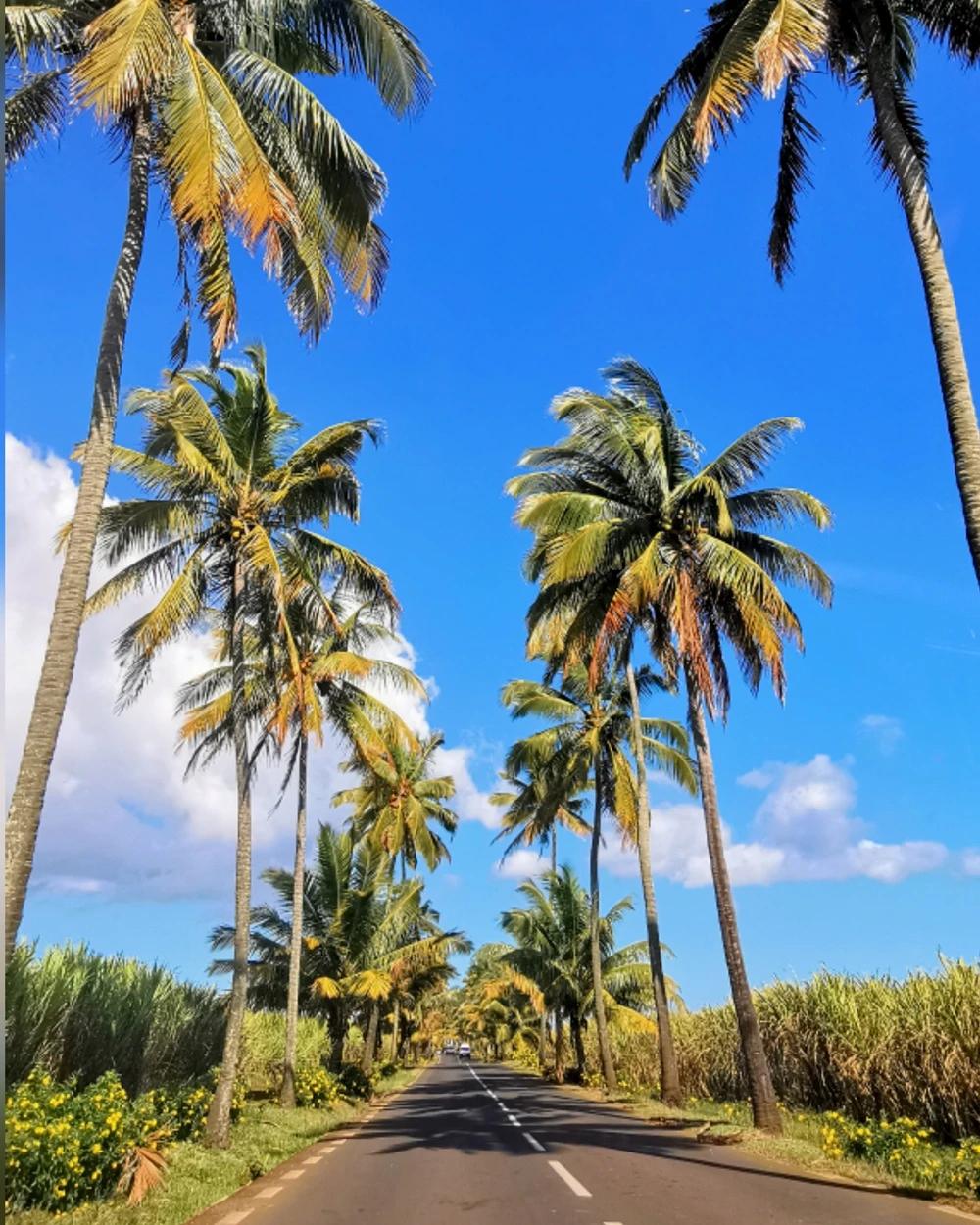
The roads are excellent. Two main highways — the M1 (north–south) and the M2 (the central motorway corridor) — connect most major destinations efficiently. Coastal roads are well-maintained and clearly signed. Even the mountain roads in the south and west, while winding, are manageable in a standard vehicle.
It is genuinely affordable. A compact hire car costs from around €25 to €50 per day depending on the season and vehicle type. There are no toll roads anywhere on the island. Petrol is reasonable, and parking outside the main cities is almost entirely free.
You find things that tours don't. The rougaille stall at the edge of a village that the bus drives past without stopping. The viewpoint that isn't on any map. The beach that has no name on Google but is empty and perfect. These are the rewards of making your own route.
A self-drive trip is especially useful if you want to explore:
Chamarel and Black River Gorges
Le Morne and the south-west
The wild south coast
Mahébourg and the south-east
North coast beaches
Pamplemousses and Port Louis
Local villages and markets
Hidden beaches and viewpoints
The island is small enough to explore comfortably, but varied enough to feel different from coast to coast.
What Driving in Mauritius Is Really Like
Driving in Mauritius is manageable, but it is not always the same as driving in Europe, Australia, South Africa or the UAE.
The main roads are generally easy to follow, especially between the airport, Port Louis, Grand Baie, Flic en Flac, Belle Mare and the main resort areas. Some village roads are narrow, and traffic can be busy around towns, markets and school hours.
Mauritius drives on the left-hand side of the road. If you are used to left-side driving, you will adjust quickly. If you normally drive on the right, take your time on the first day and avoid starting with a complicated city route.
Local driving tips:
Choose an automatic car if you want an easier drive.
Avoid driving through Port Louis at peak traffic times.
Be careful on narrow village roads.
Watch for pedestrians, dogs, bicycles and buses.
Use GPS, but also follow road signs.
Avoid difficult mountain roads after dark.
Keep coins or small cash for parking where needed.
Do not rush. Distances are short, but roads can be slow.
Stop often. The best Mauritius road trip moments are unexpected.
Driving in Mauritius is not about speed. It is about rhythm.
Suggested Mauritius Self-Drive Itinerary Overview
Below are the best road trip routes in Mauritius. Each route includes a title, direction and approximate kilometres.
Distances are approximate and depend on your starting point, exact stops and hotel location.
A full circuit of Mauritius, designed to cover all four coasts, the central highlands, the cultural landmarks, and the wild south — while leaving room for the unplanned stops that make a road trip what it is.
Itinerary 1: The Classic North Coast Loop
Direction: Grand Baie → La Cuvette → Pereybere → Bain Boeuf → Cap Malheureux → Grand Gaube → Return to Grand Baie
Approximate Distance: 35–45 km loop
This is one of the easiest self-drive routes in Mauritius and a great first road trip if you are staying in the north.
Start in Grand Baie, the island’s most popular northern village. It is lively, practical and full of restaurants, shops and boat tour options. From there, head to La Cuvette Beach for a peaceful swim close to town. This beach is small but beautiful, with calm water and a relaxed local atmosphere.
Continue towards Pereybere, one of the best beaches in the north for clear water and easy swimming. It is lively but still charming, especially in the morning.
From Pereybere, drive towards Bain Boeuf. This is a quieter coastal area with lovely views towards Coin de Mire. It is not always the best swimming beach, but it is excellent for photography and peaceful sea views.
Next, stop at Cap Malheureux. This is where you will find the famous red-roof church, Notre Dame Auxiliatrice, one of the most photographed landmarks in Mauritius. The view of Coin de Mire behind the church is iconic.
If you have more time, continue towards Grand Gaube. This village feels calmer and more local than Grand Baie, with peaceful coastal views and a slower north-east atmosphere.
Best stops on this route:
Grand Baie village
La Cuvette Beach
Pereybere Beach
Bain Boeuf
Cap Malheureux red church
Grand Gaube
Local tip:
Do this route in the morning, then return to Grand Baie for lunch or sunset drinks. Cap Malheureux is beautiful at different times of day, but early morning is quieter for photos.
Don't miss: Dholl puri from a roadside stall anywhere between Port Louis and Grand Baie. It costs almost nothing and tastes extraordinary.
Itinerary 2: The Far North Loop
Route: Grand Baie → Cap Malheureux → Pamplemousses → Triolet → Grand Baie Direction: Clockwise loop from the north Approximate Distance: 60 km Driving Time: 1.5 hours driving, full day with stops
A compact, leisurely loop that packs an extraordinary amount of Mauritius into one day.
Begin early with the drive northeast along the coastal road to Cap Malheureux — the northernmost tip of the island. The village is quiet, the beach is calm, and the Notre Dame Auxiliatrice church (the famous red-roofed church) sits facing the sea with Coin de Mire island visible in the distance behind it. Arrive before 9am and you'll likely have it almost to yourself.
From Cap Malheureux, drive west along the northern coast to the turnoff south toward Pamplemousses. The Sir Seewoosagur Ramgoolam National Botanical Garden — established in 1736, the oldest botanical garden in the Southern Hemisphere — needs a minimum of two hours with a guide (hire one at the entrance). Giant water lilies, 150-year-old tortoises, talipot palms, and an extraordinary collection of endemic trees. Children are particularly captivated.
Immediately south of Pamplemousses is L'Aventure du Sucre — a restored 19th-century sugar mill converted into what is genuinely one of the finest museums in the Indian Ocean. Allow two hours minimum. The rum tasting at the exit is arguably the best endorsement of the exhibits you'll encounter.
End the afternoon at the Maheswarnath Mandir in Triolet — the largest and oldest Hindu temple complex in Mauritius, founded in 1819. Visit respectfully (shoes off, modest dress), and if the timing works, stay for the late-afternoon atmosphere as the incense smoke catches the slanting light.
Back to Grand Baie for dinner - Best Place to Eat in the North
Best stops on this route:
Cap Malheureux
Bain Boeuf
Pamplemousses Botanical Garden
L’Aventure du Sucre
Maheswarnath Mandir in Triolet
Grand Baie
Local tip:
Start this route early, especially if you want quiet photos at Cap Malheureux before tour groups arrive. Keep enough time for Pamplemousses Botanical Garden and L’Aventure du Sucre, as both are better enjoyed slowly rather than rushed. For Maheswarnath Mandir, dress modestly, remove your shoes before entering sacred areas and visit respectfully. Finish the day back in Grand Baie for dinner, where you will have plenty of restaurants, cafés and bars to choose from.
Itinerary 3: Port Louis, Pamplemousses and Heritage Route
Direction: Grand Baie → Pamplemousses Botanical Garden → Château de Labourdonnais → Port Louis → Caudan Waterfront → Return
Approximate Distance: 80–100 km loop from Grand Baie
This route is perfect for travellers who want culture, history, gardens and city life in one day.
Start with Pamplemousses Botanical Garden, one of the most famous gardens in Mauritius. Walk through palm avenues, giant water lily ponds, rare plants and shaded paths. It is a gentle activity and works well for families, couples and older travellers.
From there, continue to Château de Labourdonnais, a beautifully restored heritage estate surrounded by gardens and orchards. It is a good stop for those who enjoy colonial architecture, local products and elegant estate scenery.
After lunch, drive into Port Louis. The capital can be busy, so plan carefully. Park near Caudan Waterfront if you want the easiest access. From there, explore the waterfront, Blue Penny Museum, Port Louis Market, Chinatown, Jummah Mosque or Aapravasi Ghat.
Port Louis is not polished like a resort area. That is why it is interesting. It is full of life, traffic, food, history and contrast.
Best stops on this route:
Pamplemousses Botanical Garden
Château de Labourdonnais
Port Louis Market
Caudan Waterfront
Blue Penny Museum
Chinatown
Jummah Mosque
Aapravasi Ghat
Local tip:
Avoid entering Port Louis during morning and afternoon peak traffic. If travelling with children, keep the Port Louis section short and focus on Caudan, the market and one museum.
Itinerary 4: South-East Lagoon, Mahébourg and Blue Bay Route
Direction: Airport area → Mahébourg → Mouchoir Rouge → Pointe d’Esny → Blue Bay → Île aux Aigrettes viewpoint → La Cambuse
Approximate Distance: 35–55 km loop
The south-east is perfect for travellers who want history, local life and lagoon scenery.
Start in Mahébourg, one of the most authentic coastal towns in Mauritius. Walk along the waterfront, visit the local market and explore the village streets. This is a great place to see everyday island life away from the big resort zones.
Stop at Mouchoir Rouge for lagoon views and local coastal scenery.
Continue to Pointe d’Esny, one of the most beautiful beaches in the south-east. The lagoon here is clear, calm and bright, perfect for photos and peaceful beach time.
Blue Bay is next. This area is famous for Blue Bay Marine Park, snorkelling and glass-bottom boat trips. Families will especially enjoy this stop.
If you have time, continue towards La Cambuse, also known as Le Chaland. It is a wilder beach close to the airport area, with open scenery and a more natural feel.
Best stops on this route:
Mahébourg Waterfront
Mahébourg Market ( Monday Only)
National History Museum
Mouchoir Rouge
Pointe d’Esny
Blue Bay Marine Park
Île aux Aigrettes boat departure area
La Cambuse
Local tip:
This route is excellent on your arrival or departure day if your flight timing allows. It is close to the airport but still full of beautiful places.
Itinerary 5: East Coast Lagoon and Île aux Cerfs Route
Direction: Belle Mare → Palmar → Trou d’Eau Douce → Île aux Cerfs boat departure → Grand River South East → Bras d’Eau
Approximate Distance: 60–80 km loop
The east coast is known for long beaches, quiet luxury resorts and beautiful lagoon colours.
Start at Belle Mare, one of the longest and most scenic beaches in Mauritius. Drive south towards Palmar Beach, a quieter coastal stop with soft sand and peaceful lagoon views.
Continue to Trou d’Eau Douce, the main gateway for boat trips to Île aux Cerfs. If you are planning a full-day boat trip, you may want to spend most of the day here rather than continue driving.
Île aux Cerfs is one of the most famous island excursions in Mauritius, known for turquoise water, white sand, water sports and catamaran or speedboat trips.
You can also include Grand River South East Waterfall if joining a boat tour.
On the return, stop at Bras d’Eau National Park for a quiet forest walk and a change of scenery.
Best stops on this route:
Belle Mare Beach
Palmar Beach
Trou d’Eau Douce
Île aux Cerfs
Grand River South East
Bras d’Eau National Park
Poste Lafayette
Local tip:
If you book a boat trip to Île aux Cerfs, do not overfill the same day with driving. Make the boat experience the main activity.
Itinerary 6: The East Coast Run
Route: Grand Baie → Port Louis → Belle Mare → Trou d'Eau Douce → Mahébourg Direction: North to South along the East Coast Approximate Distance: 110 km Driving Time: 2.5 hours driving, full day with stops
Take the motorway south from Grand Baie, bypass Port Louis, and emerge on the east coast at Belle Mare — home to one of Mauritius's most beautiful stretches of beach: wide, white, and sheltered by a protective reef. Stop here for a swim and an hour on the sand. It's the kind of beach that makes you understand why people book return flights before the first holiday is over.
Continue south along the coast road to Trou d'Eau Douce — a small fishing village at the launching point for Île aux Cerfs day trips. Even if you don't take the boat across (though it's worth it), the village itself is lovely: pirogues pulled up on the sand, fishermen mending nets, a waterfront café with a view of the offshore island.
The coast road south from Trou d'Eau Douce passes through a series of quietly beautiful villages — Poste Lafayette, Belle Mare Palmar, Pointe de Flacq — before arriving at the Mahébourg waterfront for the evening. The Sunday market here is one of the best on the island if your timing aligns. If not, find dinner at a local restaurant on the waterfront. The grilled fish is always fresh and always good.
Stop worth making: The Grand Rivière Sud-Est river mouth, visible from the east coast road just north of Trou d'Eau Douce. The largest river in Mauritius meets the sea here in a photogenic tidal estuary.
Best stops on this route:
Grand Baie
Port Louis
Belle Mare Beach
Palmar Beach
Trou d’Eau Douce
Île aux Cerfs
Grand Rivière Sud-Est
Poste Lafayette
Pointe de Flacq
Mahébourg Waterfront
Local tip:
Start early from Grand Baie to avoid traffic around Port Louis and give yourself more time on the east coast. Belle Mare is best enjoyed in the morning when the lagoon is calmer and the beach feels quieter. If you plan to visit Île aux Cerfs, make Trou d’Eau Douce the main stop of the day rather than trying to fit in too many extra places. End in Mahébourg for a more local evening, especially if you want fresh seafood, lagoon views and a slower south-east atmosphere.
Itinerary 7: The Wild South
Route: Mahébourg → Blue Bay → Souffleur → Gris Gris → Rochester Falls → Rivière des Anguilles Direction: West along the southern coast Approximate Distance: 75 km Driving Time: 2 hours driving, full day with stops
The south is where Mauritius shows its other face — wilder, less polished, more dramatically beautiful. The coral reef breaks in several places along this coast, and the Indian Ocean hits the basalt cliffs directly. The landscape is extraordinary.
Begin at Blue Bay Marine Park, just south of Mahébourg. The protected lagoon here has the finest coral reef snorkelling in Mauritius. Rent snorkelling gear from the beach operators (very affordable) or take a glass-bottom boat if you prefer to stay dry. The marine life is exceptional. Allow two hours minimum.
Drive west along the southern coastal road — the B9 — past Pointe d'Esny (another beautiful beach, quieter than Blue Bay) and on to Mahebourg to Souillac. At Le Souffleur, a natural rock formation channels the sea swell into a blow-hole effect during certain wave conditions. The cliff-top viewpoint nearby is one of the most dramatic on the island.
Continue to Gris Gris — the southernmost point of Mauritius and a place of genuine drama. The ocean arrives here unimpeded by reef, crashing against basalt formations called the Roche qui Pleure (the Weeping Rock). The spray, the noise, and the sheer openness of the horizon make this one of the most affecting natural experiences the island offers. Stand here for a while.
Inland and slightly east, Rochester Falls — a curtain waterfall where the Savanne River breaks over a series of flat volcanic rocks — is accessible from a short walking path. Arrive before 11am if possible; tour groups descend from midday.
End the afternoon in Rivière des Anguilles or nearby Souillac for the evening. The south has fewer resort options but several excellent guesthouses.
Best stops on this route:
Mahébourg
Blue Bay Marine Park
Pointe d’Esny
Le Souffleur
Gris Gris
La Roche qui Pleure
Rochester Falls
Souillac
Jardin Telfair
Rivière des Anguilles
Local tip:
Keep this route for a clear-weather day, as the wild south is all about dramatic views, cliffs and ocean scenery. Start with Blue Bay in the morning for the best lagoon colours, then continue west before the afternoon gets too hot. Do not swim at Gris Gris, La Roche qui Pleure or exposed wild south coastal spots, as the sea can be powerful and unpredictable. Rochester Falls is best visited earlier in the day before it gets busy, and Souillac is a good place to slow down for lunch or a late afternoon walk.
Itinerary 8: The West Coast Sunset and Lagoon Drive
Direction: Flic en Flac → Tamarin → La Preneuse → Black River → Les Salines → Tamarin Bay → Return
Approximate Distance: 35–50 km loop
This is one of the easiest and most enjoyable road trips on the west coast.
Start at Flic en Flac Beach, one of the longest and most popular beaches in Mauritius. It is a good place for a morning walk, swim or relaxed coffee.
Drive south towards Tamarin. This village has a strong west coast identity, with surf culture, mountain views, dolphin tours and local restaurants. Tamarin Bay is especially scenic, with river, beach and mountain views all in one place.
Continue to La Preneuse, a beautiful beach near Black River. You can also visit the Martello Tower Museum nearby for a small dose of history. This area is quieter than Flic en Flac and works well for couples and repeat travellers.
Stop at Les Salines Salt Pans, one of the most unique heritage landscapes on the west coast. The salt fields, mountain backdrop and open sky make it a beautiful photography stop.
Return to Tamarin or Flic en Flac for sunset.
Best stops on this route:
Flic en Flac Beach
Tamarin Bay
Tamarin River
La Preneuse Beach
Martello Tower Museum
Les Salines Salt Pans
Black River
Local tip:
End this route at Flic en Flac or Tamarin for sunset. The west coast is the best side of Mauritius for golden-hour views.
Itinerary 9: The Southwest: Chamarel, Le Morne and the Coast
Route: Rivière des Anguilles → Chamarel → Le Morne → Macondé Viewpoint → Flic en Flac Direction: West and then North along the Southwest Coast Approximate Distance: 80 km Driving Time: 2.5 hours driving, full day with stops
This is arguably the single most scenic driving day on the island.
Begin with the winding ascent into the Chamarel highlands. The road climbs through thick native forest, the temperature dropping a few degrees as you rise. The Seven Coloured Earths of Chamarel — a geological curiosity where volcanic minerals have settled into swirling bands of red, purple, blue, ochre, and green — are worth the entry fee. The Chamarel Waterfall nearby plunges 100 metres into a ravine and is best seen after recent rain.
The village of Chamarel itself has several excellent craft rum producers — Rhumerie de Chamarel produces some of the finest rum on the island, and a brief tour with tasting is time very well spent.
Descend the highlands toward the southwest coast and drive toward Le Morne Brabant — the iconic basalt monolith that rises sharply from the peninsula at the island's southwestern tip. A UNESCO World Heritage Site, Le Morne is culturally significant as a refuge for escaped enslaved people in the 18th and early 19th centuries. The beach at the base is one of the most beautiful on the island, and the mountain backdrop makes it unmistakably Mauritian.
From Le Morne, the coastal road north passes the Macondé Viewpoint — a rocky outcrop above a dramatic hairpin turn where you feel briefly suspended above the ocean. Stop here. Look in both directions along the coast. This is the most photographed non-resort viewpoint in Mauritius, and it earns it.
Continue north along the west coast to Flic en Flac — a long, flat beach town with a lively local atmosphere, good restaurants, and the calmer lagoon conditions that characterise the west coast. Stay the night here.
Best Stops on This Route
Rivière des Anguilles
Chamarel
Chamarel Waterfall
Seven Coloured Earth
Rhumerie de Chamarel
Ebony Forest
Le Morne Brabant
Le Morne Beach
La Prairie
Macondé Viewpoint
Baie du Cap
Flic en Flac
Local Tip
Start early because this is one of the most scenic and photo-heavy driving days in Mauritius. Visit Chamarel Waterfall and Seven Coloured Earth in the morning before the area gets busier, then allow enough time for Rhumerie de Chamarel if you want a tasting stop. Keep the afternoon for Le Morne, La Prairie and Macondé Viewpoint, when the coastal light becomes softer. Drive carefully around Macondé, as the road is narrow and visitors often stop for photos. End the day in Flic en Flac for sunset and dinner.
Itinerary 10: The West and the Black River Gorges
Route: Flic en Flac → Tamarin → Black River Gorges National Park → Curepipe → Quatre Bornes Direction: South then East into the Central Highlands Approximate Distance: 70 km Driving Time: 2 hours driving, full day with stops
Start early and drive south from Flic en Flac to Tamarin Bay — the west coast's surf beach and home to a resident pod of spinner dolphins that gather in the bay each morning. If you haven't done a dolphin-watching trip from the water, this is the place to book one through a reputable local operator. The dolphins arrive before 9am. So should you.
From Tamarin, drive east and inland toward the Black River Gorges National Park — the island's only national park, covering nearly 7,000 hectares of native forest, endemic birds, upland rivers, and montane vegetation. The park has over 60 km of marked trails, ranging from gentle valley walks to half-day ridge hikes. Even a short walk of 45 minutes into the gorge reveals endemic Mauritius kestrels, parakeets, and flying foxes.
The Chamarel Viewpoint within or adjacent to the park offers a panorama that stretches from the mountains to the west coast — one of the widest views available from any easily accessible point on the island.
Best Stops on This Route
Flic en Flac
Tamarin Bay
Tamarin River
Black River
Black River Gorges National Park
Chamarel Viewpoint
Alexandra Falls
Gorges Viewpoint
Grand Bassin
Curepipe
Trou aux Cerfs
Quatre Bornes
Local Tip
Leave Flic en Flac early if you want to catch the morning activity around Tamarin Bay or book a responsible dolphin-watching tour. After Tamarin, take your time driving inland towards Black River Gorges, as the roads become greener, cooler and more scenic. Bring proper shoes if you plan to walk any trails, and keep a light jacket because the central highlands can be cooler than the coast. If visibility is clear, prioritise Chamarel Viewpoint and Alexandra Falls before
Itinerary 11: The Cultural Heart: Port Louis and the Return
Route: Quatre Bornes → Port Louis → SSR International Airport Direction: North on M1/M2 to the capital, then East to the airport Approximate Distance: 50 km Driving Time: 1 hour driving, half-day in Port Louis
A final morning in the capital before your flight.
Port Louis rewards a slow final morning. Park at the Caudan Waterfront (or the racecourse if there's no meeting scheduled) and walk the city properly.
A suggested Port Louis morning:
Aapravasi Ghat (30 minutes) — the UNESCO World Heritage immigration depot where nearly half a million indentured labourers arrived between 1849 and 1923. Quiet, affecting, essential.
Central Market (45 minutes) — the beating heart of everyday Mauritian commerce. Spices, street food, textiles, and noise. Buy your last stock of vanilla pods, dried chillies, and cardamom here. Eat one final gateaux piment before you go.
Blue Penny Museum at the Caudan Waterfront (1 hour) — the best-designed museum in Mauritius, telling the full story of the island through its colonial history, natural heritage, and the world's first two Mauritius postage stamps.
A harbour-side coffee at the Caudan Waterfront — sit outside, watch the port, and take a moment with it.
Then collect your hire car, return it to the airport desk, and catch your flight.
Itinerary 12: Central Highlands, Curepipe and Grand Bassin Route
Direction: Curepipe → Trou aux Cerfs → Curepipe Botanical Garden → Grand Bassin → Bois Chéri Tea Factory → Saint Aubin
Approximate Distance: 70–95 km loop depending on start
This route shows a completely different side of Mauritius.
Start in Curepipe, a highland town with a cooler climate and local atmosphere. Visit Trou aux Cerfs, the famous dormant volcanic crater, then stop at Curepipe Botanical Garden for a peaceful walk.
Continue towards Grand Bassin, also known as Ganga Talao. This sacred lake is one of the most important Hindu pilgrimage sites in Mauritius. The setting is peaceful and spiritual, with temples, statues and mountain scenery.
From Grand Bassin, drive towards Bois Chéri Tea Factory. The rolling tea fields and green landscapes are beautiful, especially for travellers who enjoy food, culture and photography.
If you have time, continue towards Saint Aubin for estate scenery, gardens and heritage charm.
Best stops on this route:
Curepipe
Trou aux Cerfs
Curepipe Botanical Garden
Grand Bassin
Bois Chéri Tea Factory
Domaine des Aubineaux
Domaine Saint Aubin
Local tip:
Bring a light layer. The central plateau can feel cooler and mistier than the coast.
FAQ: Mauritius Self-Drive Road Trip
1. Is Mauritius good for a self-drive holiday?
Yes. Mauritius is a great destination for a self-drive holiday because the island is compact, scenic and full of beaches, villages, viewpoints, waterfalls and cultural stops. A rental car gives you flexibility and is especially useful for exploring Chamarel, Le Morne, Black River Gorges, the wild south and the south-east.
Self-driving is also ideal for repeat travellers, families and couples who want to discover places beyond the main resort areas at their own pace.
2. Is it safe and easy to drive in Mauritius as a foreign visitor?
Yes. Driving in Mauritius is generally safe and more straightforward than many first-time visitors expect. Roads are mostly well maintained, signage is in English and French, and the island’s compact size means you are rarely far from a town or village.
The main adjustment is that Mauritius drives on the left-hand side of the road. Visitors from right-hand-driving countries usually need a little time to feel comfortable. Take extra care on narrow village roads, winding routes around Chamarel and Black River Gorges, and in Port Louis during rush hour.
3. Do you need a car for the whole trip?
Not always. If you are staying in one resort and mainly booking organised tours, you may only need a rental car for selected days.
For a full Mauritius self-drive itinerary, renting a car for 5 to 10 days gives you the most freedom. This is especially useful if you want to explore several regions, stop at local villages, visit hidden beaches or follow your own road trip route.
Rental Car Link - Coming Soon
4. What type of car should I hire in Mauritius?
For most travellers, a compact hatchback is the best choice. A small car such as a Suzuki Swift is easy to park, comfortable on main roads and practical for narrow village streets.
An SUV is only worth considering if you are travelling with more than four people, carrying large luggage or want extra space for a family road trip. A full 4WD is not necessary for the main Mauritius self-drive routes in this guide.
5. Should I book car hire in advance?
Yes. Booking car hire in advance is strongly recommended, especially during peak travel periods such as July, August, December and January.
The best compact cars from reputable rental companies can sell out early. Booking three to four weeks before arrival usually gives you better prices, more choice and less stress. Always check insurance, excess, deposit rules and airport collection details before confirming.
6. Can I drive to major Mauritius attractions without a local guide?
Yes. Most major attractions in Mauritius are easy to reach by rental car. Places such as Blue Bay, Chamarel, Le Morne, Cap Malheureux, Pamplemousses Botanical Garden, Black River Gorges and Grand Baie are accessible by standard roads.
A local guide is not essential for driving, but it can improve the experience at certain places. Guides are useful at Pamplemousses Botanical Garden, Black River Gorges, hiking trails and cultural sites where local knowledge adds more value.
7. How many days do you need for a Mauritius road trip?
Seven days is enough for a balanced Mauritius road trip with beaches, nature, culture, waterfalls and a few scenic drives.
Ten days is better if you want to explore multiple regions without rushing. Two weeks is ideal for repeat travellers who want to combine the north, east, south-east, wild south, west coast, Chamarel and Le Morne at a slower pace.
8. What is the best time of year for a Mauritius road trip?
The best months for a Mauritius road trip are generally from May to November, when the weather is cooler, drier and more comfortable for driving, hiking and sightseeing.
December to March is warmer and more humid, with a higher chance of heavy showers. Driving is still possible, but afternoon rain can affect visibility, mountain viewpoints and wild south coastal stops. If travelling in the wetter months, keep your itinerary flexible.
9. What is the most scenic drive in Mauritius?
One of the most scenic drives in Mauritius is the route from Le Morne to La Prairie, Baie du Cap and Macondé Viewpoint. This stretch combines turquoise lagoon views, mountain scenery, coastal curves and one of the most dramatic road trip viewpoints on the island.
Other beautiful self-drive routes include Chamarel to Black River Gorges, the wild south coastal road, the east coast run to Trou d’Eau Douce and the north coast loop around Cap Malheureux.
10. What should I know before driving in Mauritius?
Drive slowly, stay alert in villages and avoid rushing between too many stops in one day. Mauritius may look small on the map, but narrow roads, traffic, photo stops and relaxed island timing can make journeys longer than expected.
Use offline maps, carry your driving licence, keep cash for small stops and avoid difficult mountain or coastal roads after dark. The best Mauritius road trip is not the fastest one — it is the one with time to stop, explore and enjoy the island properly.
Essential Practical Information
Driving Rules in Mauritius
Drive on the left. Mauritius inherited left-hand traffic from its period of British colonial rule, and it applies everywhere. If you're from a right-hand-driving country, the first hour will feel slightly unfamiliar. After that, it becomes natural.
Speed limits: 40–60 km/h in towns and villages; 80 km/h on rural roads; 110 km/h on motorways. Speed cameras are painted bright yellow and well signposted. Take them seriously.
Roundabouts are everywhere. Priority always goes to traffic already inside the roundabout. Slow down, yield, and observe — most local drivers navigate them with confidence and rhythm.
Seat belts are mandatory for all passengers. Children under 12 must be in approved child seats.
Mobile phones may only be used with a hands-free device while driving. The fine for holding your phone at the wheel is enforced.
Alcohol limit is strictly 20mg per 100ml of blood — significantly lower than many European countries. Effectively, do not drink and drive.
Avoid driving at night where possible. Street lighting is limited outside major towns, and pedestrians, cyclists, and the occasional dog on the tarmac make night driving genuinely hazardous.
Rush hours to avoid: 7:30am to 9:30am and 3:00pm to 6:00pm, particularly around Port Louis, Curepipe, Quatre Bornes, and Rose Hill.
Car Hire Essentials
A valid driver's licence from your country of residence is accepted for the first four weeks. If your licence is not in Latin alphabet, or for stays longer than four weeks, an International Driving Permit (IDP) is required.
Book early, particularly for July–August and December–January. The best compact vehicles go first.
Choose a compact car unless you are travelling with significant luggage or more than four people. Narrow village roads and coastal tracks reward smaller vehicles.
Comprehensive insurance is strongly recommended. Basic coverage is included with most rentals, but an excess waiver gives you peace of mind on the mountain roads.
Rental cars in Mauritius have yellow number plates, distinguishing them from locally registered vehicles.
Petrol stations are widely available and usually open 6am–9pm. Fill up before heading into the south or highlands — stations thin out considerably.
No toll roads exist anywhere in Mauritius. All highways and public roads are free to use.
Parking: Free almost everywhere outside Port Louis, Rose Hill, Quatre Bornes, and Curepipe. In these cities, buy a parking coupon (available at any petrol station, around Rs 20–30 per hour) and display it on your dashboard.
Navigation Tips
Google Maps works well across most of the island and is the most reliable navigation tool for visitors.
Download an offline map before departing each morning — mobile data can drop in the highlands and the deep south.
Follow road signs as a check on GPS directions, which occasionally suggest routes that are technically navigable but practically uncomfortable.
Google Maps occasionally routes through one-way streets in Port Louis. In the capital, trust the signs over the app.
The Road Is Yours
There is a version of Mauritius that is beautiful but incomplete. It consists of a resort, a beach, a couple of excursions arranged by the concierge, and a return flight home.
And then there is the other version. The one where you pick up the keys on the first morning, unfold the map — or open the app, or both — and decide which direction feels right. The version where lunch happens at a stall beside a rice field and dinner at a restaurant you found by following a hand-painted sign. The version where you see the Seven Coloured Earths and then sit on an empty beach an hour later with no particular plan.
Mauritius is the right size for this. The roads are ready for it. The island rewards it more generously than it rewards anything else.
The only thing left to do is book the car.
Written by a Mauritius Explored local travel expert with over a decade of driving every road this island offers — from the motorway to the sugarcane tracks. All routes and distances are based on personal experience.
Explore this topic
Get new Mauritius guides by email
Join the Mauritius Explored list for trip ideas, practical updates and downloadable planning help.

Written by the Mauritius Explored editorial team, a Mauritian travel guide focused on beaches, activities, local places, and practical island planning.
Local Mauritius travel research, itinerary planning, and destination coverage since 2011.