Easy viewpoint
Alexandra Falls
Start with the established viewpoint and get context for the highland landscape.
Trade the coastline for a greener side of Mauritius.
Location
Pamplemousses
North Mauritius
Opening Hours
8:30 AM - 5:30 PM
Confirm before visiting
Best Time to Visit
Plan ahead
Weather conditions may vary
Admission
Paid entry
Local conditions may apply
Pamplemousses Botanical Garden, officially Sir Seewoosagur Ramgoolam Botanic Garden, is a historic tropical garden in northern Mauritius. Visit for its giant water lilies, palm avenues, spice plants and botanical history. It suits families, nature lovers and photographers; allow around 1.5–2.5 hours for a relaxed visit.
Pamplemousses Botanical Garden offers a very different side of Mauritius from the coast. Officially named the Sir Seewoosagur Ramgoolam Botanic Garden, this historic garden in the village of Pamplemousses brings together tropical plants, centuries of botanical history, broad avenues and ornamental ponds.
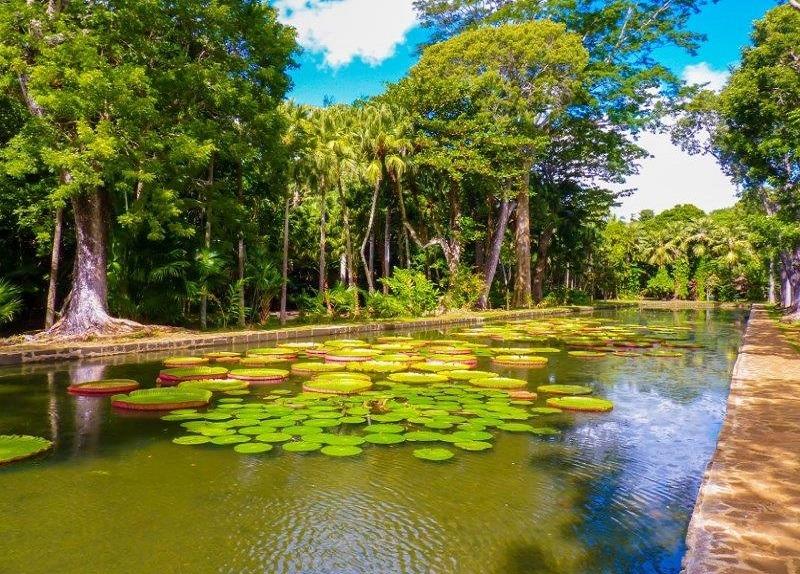
Many visitors arrive wanting to see the giant Victoria amazonica water lilies, and they are certainly one of the garden's most distinctive sights. Their huge circular leaves cover sections of the rectangular lily pond, creating one of the most recognisable botanical scenes in Mauritius.
But stopping at the water lilies would miss much of what makes Pamplemousses interesting. Walk farther and the experience changes between avenues of palms, old tropical trees, lotus ponds, medicinal plants and a spice collection with links to Mauritius' history as an important centre for cultivating cloves, nutmeg and other valuable plants.
The garden's history is part of the visit. The Mon Plaisir estate was used for plant cultivation in the 18th century, and Pierre Poivre later developed it as a botanical garden and centre for introducing plants from different parts of the world. Today, the garden remains both a visitor attraction and a plant conservation collection.
This is a place to explore slowly rather than rush from one photo stop to another. Around 1.5–2.5 hours works well for most visitors, while anyone particularly interested in plants, history or photography may want longer.
Pamplemousses is particularly suited to couples, families, photographers, older travellers and anyone interested in gardens, history or tropical plants. Travellers looking mainly for adrenaline activities or a fast-paced attraction may find its slower rhythm less appealing.
Combine Pamplemousses Botanical Garden with nearby viewpoints and the wider Mauritius landscape for a more rewarding day.
Easy viewpoint
Start with the established viewpoint and get context for the highland landscape.
Main experience
Make this place the central stop, with enough time to explore without rushing.
You are here ↑Panoramic stop
Continue the nature theme with broad views across protected forest and valleys.
Optional extension
Keep the visit simple: allow enough time, prepare for local conditions and pair it with nearby stops that suit your day.
The giant water lilies attract most of the attention, but the palm avenues, spice collection and mature tropical trees reward visitors who explore farther.
This gives you enough time to walk at a relaxed pace, photograph the main sights and notice plants you would otherwise pass without seeing.
A guide or careful reading of the plant information can turn unfamiliar trees and spices into a much more meaningful experience.
The visit involves moving between different parts of a large outdoor garden rather than viewing everything from one compact area.
Yes, especially if you enjoy nature, photography, history or a slower cultural experience. The giant water lilies are the most recognisable feature, but the palm avenues, spice plants, old trees and historical background add much more to the visit. It is particularly useful for balancing a Mauritius itinerary dominated by coastal activities.
Allow roughly 1.5–2.5 hours for a comfortable visit covering the principal ponds, palm avenues and botanical collections. A quicker walk is possible, but the garden makes more sense when you have time to read signs, look at individual plants and explore beyond the famous giant water-lily pond.
The garden is in the village of Pamplemousses in northern Mauritius, northeast of Port Louis. Visitors can reach the area by road using a car or taxi, and public bus connections also serve Pamplemousses. If you are touring the north, it can easily form part of a day that includes Port Louis or Grand Baie.
Continue exploring nearby Mauritius places instead of ending your journey at a single attraction.
Connect places, viewpoints, beaches and activities into a fuller north Mauritius day.
Its northern location also makes it easy to build into a wider day. Port Louis, Grand Baie and other attractions in northern Mauritius can be combined with the garden without making Pamplemousses feel like an isolated detour.
Natural setting
Walking or outdoor exploration
Landscape and vegetation
Extend the day into the southwest for more scenery and major visitor attractions.
Combine the garden with Port Louis, Grand Baie or another northern stop rather than making a long journey for only one attraction.
It can be a good family visit, particularly for children interested in unusual plants, giant water lilies, large trees and giant tortoises. The experience is mainly about walking, looking and discovering rather than rides or organised entertainment, so children who enjoy nature are likely to get more from it than those expecting an activity park.
Admission is paid, but prices can change, so check the current official information rather than relying on an old online rate. Bring comfortable walking shoes, drinking water and suitable sun protection. A camera or phone is useful for the water lilies, palms and tropical plants, but allow time to enjoy the garden beyond photographs.
Port Louis works particularly well if you want to combine botanical and city experiences. Grand Baie, Cap Malheureux and other northern attractions can also fit into the same regional itinerary. Rather than trying to cover the entire north in one day, choose two or three stops and leave enough time to explore each properly.
It suits nature lovers, families and travellers who enjoy outdoor discovery.
Check weather, trail or access conditions and whether the natural terrain suits your ability.