3 Day Mauritius Itinerary: The Perfect Short Stay Guide (2027)
Mauritius 3 Day Itinerary 2027: Short-Stay Highlights Without Rushing
Last checked: 20 September 2026.
Three days in Mauritius is a stopover, a long weekend from Réunion or South Africa, or the tail end of a longer trip. It is a real holiday if you treat it as one corner of the island. It is a bad one if you try to treat it as a small version of a week.
So this plan does one thing properly: one base, one outstanding day out, and two half days shaped by your flights. It also tells you plainly what to leave for next time, which is the part that actually makes three days work.
Is 3 Days Enough in Mauritius?
Not for the island — for one corner of it. Three days usually means two nights and one full day out, so plan for one base, one great day and two half days shaped by your flights. The south-west gives you the most in that single day: Le Morne, Chamarel and the coast. Everything east or north of that belongs to a longer trip.
Quick Facts
— Days — 3 days. Two nights in most cases, three if your flights allow it. That difference decides the whole plan
— Bases — 1. The south-west or the west. Moving hotels at this length is not a trade-off, it is a mistake
— Full days out — 1 if you have two nights, 2 if you have three
— Route days — 1 on two nights: Day 2 is the plan and Days 1 and 3 belong to the flights. 2 if you have a third night
— Boat days — 0 by default. A full-day boat does not fit around two transfer days
— Driving intensity — low overall, with one medium day. Two airport transfers and one winding loop, and that is the whole car budget
— Best for — stopovers, long weekends, and anyone adding Mauritius to a Réunion or South Africa trip
— What gets cut — Île aux Cerfs, Port Louis, the north, the Le Morne summit, and a second hotel
3-Day Mauritius Itinerary at a Glance
Two nights, one base, one full day — the common case, and the one costed in the budget section below. A third night adds a second full day and one more night of the tourist fee, and changes nothing else. Distances are the end-to-end figures from our route pages and do not include the leg back to your hotel. Driving intensity is relative to Mauritius, where almost nothing is more than about ninety minutes away.
— Day 1 — Arrival and the nearest beach. Transfer, check in, swim, eat locally. Base: your one base, south-west or west. Stops: none. Driving: airport transfer only.
— Day 2 — Le Morne, Chamarel and the south-west. The one full day, and the best one on the island for the time you have. Base: same. Stops: 2 core plus a viewpoint. Driving: medium, all of it winding.
— Day 3 — Shaped by your flight. A beach morning, or the south-coast road to the airport if you fly in the evening. Stops: none, or up to two on the transfer. Driving: airport transfer.
— With a third night, Day 3 becomes a second full day: a west-coast lagoon trip, or the south-east. Both are set out under Day 3 below.
Three days is the length where flight times stop being a detail and become the itinerary. A morning arrival and an evening departure gives you close to two usable days. A late arrival and a morning departure gives you one. Check both before you book anything else.
Best Area to Stay for This Itinerary
One base. There is no version of a three-day trip where changing hotels pays for itself — you would spend a quarter of your usable time packing and driving. The only question is which corner you sleep in, and at this length that decision is the itinerary.
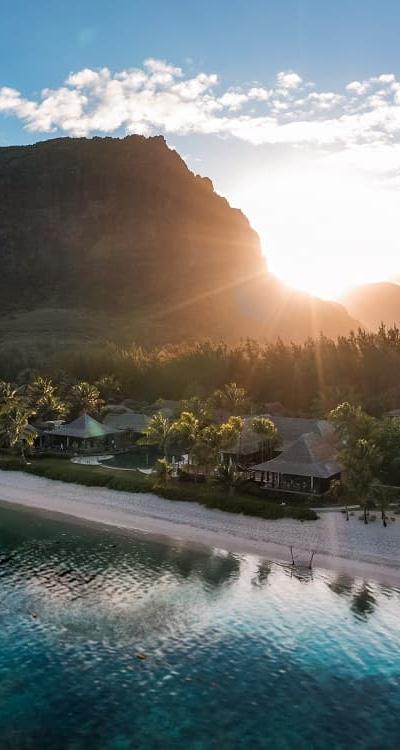
The south-west: Le Morne, La Gaulette or Bel Ombre
— This is the default. Day 2 starts at your door rather than an hour from it, and if you fly out in the evening on Day 3, the road to the airport runs along the south coast, so the transfer can carry a stop or two.
— It is the most dramatic corner of the island — the mountain, the lagoon and the cliffs are all within a short drive, which matters when you only get one day out.
— The cost is the airport transfer: published tariffs put Le Morne and Bel Ombre at around €45 against €35 for the west-coast resorts, and the drive is longer at both ends.
The west: Flic en Flac or Tamarin
— Take this if you want restaurants and a shorter transfer. Flic en Flac has the widest choice of places to eat within walking distance of anywhere on this plan, and the airport run is shorter and cheaper.
— It adds about half an hour each way to Day 2, which on a one-day trip is not nothing.
— Honest verdict: the south-west is the better base for the itinerary. The west is the better base for the evenings. On two nights, pick the itinerary.
Where not to stay for three days
The north. Grand Baie is excellent and it is the wrong choice here: it is the far end of the island from the airport, so you would spend the longest regular drive in Mauritius twice, out of three days, and Day 2's scenery would be two hours away before it started. The east has the same problem in a different direction. If the north or Île aux Cerfs is the reason you are coming, you want a longer trip and a different base — see the Continue Planning section at the end.
Before You Start: Car, Driver, Transfers or Tours?
At three days the maths is different from a longer trip, because you only need transport on one real day.
— Driver for the day, plus two transfers. The strongest option at this length, and the one most people should take. You need a car on Day 2 and essentially not otherwise, so hiring one for three days to use it once rarely pays. Agree the price and the route before you set off — taxis here are rarely metered, and a full day with a driver is priced differently from an airport transfer.
— Hire car. Still reasonable if you want the freedom on Day 1 and Day 3, or if you are staying a third night. Driving is on the left. Main roads and the motorway are good; the Chamarel roads are narrow and winding. Petrol is a fixed national price — Rs 70.65 a litre, effective 15 August 2026 per the State Trading Corporation — so fuel over three days is negligible.
— Transfers only. Published 2026 tariffs are per vehicle, not per person: around €35 for a sedan to Flic en Flac, about €45 to Le Morne or Bel Ombre, and around €55 for a minivan. Two of those plus a day driver is a complete transport plan for this trip.
— Organised excursions. Mostly the wrong shape here. Full-day boat trips run roughly 09:00 to 15:00, which needs a day with no flight at either end — so on two nights there is nowhere to put one without losing Day 2, and only a third night makes it possible.
— Buses. Cheap, from around Rs 12, and genuinely interesting — but on a three-day trip they will cost you the day out.
Day 1 — Arrival, One Base, the Nearest Beach
Why this day matters: because whatever you try to add to it, you will do badly. Most long-haul flights land in the morning after an overnight, and the airport is in the south-east, so there is a transfer between you and your hotel before anything else happens.
Clear the airport, complete the transfer, check in. Then find the nearest swimmable water and get in it. Eat somewhere local rather than at the hotel, and go to bed early — tomorrow is the day you came for.
— Stops and distance: no route today. Airport transfer only.
— Must do: check in, swim, eat locally, sleep.
— Optional add-on: a sunset walk along the coast road, which is also how you find out what is within walking distance for dinner.
— Driving: the transfer only. Allow longer than the map suggests, particularly to the south-west.
— Plan B: if it rains, this is the best of the three days for it to happen — and the only one with nothing at stake.
Day 2 — Le Morne, Chamarel and the South-West: The Day You Came For
Why: this is the most scenically dense corner of Mauritius, everything in it is within a short drive of everything else, and no other single day on the island gives you as much. It is also the answer to the question most short-stay visitors are actually asking — yes, Le Morne and Chamarel work as one day.
The Chamarel Seven Coloured Earth Geopark covers the coloured dunes, a tortoise enclosure and the waterfall viewpoint in about an hour; resident and non-resident rates differ and are only shown inside the booking system, so check before you go. Add one viewpoint over the coast on the way up or down — the road between Le Morne and Chamarel is the scenery, not just the route to it. If you want a third stop, the Black River Gorges National Park viewpoints are free and five minutes off the road — the view, not the trail. The trail below them takes around two and a half hours, which does not fit alongside Chamarel and Le Morne; leave it for the hiking variant further down. Both park information centres run roughly 07:00 to 17:00 on weekdays and from 09:00 at weekends.
Le Morne Brabant is a UNESCO World Heritage cultural landscape and the most recognisable mountain in Mauritius. Seeing it, walking the beach beneath it and photographing it from the coast road costs nothing and takes an hour. The summit hike is a different proposition — free to access, but about 3.5 to 4.5 hours return over roughly 5 to 8 km, with a technical, exposed upper section steep enough to need your hands and a guide strongly recommended, at around Rs 2,000 to 2,500. On a three-day trip the hike is the whole day and Chamarel does not happen. Do not attempt it in heavy rain or on wet rock.
— Stops and distance: 2 core stops plus a viewpoint — Chamarel geopark, Le Morne from the coast, and one stop for the view between them. Our nearest mapped route, Roadtrip South West to South East, covers this cluster in 7 stops over 91.5 km end to end, but that route continues east past the airport; from a south-west base you are driving a much shorter loop.
— Must do: Chamarel and the Le Morne coast road. That is the day.
— Optional add-on: one Black River Gorges viewpoint, which is a stop rather than a walk — or the Le Morne summit instead of everything else. Not both, and not in addition.
— Lunch: Chamarel village. This is the part of the island where a booked table saves you an hour.
— Driving: medium in distance, high in effort. The interior roads are narrow and winding, and the same roads take you back.
— Plan B: the interior gets around six hours of sunshine a day against 7.5 to 8 on the coast, per the Mauritius Meteorological Services, so cloud here is normal and does not ruin the coloured earth. Actual rain is different: the plateau holds it longer than the coast, and rain ends the hike entirely.
Day 3 — Shaped by Your Flight
Why: because the most common way a three-day trip goes wrong is booking something into departure day. What Day 3 can hold is decided entirely by when you fly, so decide that first and then pick from the list below.
Morning or early-afternoon flight
Breakfast without hurrying, one last swim, pack, go. Check your late check-out options and when the meal plan ends — it frequently stops at breakfast. From the south-west allow more time to the airport than the distance suggests. Plan nothing that has a schedule.
Evening flight
There is a south-coast road to the airport as well as the motorway, so the transfer can carry a stop or two: Bel Ombre, and the Gris Gris cliffs at Souillac, where the open ocean hits the rock with no reef to stop it. Three conditions before you plan it. Check out is usually late morning, so confirm a late check-out or accept that your luggage spends the day in the car. Work backwards from the airport, not forwards from the hotel: fix the time you need to be at check-in, subtract the direct transfer, and only spend what is left. And be clear-eyed about the road — that coast is our Roadtrip South route, 6 stops over 95.1 km, which the route page runs as a full day from 09:00 to 17:00, so you are taking a slice of a full day, not a shortcut. Two stops at most, agreed with your driver in advance, abandoned without hesitation if you are behind. Do not go past the barriers at Gris Gris. If your base is Bel Ombre, that is one stop already, so make Gris Gris the only addition.
If you have a third night
Day 3 becomes a second full day, and there are two good answers. The lagoon: a west-coast catamaran from Black River to Île aux Bénitiers and Crystal Rock — a published example runs €64 per adult and €44 per child aged 3 to 11, under-threes free, departing 09:00 and returning around 15:00, with breakfast and a barbecue lunch on board, checked 20 September 2026. These trips pass the Tamarin bay dolphins, and the rules there are stricter than the marketing suggests: under the Tourism Authority (Dolphin and Whale Watching) Regulations 2012, watching is permitted only between 06:00 and noon, and watching combined with swimming with dolphins only between 06:00 and 09:00. A boat leaving at 09:00 is a dolphin-viewing trip, which is what the operator quoted above describes. Treat a mid-morning dolphin swim as a reason to book elsewhere. The south-east: Mahébourg, Blue Bay and Pointe d'Esny, which is our Roadtrip South East route at 5 stops over 56.9 km. That figure is the loop itself; from a south-western base add the run across and back, which is the larger part of the day. It is the weaker of the two options here for exactly that reason — take it if the lagoon is out for sea state, or if the marine park is what you came for.
— Stops and distance: none by default. Up to two on the transfer with an evening flight, or a full route day with a third night.
— Must do: nothing that has a schedule, unless you have the extra night.
— Driving: the airport transfer, plus whatever you choose to add to it.
— Plan B: none needed, which is the point.
What to Skip on a 3-Day Trip
This is the section most short-stay guides leave out, and it is the one that makes the plan work. None of the following is a bad thing to do. They are all bad things to do in three days.
— Île aux Cerfs. A full-day boat from Trou d'Eau Douce on the east coast, which is the far side of the island from the south-west before the boat even starts. It costs you the day out and half of another. It belongs to the seven-day plan, which moves to a second base in the south-east specifically so that this day works.
— Port Louis. The capital rewards a proper day — our 1 Day in Port-Louis route runs 6 stops over 6.5 km on foot — and an hour bolted onto a driving day does it no favours at all.
— The north. Pamplemousses, Grand Baie and Cap Malheureux are a full day from a south-western base, and the day you would spend getting there is the day you would otherwise spend at Chamarel.
— The Le Morne summit, unless it is the reason you came, in which case it replaces Day 2 rather than joining it.
— A second base. At three days, moving hotels costs more than it can possibly return.
— Anything at all on departure day that involves a booking, a boat or a schedule.
Alternative Routes by Travel Style
These are modifications to the plan above, not separate itineraries. The single base and the empty departure day stay in all of them.
Couples and honeymooners
Base at Le Morne or Bel Ombre and keep Day 2 exactly as it is — it is the most dramatic day available at this length. If you have a third night, take the lagoon rather than the south-east, and consider a private charter over the shared catamaran: a private half-day runs around €465 for the boat before the per-person lunch supplement, against €64 per adult shared with breakfast and lunch included. For two people that is roughly 3.6 times the headline price for half the time on the water, and more than that once the lunch supplement is added; what you are buying is the route and the absence of forty strangers.
Families with children
Base in the west rather than the south-west — shorter transfers at both ends, more choice for dinner, and calmer swimming close by. Keep Chamarel on Day 2, where the tortoises and the short walks work with most ages, and skip the summit hike entirely. Note the €3 per night tourist fee applies to everyone aged twelve or over, is collected at check-in and is not in the room rate. With a third night, the west-coast catamaran charges €44 for a child aged 3 to 11 against €64 for an adult, under-threes free — and use life jackets for children on any boat, whatever the operator offers.
Active and hiking travellers
Give Le Morne its own Day 2 and accept that Chamarel goes. It is 3.5 to 4.5 hours return, the upper section needs a guide, and with the drive it is the whole day. If you would rather have a trail than a summit, the Macchabée forest loop or the Mare aux Joncs waterfall walk in Black River Gorges are both around three hours and moderate, and either leaves you Chamarel in the afternoon. The Parakeet Trail is a seven-and-a-half-hour hard route and has no place in a three-day trip. Trails are free, but the park information centres shut in the late afternoon and being on the wrong side of a closed gate is a real problem — check the day's hours on arrival.
Resort-first and slow travel
Do Day 2 as a half day — Chamarel in the morning, back by mid-afternoon — and give the rest to the hotel. Two nights at one property with one good morning out is a completely legitimate version of three days in Mauritius, and a better one than seeing the island through a windscreen. This is also the version that survives bad weather best, because almost nothing in it is scheduled.
What to Book in Advance
— The hotel, with the room configuration confirmed in writing. One base for two nights means getting this right matters more than usual.
— Airport transfers, both of them, unless you are picking up a car at the airport.
— A driver for Day 2, if you are not driving. Ask for a day rate rather than assuming the transfer tariff applies, and agree the route.
— A restaurant table at Chamarel for Day 2 if you want lunch without a wait.
— A Le Morne guide, if the summit is the reason you are coming.
— The boat, only if you have a third night. Full-day trips sell out and move for weather, and a three-day trip has nowhere to move them to.
— Travel insurance, bought when you book rather than before you fly, so cancellation is covered for the whole period.
— The Mauritius All-in-One Travel Digital Form, completed before departure at the official government portal. Check the current requirements for your nationality.
What to Do if It Rains or the Sea Is Rough
Three days has no spare day, so the honest advice is not a swap plan — it is choosing a plan that does not need one. That is most of the reason Day 2 is a land day.
— Rain on Day 2 → go anyway. Cloud over Chamarel does not ruin the coloured earth, and the geopark, the viewpoints and the coast road all work in poor weather. Only the summit hike is genuinely cancelled by rain.
— Rain on Day 1 or Day 3 → nothing is lost. Neither day has anything in it.
— Do not drive inland to escape rain. The central plateau holds it longer than the coast does.
— A booked boat on a third night's day → ask the operator what happens to a weather cancellation before you pay. On a short trip there is no second slot.
— After heavy rain, lagoon clarity drops and snorkelling the next day disappoints.
— Indoor options that are genuinely good near this base: Curious Mauritius at Chamarel, and L'Aventure du Sucre at Beau Plan if you are heading that way.
— February and March are the wettest months and October the driest, per the Mauritius Meteorological Services. Annual rainfall averages 2,010 mm, of which 1,344 mm — about 67% — falls between November and April.
— Cyclone season runs roughly November to May. A Class I warning is issued not less than 36 and not more than 48 hours before gusts of 120 km/h are expected, so you normally have more than a day's notice. Use it: follow the instructions your hotel and the national authorities give, and expect flights, excursions and shops to stop well before the wind arrives. On a three-day trip a cyclone warning is the trip.
Driving Times and Route Planning Tips
Mauritius is about 65 km by 45 km and almost nothing is more than roughly ninety minutes from anywhere else. On a longer trip that is reassuring. On three days it is a trap, because ninety minutes each way is most of your only full day.
— Check live drive times for your specific route on the day. Published estimates age badly and roadworks are common.
— Both airport transfers are the biggest driving blocks in the trip. Build them in as travel time rather than discovering them.
— The motorway runs roughly north to south through the middle of the island and is the fast way between coasts. The coast roads are slower and much better looking.
— Allow more time than the distance suggests through the interior around Chamarel — the distance is short and the road is not.
— Avoid driving unlit rural roads after dark, particularly after a long day. If you stay at Le Morne for the sunset, take the main coast road back and take it slowly.
— Agree taxi fares before you get in. Metered taxis are uncommon.
Budget Planning for This Itinerary
Flights and accommodation dominate any Mauritius budget and both move with the season, so no honest guide quotes a single figure. What can be pinned down are the on-island costs, and on a three-day trip the list is short. These were checked on 18 and 20 September 2026 and carry their dates in the sources list.
— The tourist fee catches people out. Mauritius has charged €3 per person aged twelve or over, per night, since 1 October 2025. It is collected at check-in and is not included in the room rate. Children under twelve are exempt. For two people over two nights that is €12.
— Airport transfers are per vehicle, not per person: about €35 to Flic en Flac, €45 to Le Morne or Bel Ombre, around €55 for a minivan. You need two, and on this trip they are the main transport line.
— A driver for Day 2 is the other one. Ask for a day rate rather than the airport tariff.
— Chamarel is the only paid attraction in the core plan. Resident and non-resident rates differ and are only shown inside the booking system.
— Le Morne, the beaches, the coast road, Black River Gorges and Gris Gris are all free.
— Eating locally is cheap. A meal in an inexpensive restaurant is around Rs 300, roughly €5.40 at the rate below.
— Petrol is Rs 70.65 a litre. If you do hire a car, one loop day will barely register.
— The boat, if you have a third night, is the biggest single discretionary line at €64 per adult and €44 per child aged 3 to 11.
Our full cost guide breaks down what a Mauritius trip actually costs, with the flight and accommodation lines set out properly. Currency conversions here use the Bank of Mauritius indicative selling rate of 18 September 2026: €1 = Rs 55.48.
3-Day Mauritius Itinerary FAQs
Is 3 days enough in Mauritius?
Enough for one corner of the island, not for the island. Two nights gives you one full day out plus two half days shaped by your flights. Spend the full day in the south-west on Le Morne and Chamarel, stay in one hotel, and leave the north, the east and Île aux Cerfs for a longer trip.
What should I prioritise in Mauritius for 3 days?
Le Morne and Chamarel, done as one unhurried day from a south-western base. It is the densest scenery on the island and the only cluster where you are not spending half the day driving between things. After that, prioritise swimming near your hotel over adding another region.
Where should I stay for a 3-day Mauritius trip?
The south-west — Le Morne, La Gaulette or Bel Ombre — because your one full day starts at the door and an evening departure can go to the airport along the south coast. The west, Flic en Flac or Tamarin, is the alternative if you want more restaurants and a shorter transfer. Not the north.
Can I visit Le Morne and Chamarel in one day?
Yes, comfortably — they are close enough that Day 2 of this plan does exactly that, with a viewpoint stop between them. What you cannot do is add the Le Morne summit hike. That is 3.5 to 4.5 hours return on its own, so it replaces the day rather than joining it.
Should I rent a car for 3 days in Mauritius?
Often not. You need transport properly on one day, so two airport transfers plus a driver for Day 2 is usually simpler and sometimes cheaper than three days of hire. Rent if you want freedom on the half days, if you are staying a third night, or if you would rather not negotiate a day rate.
Can I visit Île aux Cerfs on a 3-day trip?
Only by giving up Le Morne and Chamarel. It is a full-day boat from Trou d'Eau Douce on the east coast, which is the far side of the island from the south-west, so it consumes your one full day and part of another. If Île aux Cerfs is the reason you are coming, it belongs to the seven-day plan, which bases in the south-east for the second half of the week.
What should I skip on a 3-day trip?
Île aux Cerfs, Port Louis, the north coast, the Le Morne summit, a second hotel, and anything booked on departure day. Each is worth doing and none of them fits. The trip works because of what is left out, not because of what is squeezed in.
How much driving is realistic in 3 days?
Two airport transfers and one loop day. That is the entire realistic car budget. Anything beyond it and the holiday becomes a drive with stops, which is the specific failure mode of every three-day Mauritius itinerary that tries to cover four regions.
Continue Planning Your Mauritius Trip
More time? Five days still uses one base, moves it to the west, and buys you a proper lagoon day and a second region. Seven adds a second base in the south-east, which is what finally makes Île aux Cerfs work. Ten adds a rest day, a full Port Louis day and a second boat day. None of them is this plan with days bolted on — they are different routes, and each has its own page.
Explore this topic
Get new Mauritius guides by email
Join the Mauritius Explored list for trip ideas, practical updates and downloadable planning help.

Written by the Mauritius Explored editorial team, a Mauritian travel guide focused on beaches, activities, local places, and practical island planning.
Local Mauritius travel research, itinerary planning, and destination coverage since 2011.