Birds of Mauritius: Rare Endemics & Where to See Them
Mauritius Is the Land of the Dodo, But Its Living Birds Tell the Better Story
Last checked 4 October 2026
Every visitor arrives knowing one Mauritian bird, and it has been dead for three hundred years. That is a shame, because the island is now known among conservationists for the opposite reason. In 2023 BirdLife International wrote that Mauritius "is now recognised as saving more species from extinction than any other country" (BirdLife International). The dodo is the island's most famous bird. It is not the most interesting one.
The quick answer
Mauritius has nine endemic bird species, found nowhere else on earth, and several were reduced to double or single figures within living memory. The Mauritius kestrel fell to four known birds in 1974; the pink pigeon to nine in 1990. Both survive today because of sustained conservation work. The best places to see them are Black River Gorges and Pétrin in the south-west, Ile aux Aigrettes in the south-east, and Bras d'Eau in the north-east, with September to November the strongest window.
Birds of Mauritius at a glance
The island's bird list is short: roughly 120 recorded species including vagrants and introduced birds (African Bird Club). Isolation is the reason — few species arrived, those that did evolved into forms found nowhere else, and that left them defenceless when the forests were cleared and rats, cats, monkeys and pigs came ashore. The National Parks and Conservation Service counts nine endemic bird species, naming the pink pigeon, Mauritius kestrel and echo parakeet as the flagship three (NPCS). Eight are endemic at species level; the ninth, the paradise flycatcher, is a Mauritian subspecies of a bird shared with Réunion.
The rare birds to know before you go
Each figure carries its date and says what it counts, because these numbers are easy to misread.
● Mauritius kestrel — Endangered. Around 250 birds island-wide, 2025, and in decline. Try Ferney Valley or a guided day in Black River Gorges. Breeds September to March.
● Pink pigeon — Vulnerable. An estimated 626 birds across eight managed sites, December 2025. Ile aux Aigrettes, Pétrin and the Lower Black River Gorges, all named by MWF as public sites.
● Echo parakeet — Vulnerable. Over 600 birds, 2025, described as stable. Black River Gorges and the Plaine Champagne road at dawn, or Ebony Forest.
● Mauritius olive white-eye — Critically Endangered, the hardest of them all. Just 38 birds on Ile aux Aigrettes in December 2025, declining; no current estimate for the mainland.
● Mauritius fody — Endangered. An estimated 183 birds on Ile aux Aigrettes, December 2025, down from over 400 around 2018. Males wear red from late August to early April.
● Mauritius cuckooshrike — a specialist target. BirdLife's 2024 assessment put the mainland population at no more than about 210 pairs. Brise Fer and Macchabée forest, with a guide.
Mauritius kestrel
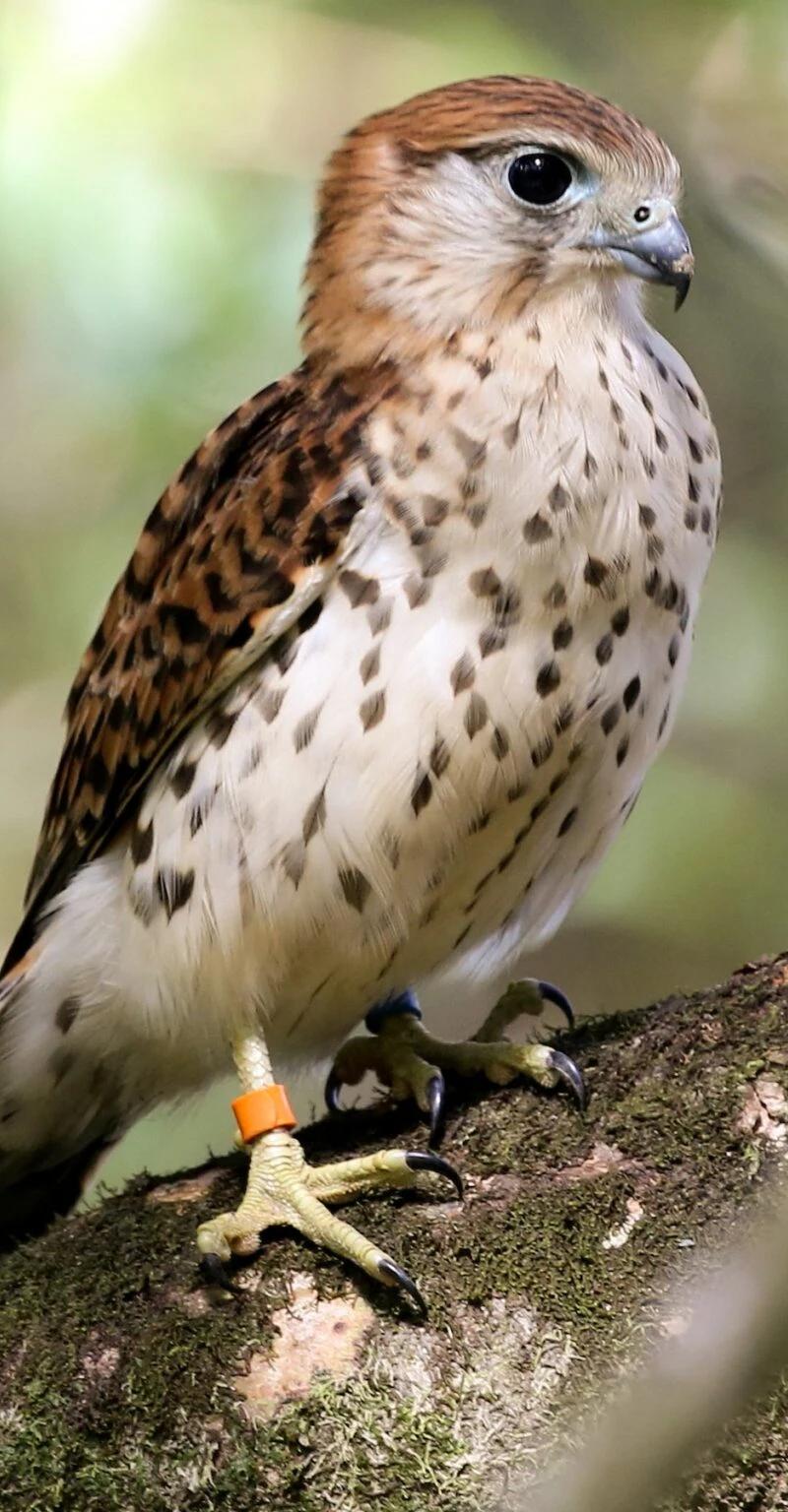
The bird that made Mauritian conservation famous, and the one whose story has turned most complicated. By 1974 four known birds were left, including a single breeding female (MWF, 2025). It was then the rarest bird in the world, and captive breeding, hand-rearing and predator-proof nest boxes took it to a peak of around 600 individuals.
The present is harder. MWF's 2025 report gives "an estimated population of around 250 birds" and states that "the Mauritius Kestrel is in decline, and serious efforts will need to be invested in the coming years to safeguard the species from extinction". It was downlisted years ago, then uplisted back to Endangered in 2014 as numbers fell. If you read that Mauritius has 600 kestrels, that is the historic peak quoted as current.
The eastern birds in the Bambou Mountains grew to roughly 50 pairs; the western population around Black River Gorges fell from 40 to 50 pairs in the mid-1990s to about 20 by 2021 (MWF). Those are pair counts, and no current split is published. Releases have been paused for three seasons to let the eastern population recover from years of egg and chick harvesting.
Pink pigeon
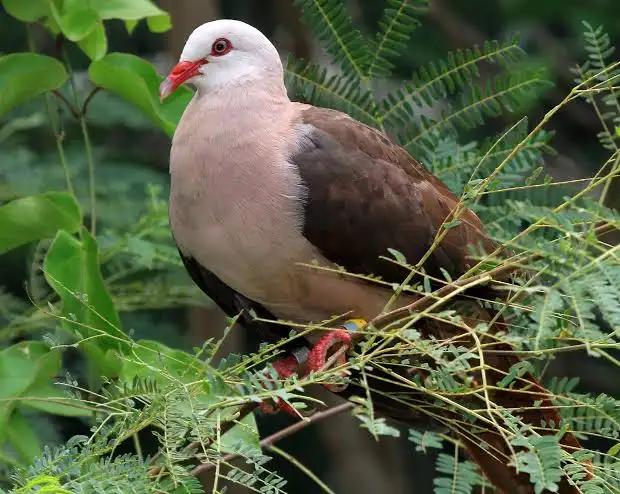
If the kestrel is the cautionary tale, the pink pigeon is the comeback. The wild population hit an all-time low of nine birds in 1990 (BirdLife International). By December 2025 MWF estimated "some 626 birds" across eight managed sites, with a record 164 young ringed that year (MWF, 2025). It was downlisted to Vulnerable in November 2018.
It is also the one rare endemic you can reasonably hope to see. MWF writes that several sites "are open to the public and the birds can easily be seen", naming Ile aux Aigrettes, Pétrin and the Lower Black River Gorges. A large, heavy, rust-and-cream pigeon with a pale pink head, it is unmistakable.
Recovered is not safe, and the reason is genetic. A 2022 study found the species "is rapidly losing its genetic diversity, and without help could become extinct in the next century" (Natural History Museum). MWF is importing diversity back, repatriating four males from Jersey Zoo in 2019 and four more in 2025. One current threat is mundane: at least 35 pink pigeons have been killed or injured by vehicles around Pétrin and Grand Bassin since October 2021.
Mauritius Paradise Flycatcher
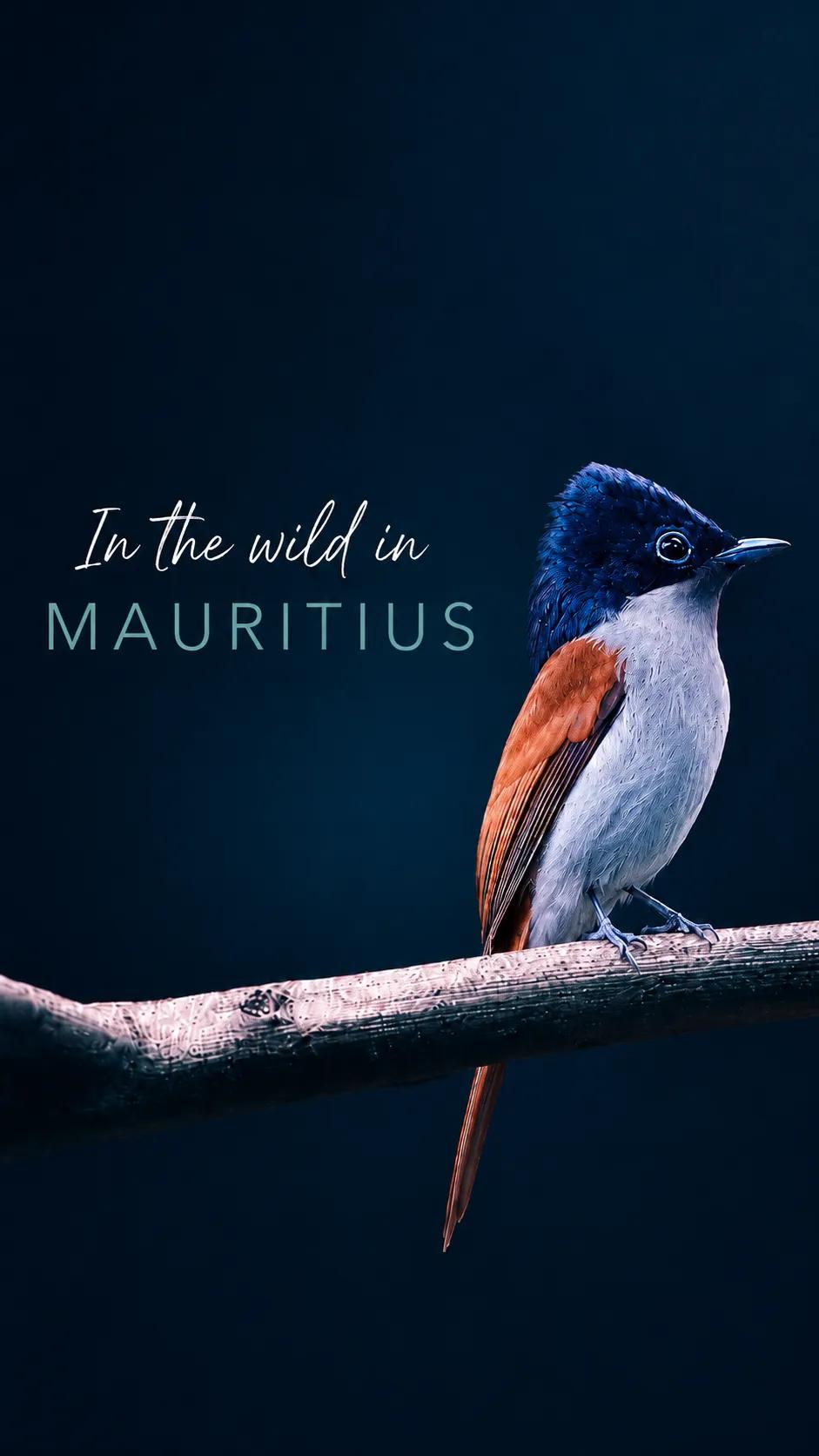
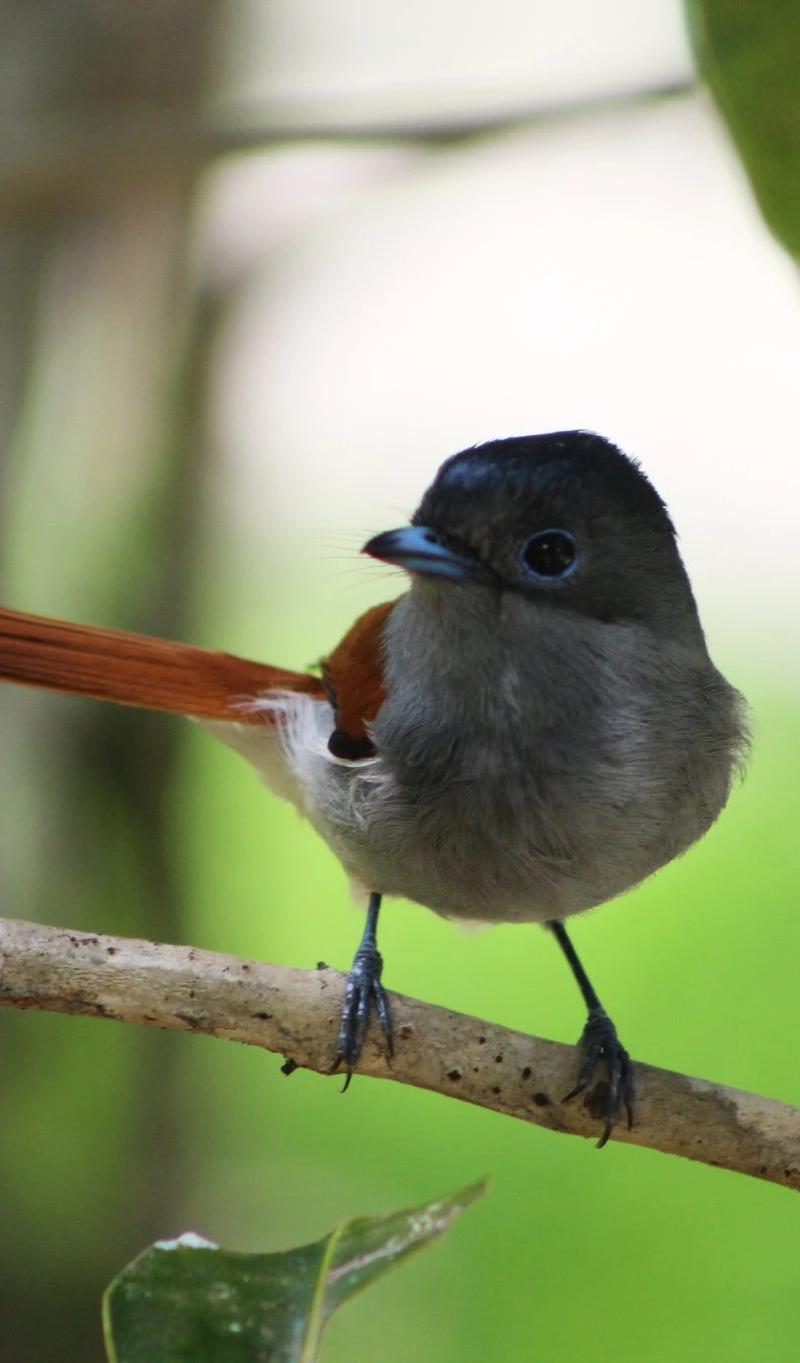
Known locally as the Coq de Bois, the Mauritius Paradise Flycatcher is one of the island’s quieter conservation stories. Unlike the Mauritius Kestrel, it never fell to just a handful of birds, but habitat loss and introduced predators reduced it to scattered forest populations. Older estimates place the Mauritius population at roughly 400–800 birds, although no recent island-wide census has replaced that range, so it should not be presented as a precise current figure. One of the best places to look for it is Bras d’Eau National Park, with other populations surviving in the south-west and around Black River Gorges. Conservation work has focused mainly on habitat protection and reintroduction: between 2016 and 2018, the Mauritian Wildlife Foundation released 48 birds into Ferney Valley, and later sightings suggest that at least some survived and bred there. Today, the species’ future depends more on protecting native forest, controlling invasive predators and restoring populations in former habitat than on intensive captive breeding. For visitors, Bras d’Eau is one of the most practical places to search for the bird, especially early in the morning.
Mauritius Straw-Tail
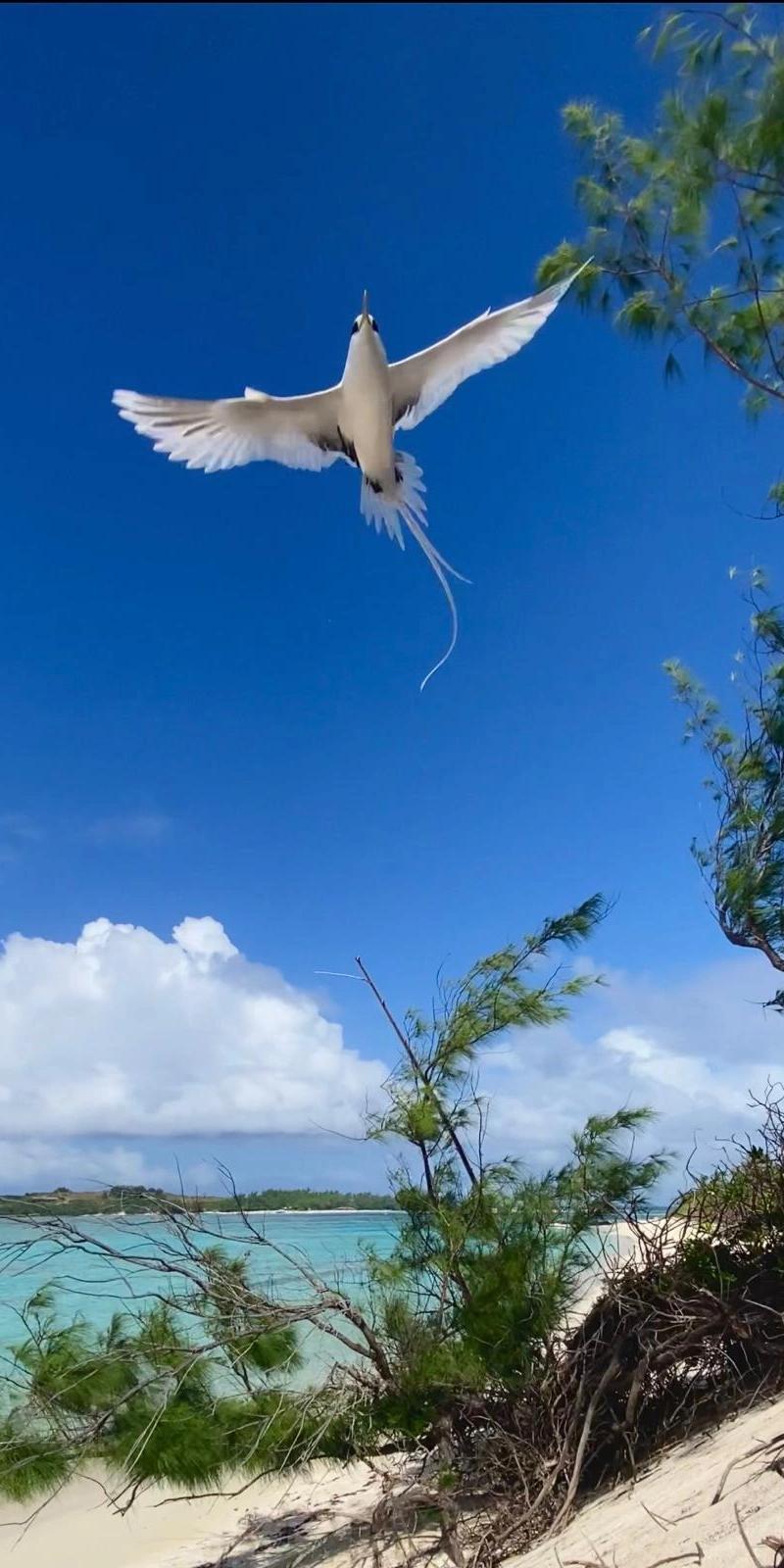
Mauritius Straw-tail — White-tailed Tropicbird — Better known in Mauritius as the Paille-en-queue, the White-tailed Tropicbird is one of the island’s most recognisable seabirds, identified by its bright white plumage and exceptionally long tail streamers. It is not endemic to Mauritius and is currently classed globally as Least Concern, with an estimated global population of roughly 400,000 mature birds, although the overall trend is believed to be declining. There is no reliable recent estimate for the number breeding specifically in Mauritius, so a local population figure should not be invented. Important breeding areas include protected offshore islands such as Round Island, where conservation work by the Mauritian Wildlife Foundation focuses on habitat restoration, invasive-species control and protecting seabird nesting areas. The bird can also be seen around offshore islets such as Coin de Mire and Île de la Passe, and sometimes along coastal cliffs. Unlike the kestrel, it is not the subject of an intensive single-species rescue programme; its protection depends primarily on safeguarding breeding islands and reducing disturbance. It can be seen year-round, with offshore boat trips and protected coastal areas generally offering the best chances.
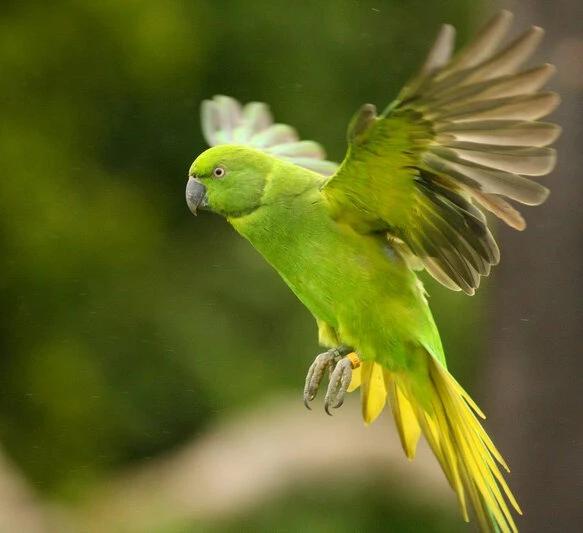
Echo parakeet
Mauritius once had several endemic parrots. One is left, and MWF calls it "the last endemic parrot of the Mascarenes". By the 1970s and 1980s fewer than about 20 survived in the Black River Gorges, making it the world's rarest parrot. MWF's 2025 report gives "over 600 birds", described as stable (MWF, 2025), and it was downlisted to Vulnerable in December 2019 (MWF). Note that MWF's own figure was over 800 in 2019 and over 700 in 2023, with no stated explanation for the change; over 600 is the current first-party number.
Telling it from the introduced ring-necked parakeet matters, because the common bird looks similar and is everywhere. Listen first: the ring-necked is high, fast and shrill, the echo lower and more measured, which works even on a flyover. Check the tail: the ring-necked trails a long thin streamer, the echo's is shorter, giving a chunkier, front-heavy shape. The echo is also about a quarter bigger and a deeper green. And consider where you are — inside Black River Gorges an echo is plausible, but in a hotel garden a green parakeet is almost certainly the introduced bird.
Protection includes nest boxes, supplementary feeding, disease research and predator control. The 2025 report names predation of chicks by crab-eating monkeys as "a significant issue in 2024/2025", and still lists the viral disease PBFD, which caused a serious outbreak in 2005, among the project's immediate challenges.
Mauritius olive white-eye
The rarest and most fragile survivor: a tiny, restless, yellowish-green bird with a white eye-ring, and Critically Endangered.
The number to quote carefully is the island one. MWF's 2025 report states the Ile aux Aigrettes population "is now (December 2025) 38 birds and is in a state of decline" (MWF, 2025). That is 38 birds on one 26-hectare islet, a reintroduced group held up by 22 feeding stations. It is not the species total. For the mainland birds in the upland south-west forests MWF publishes distribution rather than a count. No current public estimate exists for the species as a whole.
MWF attributes the islet decline to two causes together: house crows, now common there and "likely predating individuals of all ages", and accumulating inbreeding. A guided Ile aux Aigrettes tour is the best chance a visitor has, because the birds are concentrated, fed at fixed points and on a walkable trail. With 38 of them, it is not a guarantee.
Mauritius fody
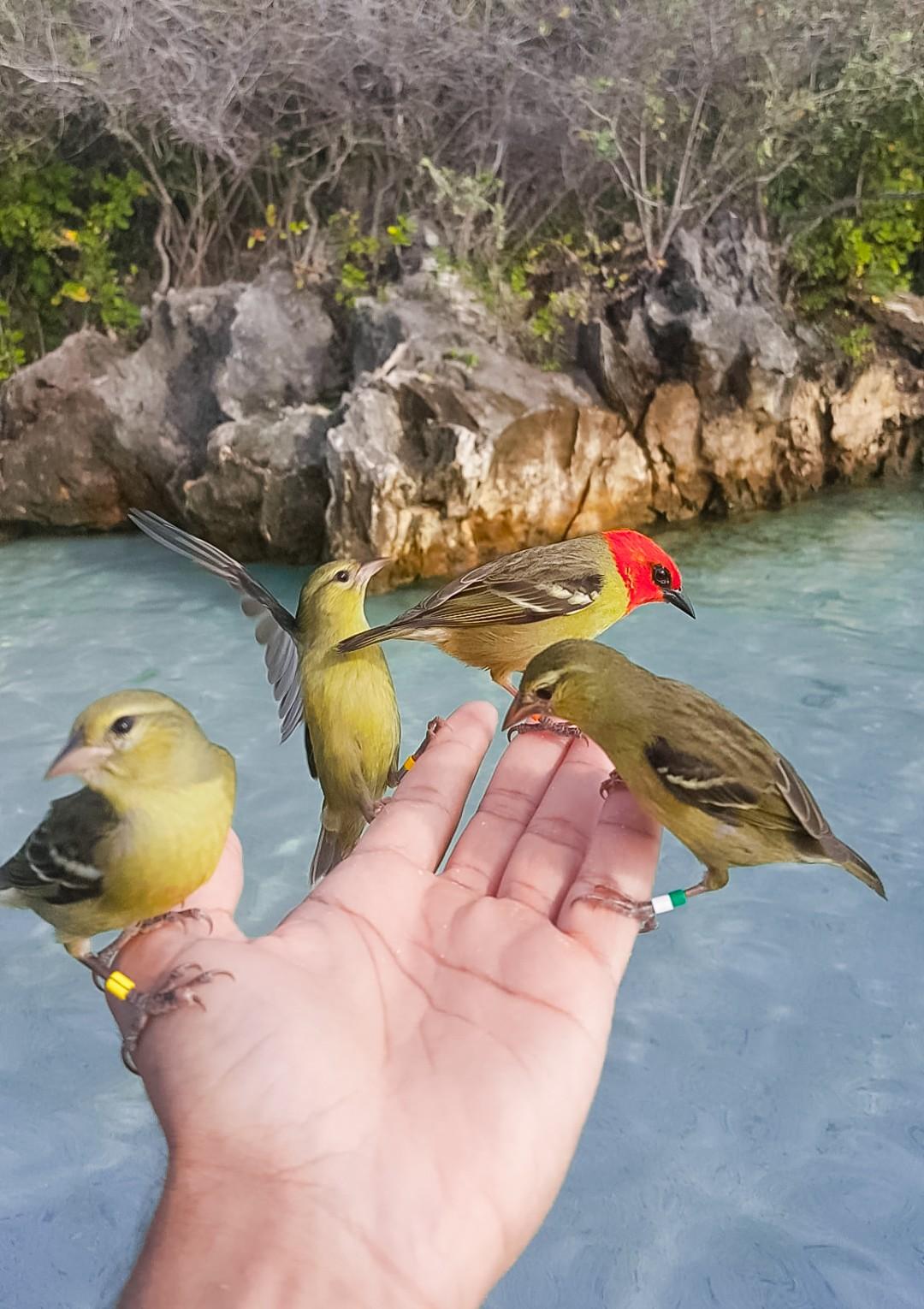
A small, sparrow-shaped bird whose breeding males are unmistakable: olive-brown with a vivid red head and breast. Females and non-breeding males are plain dull brown, so timing changes your odds. Males carry the red from late August to early April.
MWF's 2025 report gives "an estimated population of 183 (December 2025)" on Ile aux Aigrettes (MWF, 2025) — again one island population, and a steep fall from over 400 birds around 2018. A mainland population persists in the south-west forests, where MWF ringed a record 64 birds in 2025, but no current mainland total is published.
The cause is specific and ongoing. MWF reports that "approximately 25% of nests that were detected were destroyed by crows in 2025/2026" and that "at least 90 crows were roosting on Ile aux Aigrettes, this is the most crows ever observed". Asian house crows are introduced, and are currently the biggest problem on the island for both this bird and the olive white-eye.
Mauritius cuckooshrike
A specialist target: a quiet grey-and-brown forest bird that stays high in the canopy. BirdLife attributes past underestimates of its numbers to its "particularly low detectability" (BirdLife International).
BirdLife's consultation, which ran in October and November 2024, gave "a total mainland population of 210 pairs (420 mature individuals)" and called that "the maximum total population size possible for this species". It is a ceiling, not a best estimate, and it counts pairs and mature individuals rather than total birds. About 70 pairs are in the core Brise Fer and Macchabée area, one third of the mainland total. The consultation recommended listing it as Endangered, up from Vulnerable.
It is absent from the Bambou Mountains and has not been recorded at Ferney since 2021, and MWF has had no field staff assigned to it for two breeding seasons.
Other endemic birds visitors may see
● Mauritius grey white-eye — learn this one first. It is the only Mauritian endemic ranging beyond native forest into woodland and gardens, so it is the endemic you are most likely to meet, and it is grey-toned, lacking its Critically Endangered cousin's yellow-green wash. Any white-eye away from upland native forest is almost certainly this one. Least Concern.
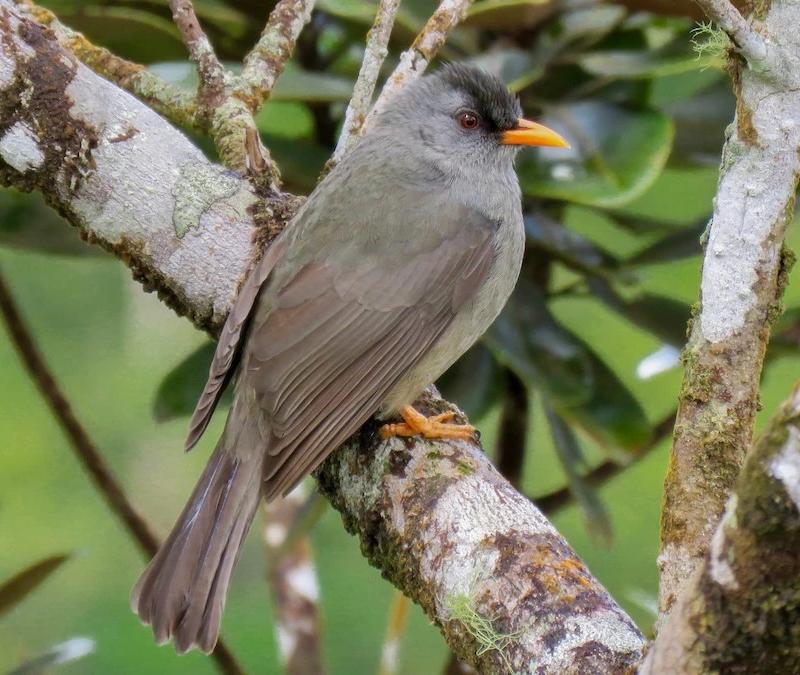
● Mauritius bulbul — a surprisingly large songbird at about 24 cm, greyish with a black crest and an orange-yellow bill. Vulnerable. No current public estimate exists; the most recent figure anywhere is 280 pairs from 1993, far too old to use. Check fruiting lantana thickets in upland native forest.
● Mascarene paradise flycatcher — the coq de bois. Expect no long tail streamers; this is the one member of its genus without them. Males have a black head, chestnut upperparts and a bright blue bill. Bras d'Eau is the place. Least Concern, but that covers both Mauritius and Réunion.
● Mascarene swiftlet — a small, fast, all-dark swift hawking insects over forest and gorges. A Mascarene regional native rather than a Mauritian endemic, and Near Threatened. No current population estimate exists.
● What you will actually see most of — introduced birds: red-whiskered bulbul, common myna, ring-necked parakeet, spotted dove, village weaver and red fody. Know that last one, because a bright red introduced weaver in a garden is often mistaken for the endangered Mauritius fody.
Where to go birdwatching in Mauritius: seven locations
These are not interchangeable. Forest endemics live in the south-west uplands, the two rarest passerines are easiest on a south-east islet, the flycatcher is a north-east bird, and the migratory waders are at a wetland outside Port Louis.
1. Black River Gorges National Park, Pétrin and Plaine Champagne
The core endemic forest zone, and the only place the three flagship birds overlap: 6,574 hectares, proclaimed on 15 June 1994, with some 60 km of trails (NPCS). Pétrin and Plaine Champagne are upland trailheads; Macchabée and Brise Fer are forest areas reached from Pétrin. MWF runs a guided bird walk from 7.30am, Monday to Saturday, four to five hours, price on request (MWF). One warning: MWF books from Pointe Jérôme in Mahébourg, across the island, and does not publish where the walk meets. See our Black River Gorges and Pétrin guides.
2. Ile aux Aigrettes
The best accessible bird experience in Mauritius, and the only realistic place for the two rarest passerines. A 26-hectare island 850 m off the south-east coast, a nature reserve since 1965, where MWF names pink pigeon, fody and olive white-eye alongside Telfair's skink and Aldabra giant tortoises (MWF). The ecotour is a guided trail of about 1.5 to 2 hours including the boat, at MUR 1,000 per adult at the public rate — published on MWF's FAQ page, not its tour page. Start times and the departure point are not published, so settle both when booking. See our wildlife tour guide.
3. Ebony Forest, Chamarel
A restored private forest and release site, and the most reliable paid option for several species at once. It lists pink pigeon, kestrel, echo parakeet and olive white-eye, and is honest that nowhere in Mauritius holds all nine endemics with a high probability of sighting (Ebony Forest). The bird tour runs three to four hours over 4.8 km, visits the release aviaries, starts at 9am and needs advance booking; Rs 2,500 per non-resident adult. Open 09:00 to 17:00 daily. See our Ebony Forest and Chamarel guides.
4. Bras d'Eau National Park
Mauritius' second terrestrial national park, 497.2 hectares, proclaimed on 25 October 2011 (NPCS). This is the place for the paradise flycatcher: government sources describe a viable population, and the Coq des Bois Trail, about 5 km return from the visitor centre, is named after the bird's Creole name. Look in shaded, still, closed-canopy interior rather than sunny edges. No hours, fee or guide service is published; we have no dedicated page for this park yet, but it features in places tourists rarely find.
5. Rivulet Terre Rouge Estuary Bird Sanctuary
The migratory shorebird site, and the one place here you cannot simply turn up to. A 26.4-hectare estuary at Mer Rouge on the edge of Port Louis, and Mauritius' first Ramsar wetland, designated in 2001 (Ramsar). NPCS has built a visitors' centre and a bird hide with telescope viewing (NPCS), but access is by prior arrangement only: the government's own site says only "For visits, please contact the National Parks and Conservation Services", on (230) 464 4053. Timing is published: "Best time to visit is between September to March at low tide" (Government of Mauritius).
6. Ferney Valley and the Bambou Mountains
The eastern kestrel landscape, near Mahébourg, and the best single place to try for the bird. Ferney runs guided nature tours of about two hours over 3 km, at 09:00 and 13:30 daily, booking mandatory, at Rs 1,150 per non-resident adult (Ferney). MWF records supplementary-feeding a wild adult female kestrel there during 2025. Two cautions: Ferney's former address, valleedeferney.com, no longer belongs to the reserve and now serves an unrelated gambling site, and the current site is ferney.mu. And Ferney's own page claims almost 600 kestrels, which is the species' historic island-wide peak.
7. The northern islets, for seabirds
MWF's half-day boat trip runs 08:00 to 13:00 or 12:30 to 17:30 with an MWF biologist, bookable two to three weeks ahead and dependent on sea conditions (MWF). This is a viewing trip, not a landing: MWF states that "landing is not permitted on Gunners Quoin, Serpent Island and Round Island". The birds MWF names are Round Island petrel, wedge-tailed shearwater, red-tailed and white-tailed tropicbirds, sooty tern, common and lesser noddy and masked booby, all seasonal. See our island hopping guide.
Best time of year and best time of day
There is no single best month, because the forest endemics, the breeding season and the migratory waders run on different calendars.
● September to November is strongest for endemic forest birds — Mauritian spring, when birds are territorial and vocal. See Mauritius in October and November.
● September to March is the migratory shorebird season at Rivulet Terre Rouge, best at low tide. NPCS gives the main season as October to March; the government's visiting guidance stretches it back to September.
● The Mauritius kestrel breeds September to March. Species context, not a promise of nests, and active nests must never be approached.
● Fody males wear red roughly late August to early April, which changes how easy they are to spot.
● Year-round works at the managed sites — pink pigeon, echo parakeet, fody and olive white-eye are present all year at Ile aux Aigrettes, Pétrin and the Lower Black River Gorges.
● Seabirds are season-dependent, and MWF publishes no month-by-month breakdown, so there is no universal best seabird month.
Time of day is not a preference but the whole game. Forest birds call and move in the first hours of light and upland heat builds later; roughly 6am to 9am is the window, which is why MWF's walk starts at 7.30am and Ebony Forest's at 9am.
One honest caveat: the best endemic birding overlaps the start of the rains, and the cyclone season runs from 1 November to 15 May. NPCS publishes no closure policy for its parks, so no official source will tell you what happens to trail access during a warning. Our summer guide explains the warning classes and the best time to visit page covers month-by-month weather.
Migratory shorebirds and Rivulet Terre Rouge
Six forest endemics are not the whole story. Mauritius sits on a migratory route, and each austral summer waders arrive from the northern hemisphere to feed on its tidal mudflats — a different kind of birdwatching, with telescopes and tide tables rather than canopy-craning. Rivulet Terre Rouge is the designated site and the reason Mauritius has a Ramsar listing at all, recognised for 14 regularly visiting migratory species. Whimbrel and common greenshank are the most frequently recorded; crab plover is the one that makes birdwatchers travel.
Seabirds and the northern islets
The islets north of Mauritius hold petrels, shearwaters, tropicbirds, noddies, terns and boobies, in combinations that shift with the season. The white-tailed tropicbird is the one most visitors notice without trying: a brilliant white bird with two long tail streamers, known locally as the paille-en-queue. The rest need the boat trip described above, and the rule there is absolute — you can sail among these islands, but you cannot land on the protected ones.
The extinct birds of Mauritius, beyond the dodo
The losses explain the urgency of everything above. Mauritius did not lose one famous bird; it lost a community of them, and the survivors are the remnant.
The dodo, and what actually happened
Europeans first recorded the dodo in 1598. The last widely accepted sighting was in 1662, by a shipwrecked Dutch sailor named Volkert Evertsz, whose account describes birds so unafraid they could be caught by hand, and who noted that they "can run very swiftly". That is a last recorded sighting, not an extinction date; the bird probably persisted unrecorded for years, and modelling and disputed later records push the likely end into the 1680s or 1690s.
The popular story, that sailors ate them all, is not what the evidence supports. Hunting began the decline, but the animals the ships brought ashore did the real damage: pigs and crab-eating macaques raiding ground nests are considered more severe factors, alongside the clearing of the lowland forest. The Natural History Museum also dismantles the caricature — the dodo was "relatively slender and quite agile", about 70 cm tall, and CT scans show an intelligence comparable to a modern pigeon (Natural History Museum).
Four more losses worth knowing
● Red rail — a flightless reddish-brown rail a little larger than a chicken, last recorded in 1693. Sir Thomas Herbert wrote in 1634 that if you "shew them a red cloth... with their utmost silly fury they will altogether flie upon it". That story is almost always misattributed to the dodo.
● Mauritius blue pigeon — a heavy pigeon in red, white and blue, which is why the Dutch called it the pigeon hollandais. The last confirmed specimen was shot in Savanne in 1826, and only three stuffed specimens survive anywhere, one in Port Louis.
● Broad-billed parrot — a large parrot with a disproportionately big head, a beak comparable to a hyacinth macaw's and a fixed crest. The last account dates to the mid-1670s.
● Mauritius owl — the island's only owl, about 60 cm long, reported in Savanne in 1837. By 1859 the naturalist George Clark wrote that "I believe there are no more remaining".
Totals are harder than they look, because published lists mix in Rodrigues and Réunion birds: Newton's parakeet was a Rodrigues bird and the Mascarene parrot a Réunion one. Well over a dozen Mauritian bird species are gone.
Two places let you meet them. On Ile aux Aigrettes, bronze sculptures by Nick Bibby, commissioned on the initiative of the biologist Carl Jones, stand along the visitor trail and include the dodo, red rail, broad-billed parrot, blue pigeon and scops owl (Gallery Pangolin). Walking past bronzes of the lost birds and then seeing living pink pigeons and fodies on the same island is the most efficient conservation lesson in Mauritius. MWF's current pages do not mention the sculptures, so confirm they are still there.
In Port Louis, the Natural History Museum holds the Thirioux dodo, found in a cave near Le Pouce in 1904 — the only dodo skeleton in the world assembled from a single individual bird (Hume and colleagues). Every other mounted dodo is a composite. Entry is free; hours are Monday, Tuesday, Thursday and Friday 09:00 to 16:00, Wednesday 11:00 to 16:00, Saturday 09:00 to 12:00, closed Sundays (Mauritius Museums Council). See our cultural places and Port Louis guides.
From extinction to comeback: how the conservation actually works
Mauritius matters for bird conservation not because its birds are rare but because of what was done about it. A 2025 study by Durrell, MWF, the National Parks and Conservation Service and the University of Oxford assessed ten species and concluded that "without conservation intervention, nine of the species assessed would likely have gone extinct by now" (Durrell), warning that if current efforts stopped those species could decline dramatically within ten years.
● Captive breeding and hand-rearing, when wild nests were failing.
● Reintroduction and translocation, creating a second population so one disaster cannot take the species.
● Nest boxes and supplementary feeding, where old trees no longer provide safe cavities and small populations need carrying through lean periods.
● Invasive predator control, against rats, crab-eating monkeys, cats and now Asian house crows.
● Habitat restoration, clearing invasive plants so native forest and native food return.
● Genetic management and disease monitoring, tracking inbreeding and watching for outbreaks like the 2005 one in echo parakeets.
● Long-term ringing, surveys and nest monitoring, the unglamorous foundation behind every number in this guide.
MWF and the National Parks and Conservation Service are the central organisations, with Durrell Wildlife Conservation Trust and other partners (Durrell). Three Mauritian birds have been downlisted on the IUCN Red List as conservation took effect: the pink pigeon twice, in 2000 and November 2018, and the echo parakeet in December 2019. But the record is not an unbroken run of triumphs, and the kestrel is the proof — downlisted once, uplisted back to Endangered in 2014, and now described by MWF as in decline. Gains here are real, and reversible. See our spring escapes and nature reserves guides.
Birdwatching experiences and mini-itineraries
If you want a guide rather than a self-drive morning, our curated endemic bird-watching walk is the bookable option: a slow-paced guided walk of three to five hours in the south. Four routings cover the rest of the island.
● Southwest endemic bird day. Pétrin or the Plaine Champagne road at first light for pink pigeon and echo parakeet, then the Black River Gorges viewpoints, then Ebony Forest late morning. The strongest day for endemics, and the only one that can plausibly add a kestrel.
● Southeast conservation day. A morning Ile aux Aigrettes tour for fody, olive white-eye and pink pigeon, then Mahébourg and Blue Bay. Best for families, and the only day that reliably delivers two threatened passerines.
● Port Louis and migratory birds day. Rivulet Terre Rouge at a low tide, arranged in advance with NPCS, then Port Louis for the dodo skeleton. Best September to March, and the one itinerary joining the living birds to the lost ones.
● North and northeast nature day. An early start at Bras d'Eau for the paradise flycatcher on the Coq des Bois Trail. Treat the flycatcher as a possibility.
Where to stay for birdwatching
Birdwatching here is decided at 5.30am, so what matters is the pre-dawn drive.
● Southwest, around Black River, Tamarin, La Gaulette or Le Morne — the best base overall, within reach of Pétrin, Plaine Champagne, Macchabée and Ebony Forest (west Mauritius guide).
● South and southeast, around Bel Ombre, Souillac, Mahébourg or Blue Bay — best for early Ile aux Aigrettes tours and the Ferney kestrel landscape (south Mauritius guide).
● North and northeast — best for Bras d'Eau and seabird departures, weakest for forest endemics (north and east guides).
● Port Louis and the northwest — convenient for Terre Rouge and the museum, but a long pre-dawn drive to endemic forest, and see our itinerary plans.
Practical birdwatching preparation and etiquette
● Start early, carry binoculars, and use a camera zoom rather than walking closer.
● Wear proper walking shoes, a light rain layer, insect repellent and water. The uplands are wetter and cooler than the coast.
● Book ahead. The Pétrin walk, Ile aux Aigrettes, the seabird trip, Ebony Forest and Ferney all require it; the seabird boat wants two to three weeks.
● Never approach an active nest or feeding station. Taking or destroying the egg or nest of protected fauna without written authorisation is an offence under the Native Terrestrial Biodiversity and National Parks Act 2015.
● Do not use call playback near rare species, and do not feed wild birds yourself. Neither MWF nor NPCS publishes a birdwatching code, so this is general birding ethics — but where a species numbers 38 birds the case for restraint is obvious.
● Keep drones away from reserves, nests and colonies. Published Civil Aviation guidance says not to fly over nature parks, with penalties up to one million rupees.
● Stay on marked trails, and check the weather before an upland hike in summer, since no park closure policy is published.
● Treat every sighting as a possibility. Any operator who promises you a bird is overselling.
Families. Ile aux Aigrettes is the easiest conservation story for children: guided, compact, boat-accessed, with tortoises and the bronze sculptures as well as birds. Photography. Long lenses and guided access beat proximity; Ebony Forest's tour visits the release aviaries and MWF offers tailored photography tours. Never publish the location of an active nest.
Frequently asked questions
What birds are unique to Mauritius?
Nine: the Mauritius kestrel, pink pigeon, echo parakeet, olive white-eye, fody, cuckooshrike, bulbul, grey white-eye and the paradise flycatcher.
How many endemic birds does Mauritius have?
Nine, per the National Parks and Conservation Service. You will sometimes see eight, because eight are endemic at species level and the ninth is an endemic subspecies.
What is the rarest bird in Mauritius?
The Mauritius olive white-eye: Critically Endangered, with 38 birds on Ile aux Aigrettes in December 2025 and declining. The kestrel was once the world's rarest bird, at four in 1974.
Where can I see rare birds in Mauritius?
Black River Gorges and Pétrin for pink pigeon, echo parakeet and kestrel; Ile aux Aigrettes for fody and olive white-eye; Bras d'Eau for the paradise flycatcher.
Where can I see the Mauritius Kestrel?
Ferney Valley in the east, or a guided day in Black River Gorges. With around 250 birds island-wide in 2025 and declining, treat it as a lucky break.
Where can I see Pink Pigeons in Mauritius?
MWF names Ile aux Aigrettes, Pétrin and the Lower Black River Gorges as public sites where the birds can easily be seen. An estimated 626 survived in December 2025.
Where can I see Echo Parakeets?
Black River Gorges is the stronghold, and the Plaine Champagne road at dawn a known spot. Ebony Forest at Chamarel is a release site and the most dependable paid option.
Where can I see the Mauritius Fody?
A guided tour of Ile aux Aigrettes, where an estimated 183 birds lived in December 2025. Males are in red breeding plumage from late August to early April.
Is Ile aux Aigrettes good for birdwatching?
The best in Mauritius, and the only realistic place for the two rarest endemic passerines. The guided ecotour takes 1.5 to 2 hours including the boat.
Is Black River Gorges good for birdwatching?
Yes. It is the core endemic forest zone and the only place all three flagship species overlap. MWF's guided walk runs from 7.30am, Monday to Saturday.
When is the best time for birdwatching in Mauritius?
September to November for endemic forest birds, when they are territorial and vocal. September to March for migratory shorebirds at Rivulet Terre Rouge, best at low tide.
What time of day is best for birds in Mauritius?
Early morning, roughly 6am to 9am, before upland heat and cloud build. MWF starts its Pétrin walk at 7.30am and Ebony Forest its bird tour at 9am.
Where can I see migratory birds in Mauritius?
Rivulet Terre Rouge near Port Louis. Visits must be arranged in advance with NPCS on (230) 464 4053; there is no walk-in access. Go September to March, at low tide.
What birds can I see at Rivulet Terre Rouge?
NPCS recognises 14 regularly visiting migratory species, including whimbrel, common greenshank, grey plover, ruddy turnstone, curlew sandpiper, little stint and crab plover. None can be guaranteed on a given date.
Can I see seabirds around Mauritius?
Yes, on MWF's half-day northern islets boat trip, booked two to three weeks ahead. It is a viewing trip: landing is not permitted on the protected islets.
Can you see the dodo in Mauritius?
The Natural History Museum in Port Louis holds the Thirioux dodo, the only dodo skeleton in the world made from a single bird. Entry is free; it closes Sundays.
What extinct birds lived in Mauritius?
Besides the dodo, the red rail, Mauritius blue pigeon, broad-billed parrot and the island's only owl, among well over a dozen species.
Do I need a guide for birdwatching in Mauritius?
Not for common birds, or a pink pigeon at Pétrin. For the cuckooshrike, olive white-eye, kestrel or flycatcher a guide changes your chances substantially.
Continue Your Planning
Links used in the article body:
● Endemics of Mauritius: a curated walk, bird-watching — the commercial conversion page, linked from the experiences section. All booking and tour intent routes here.
● Black River Gorges National Park hike — park and hiking intent.
● Pétrin forest hike — the upland trailhead.
● Ile aux Aigrettes wildlife tour — reserve and wildlife-tour intent.
● Ebony Forest Reserve and exploring Chamarel — the Chamarel reserve and its region.
● 15 places tourists rarely find — carries the only internal coverage of both Bras d'Eau National Park and Rivulet Terre Rouge.
● East Mauritius travel guide, north, west and south — regional and hotel-base routing.
● Spring escapes in Mauritius national parks — seasonal nature inspiration.
● Nature reserves and parks in Mauritius — the protected-area network.
● Mauritius in October and Mauritius in November — month and trip-weather context.
● Mauritius in summer — cyclone season and warning classes.
● Best time to visit Mauritius — month-by-month weather.
● The ultimate island hopping experience — islet context for the seabird section.
● 15 cultural places in Mauritius and a day in Port Louis — Natural History Museum and dodo context.
● Mauritius itinerary plans — fitting birding into a wider trip.
Source list
● Mauritian Wildlife Foundation Annual Report 2025, full and summary — the primary source for every population figure here. Also the annual reports index.
● MWF Mauritius kestrel project page — historic east and west pair counts, breeding season.
● MWF Pétrin bird watching tour, Ile aux Aigrettes, FAQ with published rates and northern islets seabird tours.
● MWF on the echo parakeet downlisting, 10 December 2019 and MWF on Ile aux Aigrettes, 24 October 2024.
● NPCS Black River Gorges National Park, Bras d'Eau National Park, parks and reserve areas, Fauna Unit and Wetland Unit.
● Government of Mauritius PES: Rivulet Terre Rouge Estuary Bird Sanctuary and visiting PES sites, the source of the low-tide and September to March guidance.
● Ramsar Sites Information Service, site 1094 — designation and area. Note a date conflict: Ramsar records 30 May 2001, the Mauritian government publishes 30 September 2001. The copy gives the year only.
Explore this topic
Get new Mauritius guides by email
Join the Mauritius Explored list for trip ideas, practical updates and downloadable planning help.

Written by the Mauritius Explored editorial team, a Mauritian travel guide focused on beaches, activities, local places, and practical island planning.
Local Mauritius travel research, itinerary planning, and destination coverage since 2011.