Île aux Cerfs Regeneration
Île aux Cerfs Regeneration: Inside the Plan to Protect Mauritius’s Most-Loved Island
Eco-Park, Écomusée & What Changes for Visitors
By Mauritius Explored
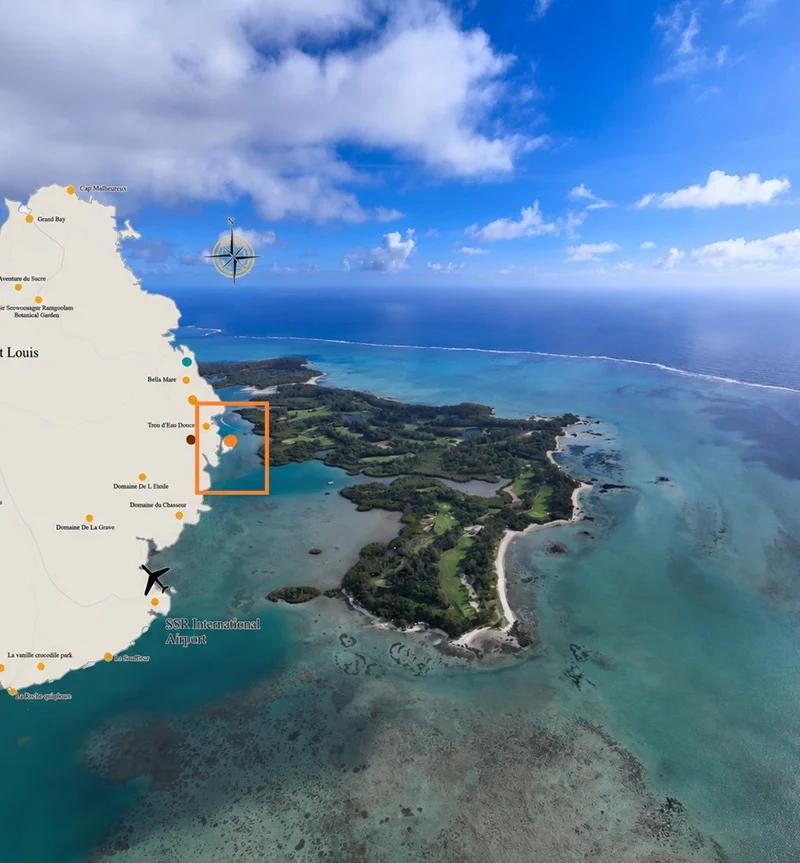
There is a moment on the crossing from Trou d’Eau Douce that never gets old. The boat clears the jetty, the water shifts from bottle green to something closer to glass, and Île aux Cerfs appears low on the horizon like a rumour you had heard but not quite believed. I have made that crossing more times than I can count — as a child, as Mauritius Explored , with visiting friends who arrive convinced they have already seen every beautiful beach worth seeing. They are always wrong, and the island always wins.
That is precisely the problem, and it is the reason an announcement made on 4 August 2026 deserves more attention. On that date, Riveo launched what it calls a sustainable regeneration plan for Île aux Cerfs: a long-term programme to preserve the island’s natural heritage, improve the visitor experience, and put the site’s management on a more durable footing. For an island that receives several hundred thousand visitors a year, this is not a cosmetic exercise. It is an attempt to answer a question Mauritius has been circling for a while: what do you do when a place is loved almost too much?
Finally, the change we need.
What Is the Île aux Cerfs Regeneration Plan?
At its simplest, the Ile aux Cerfs regeneration plan is a set of complementary initiatives designed to strengthen the protection and the enhancement of the site over the long term. Three of them form its structural core: an Eco-Park, developed progressively over part of the site; an Écomusée, conceived as a space for discovery, interpretation and environmental education; and the Île aux Cerfs Eco-Park Foundation, a non-profit organisation created to fund and coordinate conservation, ecological restoration and public awareness work.
Riveo is explicit that the plan is a response to how the site has evolved rather than a reinvention of it. The company’s framing is that Île aux Cerfs will remain fully accessible to Mauritians and visitors alike, within a better-organised setting that is more respectful of its environment. Free access to the site is maintained — a point the dossier lists first among the benefits for Mauritians, alongside a safer, better-maintained and more welcoming environment.
The plan’s technical spine is a Management Plan for the Eco-Park . That document sets the orientations for conservation of natural habitats, ecological restoration, the organisation of spaces, and the awareness actions aimed at the public. In other words, the ambition is not being improvised on site; it is being written down, with a governance structure attached to it.
The Vision: Five Pillars, One Balancing Act
The heart of the whole endeavour stems around five priorities: preserve the island’s exceptional natural heritage; durably improve the visitor experience; structure authorised activities within a more suitable framework; strengthen environmental governance; and invest in the preservation of the site for future generations.
These five pillars describe a single balancing act. Riveo’s stated ambition is to make Île aux Cerfs a Mauritian and regional benchmark for the sustainable management of an exceptional natural site — reconciling environmental protection, quality of visitor experience, and the responsible development of authorised activities. Underpinning it is what the dossier calls a simple conviction: that economic development, welcoming the public, and preserving the environment can durably reinforce one another rather than compete.
What does success look like in practice? On the visitor side, the plan describes a progressive strengthening of reception facilities, modernised infrastructure, better-organised spaces and a cleaner environment — and, crucially, an experience that is no longer limited to the beaches and the lagoon. Through the Eco-Park and the Écomusée, the island is meant to become somewhere you understand as well as somewhere you swim.
On the operator side, the approach is one of structure rather than exclusion. Operators holding the required licences will continue to work on the island, but within a clearer framework: dedicated spaces, adapted infrastructure, and partnerships concluded with Riveo, complementing the authorisations issued by the competent authorities. The dossier names the activities concerned — catering, the traditional barbecues, water sports, and the boat transport of visitors — which is a fairly precise way of saying that the parts of the island’s economy people actually recognise are being brought into a common framework rather than left to grow organically.
"Île aux Cerfs is an exceptional natural heritage, deeply anchored in the hearts of Mauritians and in our country’s image internationally. […] We want to demonstrate that it is possible to reconcile environmental protection, responsible economic development and the creation of value for the benefit of those who contribute every day to the standing of Île aux Cerfs. "
Gregory Coquet, Chief Operations Officer, Riveo
The Ecology: A Lagoon That Sets the Terms
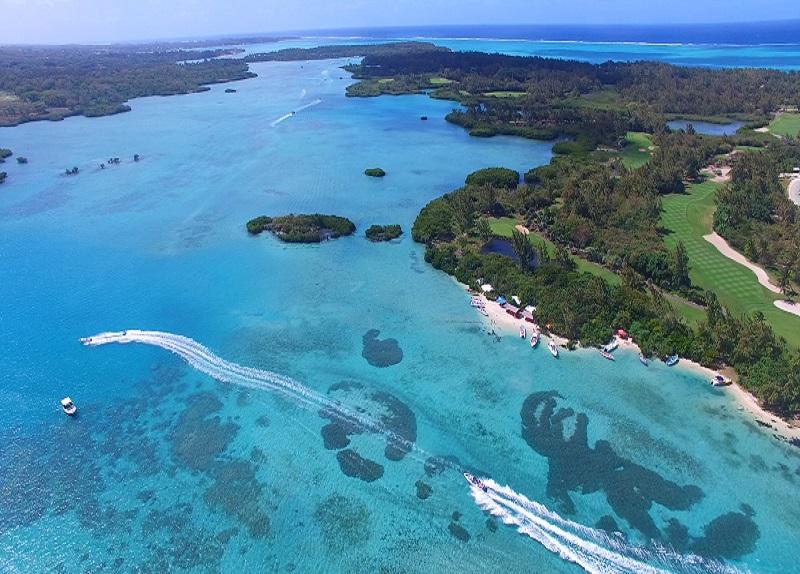
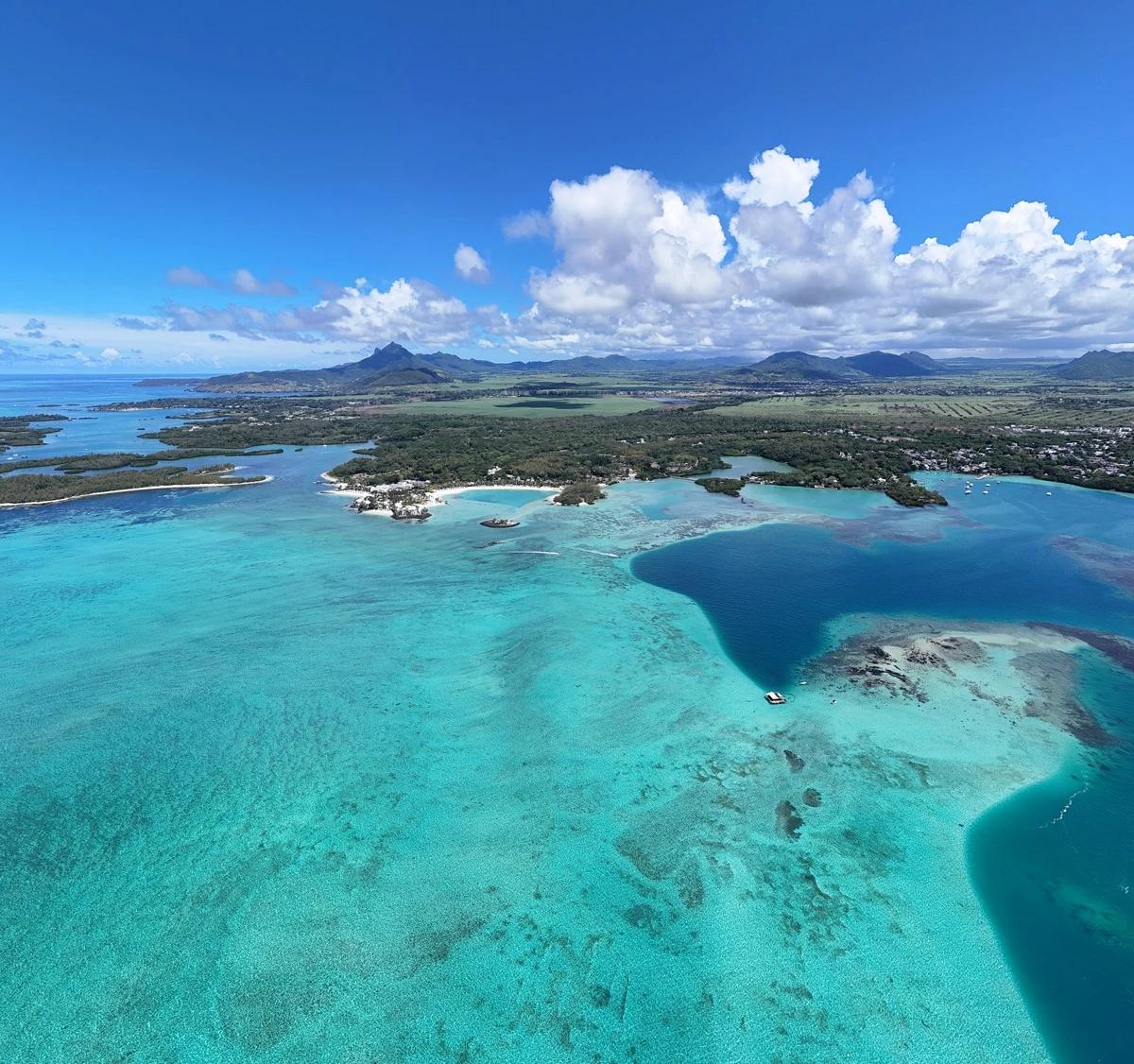
Île aux Cerfs does not sit in isolation. The site is directly linked to the Trou d’Eau Douce Fishing Reserve, proclaimed a Marine Protected Area in 2000, covering close to 574 hectares between Trou d’Eau Douce and Pointe aux Feuilles. Activities around Île aux Cerfs and Îlot Mangénie therefore take place inside a coastal and marine ecosystem whose balance rests on the preservation of mangroves, wetlands, coastal habitats, seagrass beds and the East lagoon.
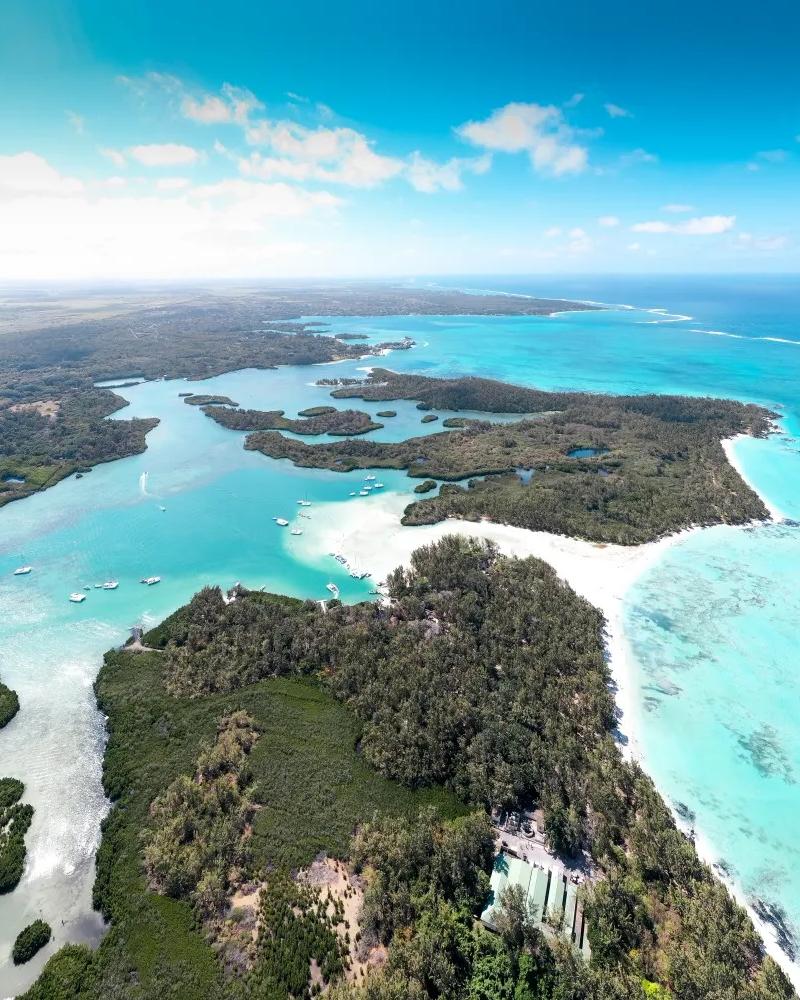
That ecological reality shapes where the Eco-Park goes. According to the dossier, its footprint will mainly cover the greater part of Îlot Mangénie — the smaller islet — and it will be accompanied by restoration of natural habitats, protection of mangroves and the coastline, reinforcement of biodiversity, and initiatives aimed at improving the site’s ecological resilience. Importantly, the Eco-Park will not cover the whole island: the other areas will continue to welcome visitors and authorised activities within a better-structured framework.
Governance is where the environmental commitment is meant to acquire teeth. The Île aux Cerfs Eco-Park Foundation will manage the Eco-Park and carry out conservation, ecological restoration, environmental awareness and heritage enhancement work, operating in partnership with the competent authorities, the operators concerned and the full set of stakeholders, in a public-interest logic. Among the benefits the dossier lists for the environment is one line worth underlining: funding dedicated exclusively to conservation.
"Île aux Cerfs and Îlot Mangénie form a sensitive ecological ensemble, directly linked to the East lagoon. The ambition to regenerate it means better understanding its ecosystems, adapting uses, and equipping ourselves with dedicated governance, as proposed in the Management Plan. That will allow Mauritians and visitors alike to rediscover the richness these environments bring us every day. "
Thierry Le Breton, Dynamia
What It Means for Mauritius — and for the People Who Visit
For Mauritius, the stakes run past one island. Île aux Cerfs is a fixture of how the country is pictured abroad and a genuine national heritage site at home, receiving hundreds of thousands of Mauritians and visitors every year who come for the lagoon, the beaches and the landscapes. A credible model for managing that kind of pressure — one that keeps access open while restoring habitats — is exactly the kind of thing a small island state trading on its natural capital needs to be able to demonstrate. Riveo’s own stated aim is for the island to become a Mauritian reference point for responsible tourism and the sustainable management of an exceptional natural site.
For travellers drawn to eco-tourism in Mauritius, the practical change is a richer visit: modernised infrastructure, better safety, a cleaner environment, and an Écomusée that explains the mangroves and seagrass beds most day-trippers currently glide straight over. For Mauritians, the promise is continuity with improvement — the same island, still free to access, in better condition. Both of those things are, for now, commitments rather than completed work.
Looking Ahead
The honest position on the Île aux Cerfs regeneration plan is that it is a well-articulated intention with a serious technical document behind it, and that intentions on this island have a history of meeting the friction of real operations. The published material sets out the what and the why with considerable clarity; the when is where it stays deliberately open, describing the Eco-Park, the Écomusée and the infrastructure improvements as progressive rather than dated.
Still, the direction is the right one, and the framing is unusually candid for this kind of announcement: the dossier states outright that the island’s success is both its greatest strength and its principal challenge. That is a rare admission, and a reasonable place to start. The measure of this plan will not be the language in the press folder but what the lagoon looks like in ten years, and whether the boat from Trou d’Eau Douce still delivers that moment when the water turns to glass. Worth watching closely — and worth holding to account.
So the next time you step foot on Île aux Cerfs, some of this will likely be waiting for you: a cleaner shoreline, a place to learn what lives beneath the lagoon you have been swimming in, and an island being looked after a little more carefully than before.
Come and see it for yourself. See you soon in Mauritius.
Explore this topic
Get new Mauritius guides by email
Join the Mauritius Explored list for trip ideas, practical updates and downloadable planning help.

Written by the Mauritius Explored editorial team, a Mauritian travel guide focused on beaches, activities, local places, and practical island planning.
Local Mauritius travel research, itinerary planning, and destination coverage since 2011.