Spring Escapes in Mauritius National Parks: Beyond Hiking
Spring Escapes in Mauritius National Parks
There's a lot more to do than just hiking
At 6:40 on an October morning, the ridge above the Black River valley is doing something it does not do in July. The mist that usually sits on the plateau until nine has already lifted, the air smells faintly of guava leaf and wet basalt, and somewhere below you a bird that came within four individuals of disappearing forever is hunting through the canopy. You have not walked a single kilometre of trail yet. You are standing at a roadside viewpoint with a flask of Bois Chéri tea.
That is the argument of this article in one scene. Mauritius national parks are usually sold to visitors as a hiking add-on — a half-day between beach days, a photo at a gorge lookout, back to the hotel by two. Spring, roughly September through November, is when that framing falls apart most obviously. The island's protected areas are shaking off the cool season: birds are pairing and calling, endemic trees are setting flower, the water in the interior rivers has warmed enough to swim, and the tour operators who go quiet in winter are back on the water and in the canopy.
Spring is also the island's shoulder season, which means fewer people between you and the view, and rates that have not yet climbed toward the December peak. What follows is a practical, opinionated guide to what you can actually do in these parks in spring — the wildlife, the adventure sports, the conservation work you can join, the heritage you can walk through, and the logistics that make it all fit together.
Spring is the island's quiet handover: winter's dry, walkable ground meets summer's returning warmth, and for about ten weeks the parks belong mostly to the people who live here.
Why Visit Mauritius National Parks in Spring?
Timing a trip to a subtropical island is mostly a question of trade-offs, and spring in Mauritius resolves more of them at once than any other window in the calendar.
Start with the climate, because Mauritius spring weather is the whole reason this window works. The Mauritius Meteorological Services define summer as November to April and winter as June to September, with October and May treated as transition months — spring, in other words, is officially a season of handover rather than extremes. The island's mean summer temperature is 24.7°C and mean winter temperature 20.4°C, a spread of only 4.3°C, so September through November sits in a comfortable band rather than swinging between them. Long-term mean annual rainfall over the island is 2,010 mm (1971–2000 average), but it is heavily weighted toward summer, and October is the driest month of the year. For a traveller, that combination — warming days, low rainfall, dry trails — is close to ideal.
Altitude matters more than latitude here. The central plateau where Black River Gorges National Park sits is consistently cooler and wetter than the coast, and receives fewer daily sunshine hours than coastal areas. Expect to shed a layer as you drive down from Plaine Champagne to Baie du Cap, and expect the gorges to hold cloud after the coast has cleared.
Then there is the biology. Mauritius is a genuinely extraordinary place botanically: the island holds 691 species of indigenous flowering plants, around 39% of them endemic, alongside about 80% endemism among non-marine birds — but only about 2% of the island remains under native forest. Spring is when that surviving 2% is at its most active, with breeding activity, calling, and flowering concentrated in the warming months. It is also the tail of the humpback whale season on the west coast, which overlaps with several of the coastal parks and reserves.
Finally, value. Spring falls between the European summer holidays and the December–January peak, so accommodation, car hire and guided Mauritius nature tours are easier to book at short notice and generally priced below high season (Verify: current operator and hotel rate cards). Most people who visit Mauritius in spring come away wondering why they ever considered December. If you want the parks without the queue at the Gorges viewpoint, this is your window.
The Main Parks and Nature Reserves — an Overview
Five places do most of the work in this article, and they are deliberately different from one another in scale, habitat and mood.
Black River Gorges National Park is the heavyweight. Proclaimed on 15 June 1994, it protects 6,574 hectares of upland forest in the island's south-west, rising to Piton de la Rivière Noire at 828 m — the highest point in Mauritius. It holds the island's largest surviving native forest, its main populations of endemic birds, and eight official trails ranging from about 3 km to 14 km. It is also, crucially, full of things to do that involve no serious walking at all.
Île aux Aigrettes is the opposite: a 26-hectare coralline limestone islet about 850 m off the south-east coast in Mahébourg Bay, managed by the Mauritian Wildlife Foundation. It preserves the last significant remnant of Mauritius's dry coastal forest and is visited only on a guided EcoTour by boat.
Bras d'Eau National Park, in the north-east near Poste Lafayette, was proclaimed on 25 October 2011 and covers about 497 hectares. Much of it is old timber plantation rather than pristine forest, which makes it quieter, flatter, easier with children — and unexpectedly rich in birdlife and ruins.
The Mahébourg waterfront and Blue Bay area on the south-east coast is not a national park, but it is the gateway to Île aux Aigrettes and sits beside the Blue Bay Marine Park, so it functions as the coastal, cultural and marine counterpart to the upland parks.
Chamarel, in the south-west, is likewise not a national park but a village surrounded by private conservation land — most notably the Ebony Forest Reserve, a restoration project on 195 hectares — plus the Seven Coloured Earths and the Chamarel waterfall. Together with Black River Gorges next door, it makes the south-west the densest concentration of Mauritius outdoor activities on the island.
[Link: Guide to Black River Gorges] · [Link: Île aux Aigrettes visitor guide] · [Link: Where to stay in the Mauritian south-west]
Beyond Hiking: The Best Things to Do in Mauritius National Parks
Here is the heart of it: ten things to do in Mauritius national parks and the reserves around them, none of which require you to finish a trail. Taken together they are the best of the island's Mauritius outdoor activities, and almost none of them appear on a standard excursion menu. Most can be combined two or three to a day, because nothing in Mauritius is more than about ninety minutes' drive from anything else.
1. Endemic Birdwatching — the Signature Mauritius Wildlife Experience
If you do one thing on this list, make it this. Mauritius is one of the few places on earth where you can see, in a morning, several species that were reduced to double or single digits within living memory and brought back by hand.
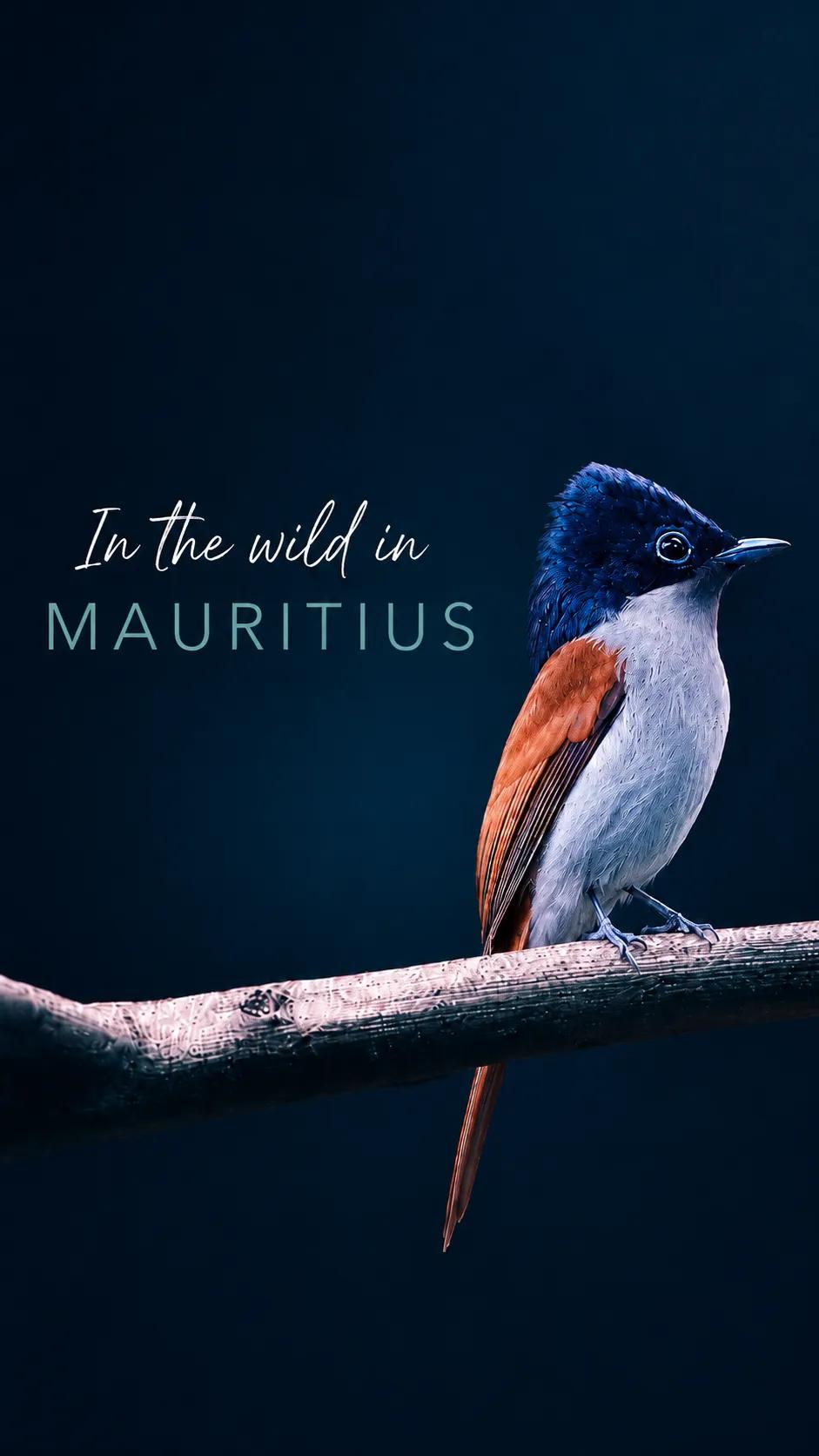
The reliable places to look for Mauritius endemic birds are the upper reaches of Black River Gorges National Park — the Macchabée and Pétrin areas, and the Plaine Champagne road — plus the Ebony Forest Reserve at Chamarel, where four endemic bird species including the Mauritius Kestrel, Pink Pigeon and Echo Parakeet have been reintroduced into restored forest. Bras d'Eau, in the north-east, is the place for the Mascarene paradise flycatcher, known locally as the coq de bois.
Spring is the strong season: birds are territorial, vocal and moving. Go at first light — between roughly 6:00 and 9:00 — when calls carry and the plateau cloud has not yet closed in. A guided endemic-bird walk with a specialist operator or with Ebony Forest's own guides is worth the money purely for the ears; you will hear the parakeet's harsh, ratcheting call long before you find it (Verify: current tour prices with operator). The sensory detail that stays with people is not the sighting. It is the silence between calls in a forest that has almost no introduced birdsong left in it at altitude.
2. Conservation Experiences on Île aux Aigrettes
The Île aux Aigrettes nature reserve EcoTour is the most quietly astonishing ninety minutes on the island, and the flagship of Mauritius ecotourism. You take a short boat crossing from Pointe Jérôme near Mahébourg — the island lies about 850 m offshore — and walk a guided trail through the last stand of Mauritian dry coastal forest, roughly 1.5 to 2 hours including the boat.
What you are walking through is a working restoration project. Introduced predators and plants were removed, native ebony was replanted, and species that had vanished from the site were returned. Aldabra giant tortoises were introduced as an ecological stand-in for the island's extinct giant tortoises, grazing and dispersing seeds much as the originals did. It is worth being precise here: nobody is bringing back the dodo. What is happening on Île aux Aigrettes is the restoration of the forest the dodo lived in, and of the animal relationships that kept it functioning.
Book ahead — tours run on set departures and the island has a visitor cap. Spring mornings are calm and the crossing is usually flat. The detail people describe afterwards is the sound of a tortoise moving through leaf litter: unhurried, weirdly loud, entirely unbothered by you.
3. Zip-Lining and Canopy Experiences
For a different relationship with the same forest, put yourself above it. Zip-lining is well established in the south, with multi-line courses at La Vallée des Couleurs near Chamouny and other adventure parks in the south-west, several with lines running for hundreds of metres over ravines and waterfall gorges. Ebony Forest at Chamarel offers an elevated walkway and viewpoint experience that gets you into the canopy without a harness — the gentler version of the same idea (Verify: current course specifications and prices with each operator).
Spring conditions are favourable: drier ground, lighter wind than midsummer, and afternoon slots that are warm without being punishing. Prices generally scale with the number and length of lines, and most parks sell zip-line-plus-quad or zip-line-plus-nature-walk combinations (Verify: operator rate cards). The moment worth paying for is the first two seconds off the platform, when the tree ferns below resolve into a single green surface.
4. Waterfall Swimming and Canyoning
Mauritius's interior is cut by short, steep rivers, and canyoning has grown into one of the island's best-run adventure sectors. The classic outing is the Tamarind Falls system above Henrietta — the Sept Cascades — where guided half-day trips combine abseiling down waterfall faces, jumps into plunge pools, and swimming through basalt corridors. The Chamarel waterfall, dropping roughly 100 m in a single fall, is the south-west's showpiece from its viewing platform.
Spring is arguably the best canyoning window of the year: water levels have dropped from the summer highs, the rock is less greasy, and the pools are warm enough to linger in. Trips are run by licensed operators with equipment included, typically a half or full day (Verify: operator pricing and minimum ages). Do not freelance this — river levels in Mauritius change fast, and the canyons are not places to improvise.
5. Mountain Biking the Forest Estates
The trail network that matters for Mauritius adventure travel on two wheels is mostly on the private nature estates that ring the national parks: Domaine de l'Étoile in the east and the Frédérica Nature Reserve at Bel Ombre in the south, both with marked tracks through hunting forest, river crossings and long descents. The forestry roads on the fringes of Black River Gorges are rideable too, though the official Mauritius hiking trails inside the park are walkers' ground.
Spring's dry, firm surfaces make this the sweet spot before summer turns the clay tracks slick. Estates rent bikes and helmets and run guided descents, and most will pair a ride with lunch on site (Verify: estate rates and rental availability). The thing nobody tells you: the deer.
6. Paragliding and Flying the Coast
Tandem paragliding operates on the west and south-west coasts, launching from the slopes behind Le Morne and above the Black River plain — the same landscape you have been looking up at from the gorges, seen from the other direction. Flights are short, usually 10 to 20 minutes, and weather-dependent.
Spring's moderate winds and clear mornings give a high proportion of flyable days. From the air, the thing that lands hardest is the colour break: forest black-green behind you, then the sudden turquoise shelf of the lagoon and the white line of the reef.
The gorges look like the interior of the island. From a paraglider harness above Le Morne, they look like what they actually are — the last uneaten corner of a forest that once ran all the way to the sea.
7. Cultural and Heritage Trails Inside and Beside the Parks
The parks are not empty wilderness; they are landscapes people used. In Bras d'Eau National Park, the forest holds roughly 200-year-old ruins including the remains of a sugar mill and a lime kiln, and shares the site with the Mauritius Radio Telescope — an unlikely pairing of colonial industry and radio astronomy inside one small park.
On the south-east coast, the Mahébourg waterfront and its national history museum anchor a walkable heritage afternoon before or after Île aux Aigrettes. To the south-west, Le Morne Brabant — a UNESCO World Heritage site associated with maroon slaves who took refuge on the mountain — sits within sight of the Black River massif and can be visited as a cultural experience without summiting.
Spring's mild mid-afternoons suit these trails, which are exactly when the forest walks are least productive. Access is generally free or low-cost, with guided options available at Le Morne (Verify: current guiding arrangements and fees).
8. Photography Tours and Nocturnal Wildlife Walks
The Mauritian Wildlife Foundation offers tailor-made tours built around specific interests including photography and birdwatching, which is the most direct route to time in restricted areas with someone who knows where the birds are. Ebony Forest's sundowner experience is built for the same purpose in the last hour of light.
Set expectations honestly: Mauritius has no big-game night safari. What it has is nocturnal wildlife of a subtler kind — the endemic Mauritian flying fox leaving its roost at dusk, geckos on the trunks, and an insect chorus in the coastal forest — and a handful of operators and private reserves running guided evening walks (Verify: which operators currently offer night walks). Spring's later sunsets push golden hour to a civilised hour.
9. Picnicking, Stargazing and Doing Very Little
There is a proper Mauritian tradition of the forest picnic, and the parks are set up for it. Alexandra Falls, the Gorges viewpoint on Plaine Champagne, and the Pétrin and Mare Longue areas all have accessible parking, tables and shade, and the drive along Plaine Champagne is itself one of the island's great roads.
Spring evenings are dry and clear, and the plateau has meaningfully darker skies than the coastal resort strip — enough to pick out the Southern Cross and the Magellanic Clouds on a moonless night. Bring a fleece; the plateau drops several degrees below the coast after dark, which catches people out every single time.
10. Snorkelling and Kayaking the Marine Park Next Door
Protection in Mauritius is not only terrestrial. Blue Bay Marine Park, minutes from the Île aux Aigrettes jetty, is a shallow, coral-rich lagoon best seen by glass-bottom boat, snorkel or kayak, and it pairs naturally with a morning on the reserve.
Spring water temperatures are climbing back toward comfortable and visibility is generally good before the summer rains start pushing sediment out of the rivers. It is also the tail of the humpback whale season on the west coast — whales are present in Mauritian waters roughly May to November — so a west-coast boat trip in September or October is a real possibility, with certified operators required to keep their distance and approach slowly.
Wildlife Spotlight: What You Might See in Spring
Mauritius wildlife is a study in near-misses. Almost everything on this list came close enough to extinction to be counted on your fingers, and spring in Mauritius is when it is easiest to find.
The Mauritius Kestrel (Falco punctatus) is the emblem. By 1974 there were four known individuals left, including a single breeding pair; captive breeding, hand-rearing and predator-proof nest boxes pulled it back to a wild population of roughly 350 birds today, and the IUCN currently lists it as Endangered after an uplisting in 2014. Its strongholds are the Black River Gorges area in the west and the Bambou Mountains in the east. It is small, fast and short-winged — built for flying inside forest rather than above it.
The Mauritius Pink Pigeon (Nesoenas mayeri) fell to about 10 birds in 1991 and now numbers in the low hundreds, with wild populations in Black River Gorges National Park and on Île aux Aigrettes; it was downlisted to Vulnerable in 2018 (Verify: latest IUCN Red List assessment and MWF census). Adults are 36–38 cm long with pale pinkish-grey plumage, a rust-coloured tail and dark red eye-rings, and they feed heavily on buds, shoots, fruit and seed — which is why they are easiest to see where native fruiting trees have been replanted.
The Echo Parakeet (Psittacula eques) is the third of the famous recoveries, once down to a handful of birds and now recovered enough to have been downlisted from Endangered. Listen for it along the Plaine Champagne road at dawn. Rounding out the Mauritius endemic birds worth learning by sight: the Mascarene paradise flycatcher at Bras d'Eau, and the Mauritius olive white-eye, one of the rarest of them all, in restored coastal forest.
On the reptile side, Île aux Aigrettes is the place. Telfair's skink and the ornate day gecko — a small lizard patterned in green and red that looks painted — live alongside the introduced Aldabra giant tortoises that now do the grazing work of Mauritius's own extinct giants. The tortoises are the easiest large animal to photograph in the country, and the least impressed by you.
Offshore, the marine picture in spring is the tail of the humpback whale season on the west coast, resident sperm whales year-round, and spinner dolphins in the bays at dawn. Botanically, spring pushes the native forest into flower and fruit: ebony (Diospyros spp.), the bois de natte and other canopy species, and the endemic Trochetia — the genus that gives Mauritius its national flower, the Boucle d'Oreille of Le Morne (Verify: precise flowering months with the Mauritian Wildlife Foundation or National Parks and Conservation Service).
Almost every species on this list exists because somebody climbed a tree in the 1980s and took an egg. Mauritius is not a place where wildlife survived; it is a place where wildlife was rebuilt.
Practical Travel Tips for Spring Park Visits
The Mauritius travel tips that matter for the parks are almost entirely logistical. Everything on a small island is easy, right up until the moment you assume the bus goes there.
Getting around. A hire car is the honest answer for the parks. Black River Gorges is reached from Curepipe via Pétrin in the east, or from the coast via Plaine Champagne and Case Noyale in the west; the drive across the plateau is the scenic route and takes about an hour end to end. Bras d'Eau is a straightforward drive from Poste Lafayette in the north-east. Île aux Aigrettes is reached only by the operator's boat from Pointe Jérôme near Mahébourg. Buses serve the towns near the parks well and the parks themselves poorly; taxis will do half-day and full-day rates, negotiated in advance.
Fees and booking. Entry to Black River Gorges National Park and to Bras d'Eau is generally free, with parking at the main visitor points (Verify: National Parks and Conservation Service current policy). Île aux Aigrettes, Ebony Forest and the adventure parks are ticketed, and the reserve tours in particular have limited daily capacity — book Île aux Aigrettes several days ahead in spring, and further out over school holidays. Canyoning, zip-line and paragliding operators also work on fixed departure slots.
What to pack. Layers, in both directions. The plateau can be 5°C cooler than the coast and holds cloud when the beaches are clear, so a light waterproof and a fleece belong in the day bag even in November. Add proper shoes with grip — the basalt and clay are slick when damp — plus sun protection, insect repellent for the wetland edges at Bras d'Eau and Mare Sarcelle, at least 1.5 litres of water per person, and binoculars if you care at all about the birds. Swimwear lives in the car permanently.
Guides and operators. For Mauritius wildlife, the Mauritian Wildlife Foundation runs the Île aux Aigrettes EcoTour and tailor-made Mauritius nature tours built around birdwatching or photography, and Ebony Forest Reserve at Chamarel runs its own guided walks in restored forest. For Mauritius outdoor activities with any risk attached, use operators certified by the Mauritius Tourism Authority — this matters most for canyoning and for any marine mammal trip, where certified boats are required to keep a minimum distance and approach slowly.
One scheduling tip. Do the forest at dawn, the culture or the canopy in the middle of the day, and the coast in the late afternoon. Mauritius rewards people who move with the light rather than against it.
Frequently Asked Questions About Mauritius National Parks
The questions below are the ones that come up most often when people start searching for things to do in Mauritius national parks — answered honestly rather than in brochure language.
Q: What is the best time of year to visit Mauritius national parks?
A: The best time to visit Mauritius for the parks specifically is spring — September to November — along with the winter months either side of it. October is statistically the driest month of the year, trails are firm, temperatures sit in the low-to-mid 20s°C, and the island is between its two peak tourist seasons. Midsummer (January to March) is hotter, much wetter and falls inside the cyclone season, which can close trails at short notice. If your priority is the beach rather than the forest, the calculus shifts toward summer.
Q: Are Mauritius national parks suitable for families with children?
A: Yes, with sensible selection. Bras d'Eau is flat, shaded and short on drama, which makes it the easiest with young children. The Île aux Aigrettes EcoTour is roughly 1.5 to 2 hours on level ground with giant tortoises at the end of it — close to a perfect children's outing. In Black River Gorges, the viewpoints at Gorges and Alexandra Falls and the Pétrin picnic areas need no walking at all, while the longer trails and any canyoning or zip-line activity carry age and height minimums set by the operator.
Q: Is Black River Gorges National Park free to enter?
A: Entry to the park is generally free, including access to the main viewpoints and the trail network, and there is no ticket booth on the Plaine Champagne road. Guided walks, private nature reserves nearby such as Ebony Forest, and any organised activity are charged separately (Verify: National Parks and Conservation Service, current season).
Q: What wildlife can I see in Mauritius national parks?
A: Realistically: endemic birds, reptiles and bats on land, plus marine life from the coastal parks. The headline species are the Mauritius kestrel, pink pigeon, echo parakeet, Mascarene paradise flycatcher and Mauritius olive white-eye; on Île aux Aigrettes, Telfair's skink, the ornate day gecko and Aldabra giant tortoises. There are no large land mammals native to Mauritius — the free-roaming deer, macaques and mongooses you will see were all introduced, and the last two are part of the reason the birds needed saving.
Q: Do I need a guide to explore Mauritius national parks?
A: Not for Black River Gorges or Bras d'Eau, both of which have marked trails you can walk independently. You do need one for Île aux Aigrettes, which can only be visited on a guided tour, and for anything technical — canyoning, abseiling, zip-lining, flying. For birdwatching, a guide is optional but transformative, and guided Mauritius nature tours run from most of the reserves; the difference between hearing an echo parakeet and seeing one is usually a local who knows which tree it feeds in.
Q: What should I wear and pack for a spring visit to Mauritius parks?
A: Light, quick-drying clothes with a fleece and a packable waterproof for the plateau, closed shoes with real grip, a hat, high-factor sun protection, insect repellent, and plenty of water. If you visit Mauritius in spring, add binoculars for the forest, swimwear and a towel for the waterfalls and lagoon, and a dry bag if you are canyoning. Long sleeves are useful at dusk near the wetlands.
Q: Are there accommodation options near Mauritius national parks?
A: Yes, and staying inland changes the trip. Chamarel and the south-west have guesthouses, eco-lodges and small hotels within twenty minutes of the Black River Gorges viewpoints; the south coast around Bel Ombre and the east around Trou d'Eau Douce work well for the estates and Bras d'Eau; and Mahébourg and Blue Bay put you closest to the Île aux Aigrettes departure point. Booking inland in spring is usually straightforward, but the small eco-lodges have very few rooms.
Q: How long does it take to explore Black River Gorges National Park?
A: A viewpoint-and-picnic visit takes two to three hours including the Plaine Champagne drive. A half day covers a short trail such as the 3 km Paille en Queue trail or the 6 km Savanne trail plus the lookouts. The longer routes — the 14 km Macchabée forest loop, the 12 km Mare Longue loop, or the 9 km Black River Peak return — are full-day outings that should start at dawn. Two separate half-days, one for birds and one for everything else, beat one exhausting full day.
Start Planning Your Mauritian Spring
The reason to come to these parks in spring is not that the hiking is better, though it is. It is that spring opens up everything the hiking usually crowds out. People who visit Mauritius in spring get the parks at their most active and their least crowded. In one week you can watch a kestrel hunt at first light, walk a restored dry forest behind a guide who helped plant it, drop off a zip-line platform above a ravine, swim under a waterfall, ride a forest estate, eat a long lunch at a picnic table on the plateau, and finish under some of the darkest skies in the Indian Ocean.
That is not a day trip from the beach. That is the trip. The Mauritius national parks are small, unusually accessible, and carrying a conservation story that almost no other island can match — and for about ten weeks between September and November, they are at their most generous and their least busy.
Pick your dates, book the Île aux Aigrettes tour first because it fills, and build the rest of the week around it. The forest is waiting, and so is the bird that came back from four.
Explore this topic
Get new Mauritius guides by email
Join the Mauritius Explored list for trip ideas, practical updates and downloadable planning help.

Written by the Mauritius Explored editorial team, a Mauritian travel guide focused on beaches, activities, local places, and practical island planning.
Local Mauritius travel research, itinerary planning, and destination coverage since 2011.