Grand Baie Mauritius Travel Guide
The Complete Grand Baie Mauritius Travel Guide: Beaches, Food and Local Know-How
If you land at Sir Seewoosagur Ramgoolam International Airport and drive north for an hour, the island changes character three times before you arrive. Sugar cane gives way to the industrial edge of Port Louis, then to the flat green corridor of Pamplemousses, and finally the road drops toward a wide, sheltered bay where the water goes the colour of bottle glass. That is Grand Baie Mauritius, and this guide is written for the traveller who wants to understand it rather than simply photograph it.
We have watched this village change for decades. What follows is what we would tell a friend arriving for the first time: which beach suits which mood, where to eat when you want food rather than a view, what a catamaran day actually looks like, and the small practical things that make a difference on the ground.
What Makes Grand Baie Special — A Local Perspective
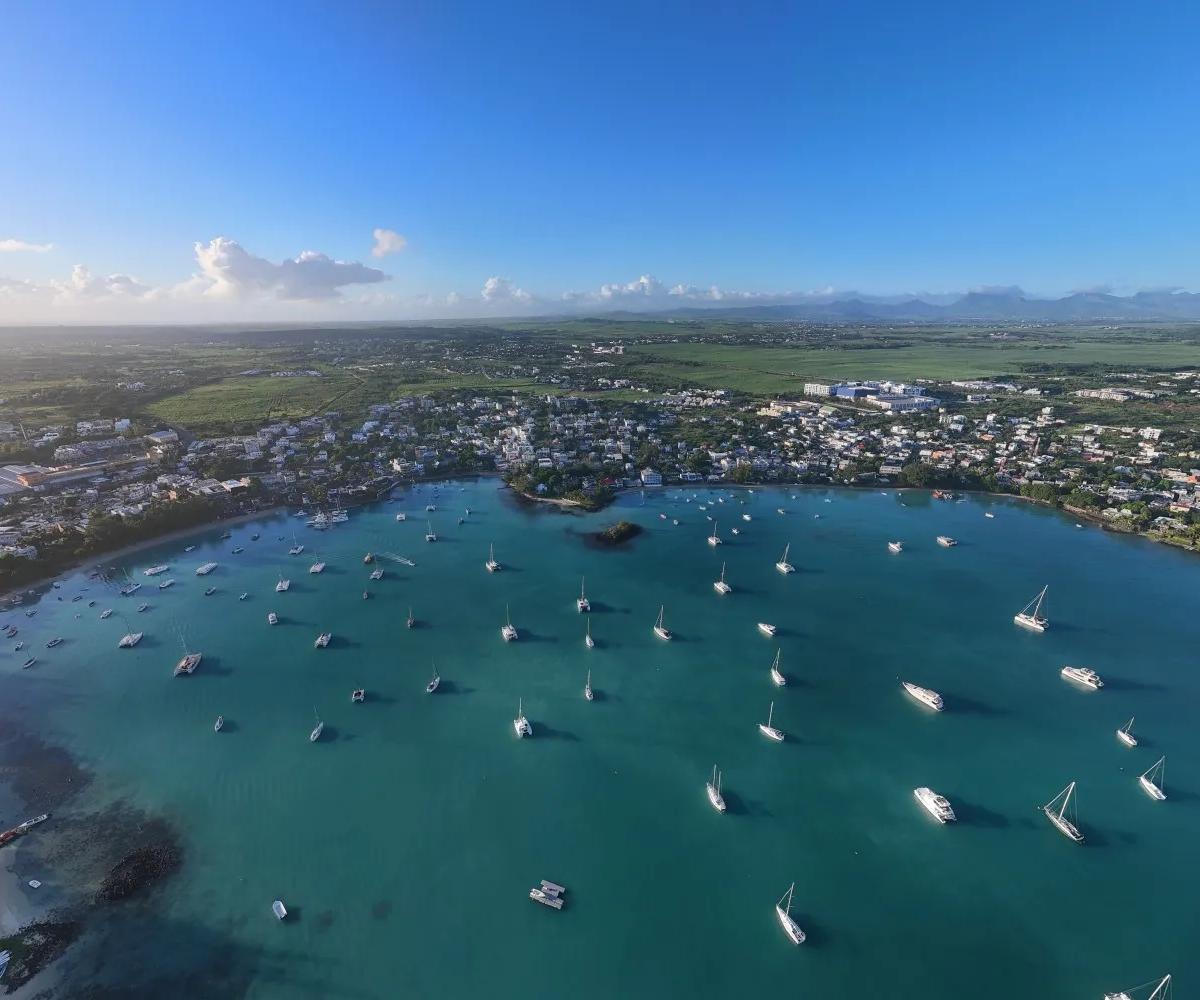
Grand Baie sits at the north-western shoulder of Mauritius, in the district of Rivière du Rempart, with its western edge spilling into Pamplemousses. The bay itself is a deep natural cove that faces north-west, which is the single most important geographical fact about the place. The south-east trade winds that whip across Belle Mare and Le Morne for much of the year arrive here softened and secondhand. The lagoon stays glassy when other coasts are choppy, which is why the fishing pirogues, the sailing schools and the excursion boats all cluster in the same few hundred metres of water.
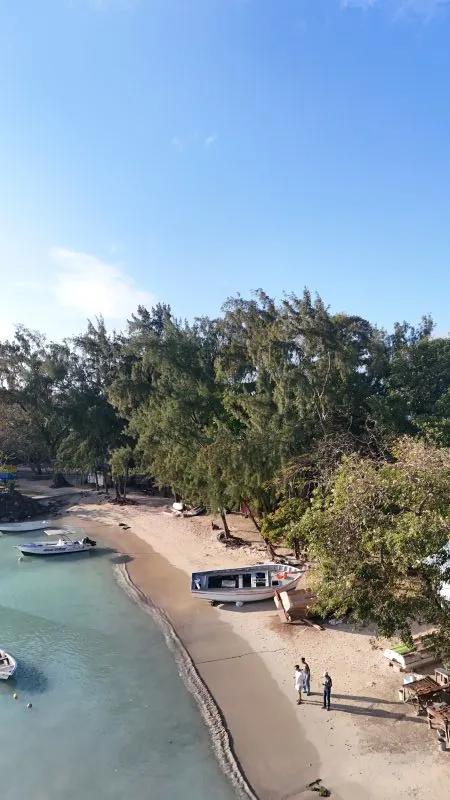
The Dutch noticed the shape of it first. In the seventeenth century they called this stretch De Bogt Zonder Eynt, the bay without end, and the name has outlived their settlement by three hundred years. For most of the time since, Grand Baie was a working fishing village with a few colonial holiday houses tucked among the filao trees. Photographs from the 1960s show a dirt road, wooden pirogues hauled up on the sand, and almost nothing else.
The transformation came fast, and it came from tourism. Today the village council area counts a resident population of around 11,900, a figure that bears no relationship at all to how many people are actually on Royal Road on a Saturday evening in December. In 2024, UN Tourism named Grand Baie one of its 55 Best Tourism Villages worldwide, selected from more than 260 applications across 60 countries, alongside Roches Noires on the east coast. Whatever you think of awards, it reflects something real: this is a place that has kept a functioning village underneath the tourism, rather than replacing one with the other.
That layering is what sets Grand Baie apart from Flic en Flac or Belle Mare. Belle Mare is beach and resorts. Flic en Flac is a long strip of holiday apartments. Grand Baie is a village with a bank, a fish market, several temples, a secondary school, a nightclub scene, and a fleet of catamarans, all sharing the same two kilometres of road. You will find yourself buying sunscreen in a shop where the family behind the counter has been trading for forty years, then walking twenty metres to a rooftop cocktail bar. That collision is the point.

A Brief Cultural Portrait of Grand Baie
Mauritius has no indigenous population. Everyone here arrived by ship: French planters, enslaved East Africans and Malagasy, Indian indentured labourers, Chinese traders, and later the Europeans who never went home. Grand Baie shows you all of it within a short walk.
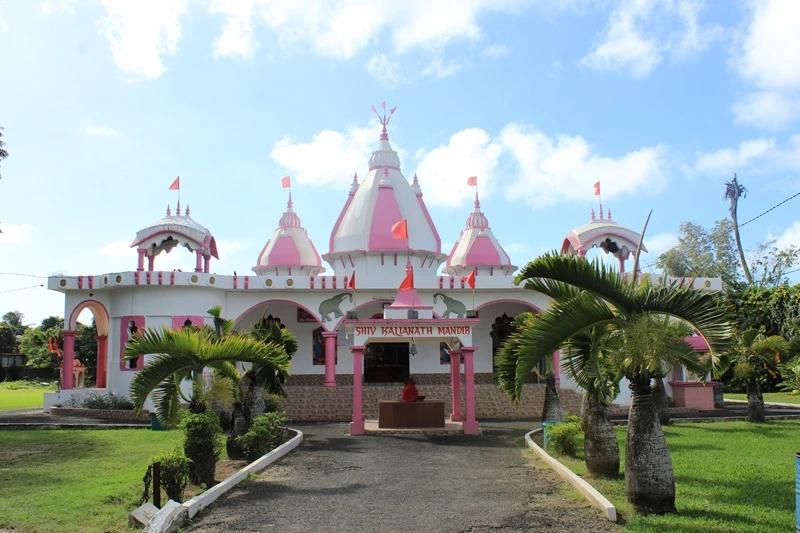
Start with the temples. Shiv Kalyan Vath Mandir, with its red-and-white turrets, sits close to the water and fills with families on Hindu festival days; Surya Oudaya Sangam stands a little to the west. The Roman Catholic parish draws its congregation from the Creole fishing families whose grandfathers launched pirogues from this beach. The Chinese-Mauritian community, small in number but enormously influential in Mauritian commerce, is visible in the corner boutik shops along Royal Road and in the Chinese-Mauritian restaurants that Mauritians of every background treat as ordinary weeknight food.
Language works the same way. Nearly everyone speaks Mauritian Creole at home, French in cafés and on the radio, and English in government and schools. You will be answered in whichever of the three you open with, and often in a blend of all three within a single sentence.
Walk the strip on a Saturday morning and you get the village at its most itself. The air smells of frying oil from the roadside stalls, diesel from the boats, and something sweeter from the fruit sellers. Vans double-park. Somebody is selling pineapple, peeled into a spiral and dusted with chilli salt, from a glass box on a trolley. By dusk the register changes completely: the light goes gold across the lagoon, the boats swing on their moorings, and the first bass lines start up from the bars near Sunset Boulevard.
The Beaches Around Grand Baie
The village sits at the centre of the finest run of accessible beach on the island. Everything below is within twenty minutes by car, and two of them you can walk to. For a wider survey of the coastline, see our guide to the best beaches in northern Mauritius.
La Cuvette Beach
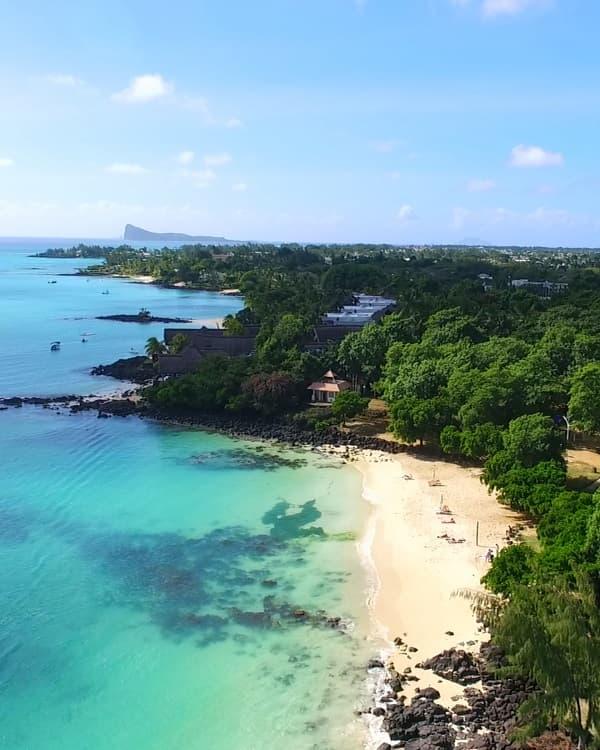
La Cuvette is Grand Baie's own public beach, a small crescent of white sand about ten minutes on foot from the centre, tucked beside the Royal Palm hotel. It is a plage publique, which in Mauritius means genuinely public: a coastguard post, a grassy shaded strip behind the sand, and Mauritian families setting up folding chairs and enormous lunches on Sundays.
The lagoon here is shallow, clear and largely free of boat traffic, which makes it one of the few places near the village where you can swim proper lengths without watching for propellers. Come early. Between 7am and 9am you often have the water to yourself and the light is at its best.
Insider tip: the northern end of La Cuvette, where the sand meets rock, holds a surprising amount of small reef life at high tide. Bring a mask rather than assuming you need a boat to see fish.
Mont Choisy Beach
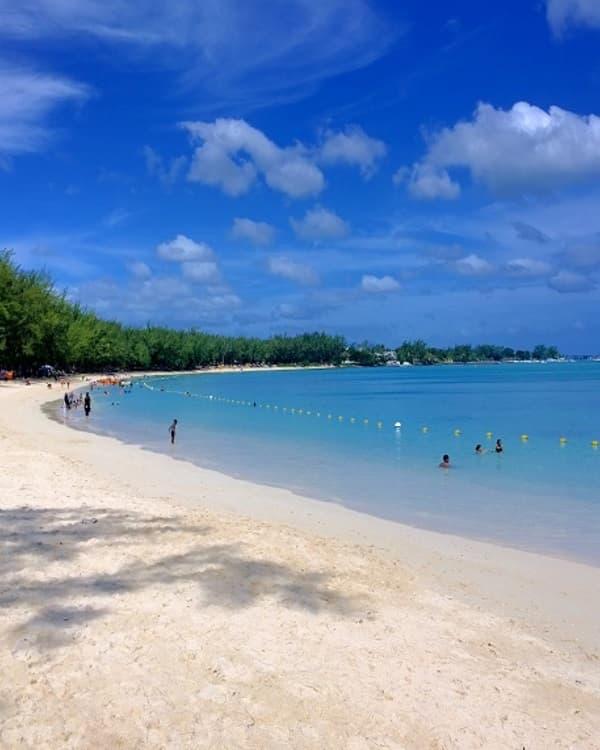
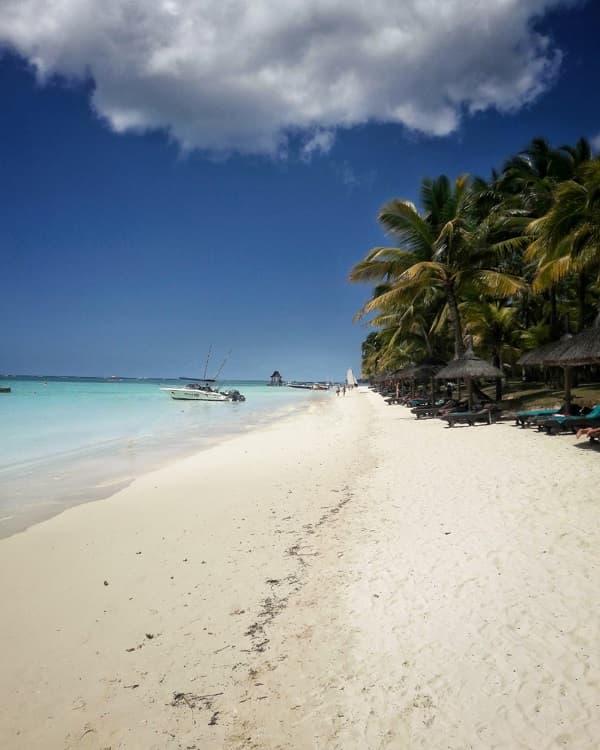
Mont Choisy is the long one: a gentle three-kilometre arc of sand between Grand Baie and Trou aux Biches, backed by a dense belt of filao trees that provide genuine shade all afternoon. The water is shallow and calm far out, which makes it the local default for families with small children.
The flat plain behind the beach has a history most visitors never hear. Before Mauritius had an airport, Mon Choisy served as the island's landing ground, and in November 1933 the businessman Abdulla Currimjee chartered the first commercial flight from Mauritius to Réunion from here, flown by the pilot Jean Hilly. Crowds came out to watch a two-seater aeroplane leave a field.
Insider tip: most people park at the northern end near the food vans. Drive to the southern end instead, toward the Trou aux Biches side. The trees are thicker, the crowd thins to almost nothing on weekdays, and the snorkelling improves as you approach the reef.
Pereybere Beach
Pereybere is about three kilometres north of Grand Baie and feels younger and busier. The beach is compact, the water deepens quickly enough for real swimming close to shore, and the strip behind it is crowded with snack shops, ice cream counters, dive centres and small bars. If you are travelling solo or in your twenties, this is where you will end up.
The reef sits close in, and the snorkelling off the rocks at either end of the bay is better than the middle. Weekends belong to Mauritian day-trippers; weekday mornings are calm.
Insider tip: Pereybere has more sea urchins in the rockier shallows than any other beach on this list. Reef shoes are not optional here.
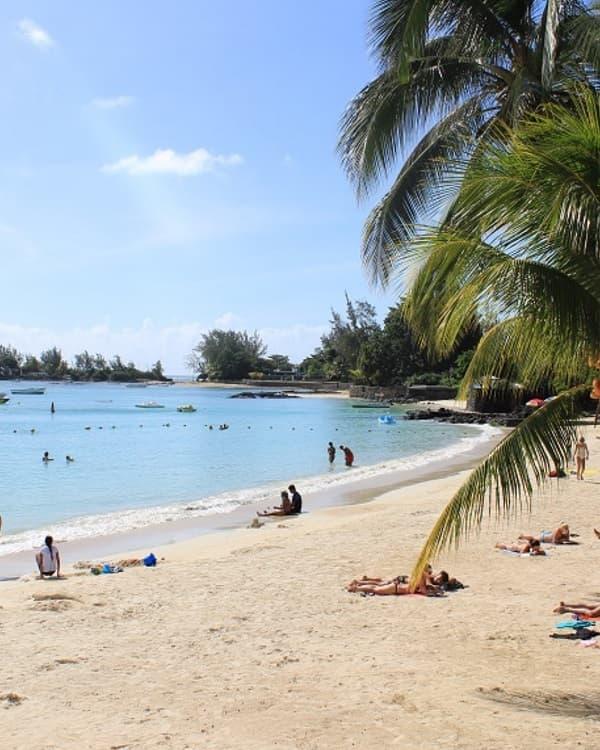
Trou aux Biches
Trou aux Biches is a fifteen-minute drive south and regularly appears on international best-beach lists — it took World's Leading Beach Destination at the World Travel Awards in 2011. The reputation is earned rather than invented. The sand is fine and pale, the reef sits far enough out to leave a wide flat lagoon, the trees run right down to the beach, and it faces west, which means the sunsets are the best on this stretch of coast.
It is also the base for the north's dive industry, with the Stella Maru wreck lying just offshore.
Insider tip: the public beach at Trou aux Biches is long, and almost everyone stops at the first car park. Keep walking south past the resort frontage for ten minutes and the density drops by half.
Activities and Experiences Around Grand Baie
This is where Grand Baie justifies itself as a base. Very little of what follows requires a full day of driving, and the sheltered lagoon means excursions run on days when the south and east coasts are wind-bound.
Water Sports and Ocean Adventures
The bay is the departure point for almost everything. Catamaran cruises leave from Grand Baie public beach, typically around 8.30am, for seven-hour days that combine sailing, snorkelling stops and a barbecue lunch. Smaller speedboat charters do the same route faster and with fewer people. Our full guide to catamaran cruises in Mauritius covers what distinguishes the operators.
Diving in the north is genuinely good and unusually forgiving. The Stella Maru is the signature dive: a 52-metre Japanese trawler deliberately sunk in December 1987 to create an artificial reef, now sitting upright in 18 to 25 metres of water off Trou aux Biches with her mast intact and colonised by soft coral, lionfish and enormous schools of snapper. Closer to Grand Baie, Peter Holt's Rock off Pointe aux Canonniers is a maze of granite boulders at 16 to 20 metres, full of tunnels and moray eels. Out at Coin de Mire, the Djabeda wreck was sunk in 1996 and lies at around 30 metres for more experienced divers, while the drop-offs along the island's wall are among the most dramatic dives in Mauritian waters. There is more detail in our northern Mauritius diving guide.
Deep-sea fishing boats also run from the bay, chasing marlin, tuna and wahoo in the deep water beyond the reef, with the best months roughly November through March. Kite surfing is not a Grand Baie activity — the wind is wrong here — but Anse la Raie, twenty minutes east, has a wide flat lagoon that works well for it.
Island Day Trips
The classic northern excursion runs to Île Plate (Flat Island) and Îlot Gabriel, two low islands about eleven kilometres off Cap Malheureux, separated by a turquoise channel. Flat Island served as a quarantine station in the nineteenth century, and the ruins and lighthouse are still there, which gives an otherwise idyllic day an unexpectedly sombre undertone worth reading about before you go.
Most catamarans anchor off Îlot Gabriel and shuttle you ashore by dinghy. You will get two to three hours on the sand, a barbecue lunch cooked on board, and a snorkel stop. Boats pass beneath Coin de Mire, also called Gunner's Quoin, a 65-hectare volcanic cone eight kilometres offshore that is a nature reserve where landing is prohibited. Tropicbirds nest on its cliffs and you will usually see them.
Bring more water than you think you need, high-factor sunscreen, a hat, a dry bag and cash for tips. There is no restaurant, no shop and no shade infrastructure on either island. The channel between the two has real current, so it is not a swim for weak swimmers.
Land-Based Exploration
North Mauritius rewards a car or a scooter. Ten minutes east of Grand Baie, Cap Malheureux offers the most photographed building on the island: Notre Dame Auxiliatrice, a small church with a scarlet roof standing against the sea with Coin de Mire filling the horizon behind it. Step inside for the woodwork and the holy-water basin made from a giant clamshell. A sign in the grounds firmly prohibits couples from staging fake weddings for photographs, which tells you a great deal about what goes on there. Mass is at 6pm on Saturday and 9am on Sunday.
The name means Cape of Misfortune. It was near here, in late 1810, that British forces landed and took the island from the French, having failed disastrously at Grand Port in the south a few months earlier. The village has been living with the name ever since.
Further afield, the Balaclava ruins at Baie aux Tortues preserve the remains of an eighteenth-century French estate, including an old powder magazine and mill walls, in a coastal setting most tour buses skip. The Sir Seewoosagur Ramgoolam Botanical Garden at Pamplemousses is about twenty minutes south and worth half a morning for the giant water lilies and the talipot palms alone. Quad-biking and mountain-bike outfits operate on the sugar estates inland, and the Château de Labourdonnais, with its rum distillery and orchards, makes a good rainy-afternoon option.
Nightlife and Social Scene
Grand Baie is the nightlife capital of Mauritius, and it is not close. The centre of gravity is the Sunset Boulevard area and the stretch of Royal Road around it, where boutiques and cafés by day turn into bars, lounges and clubs after dark.
The rhythm is Mauritian, which means late. Restaurants fill from 7.30pm, bars from around 10pm, and clubs such as the Banana Beach Club do not properly start until close to midnight. Expect a genuine mix: Mauritians from Port Louis and Curepipe come north for the weekend, so this is not a tourist-only scene. Sega, the island's own music, shares the night with house and international pop.
Two practical notes. Weeknights outside the December and July peaks can be quiet enough that a club feels empty at 11pm and full at 1am, so do not judge too early. And taxis home are easy to find but rarely metered, so agree the fare before you get in.
Where to Stay — Hotels and Accommodation Around Grand Baie
Grand Baie hotels span the full range, and where you sleep changes your holiday more here than in most places. On the bay you get walkability and noise. In Pointe aux Canonniers, five minutes west, you get quiet and a short drive. Our guide to where to stay in the north breaks the sub-areas down further.
Luxury
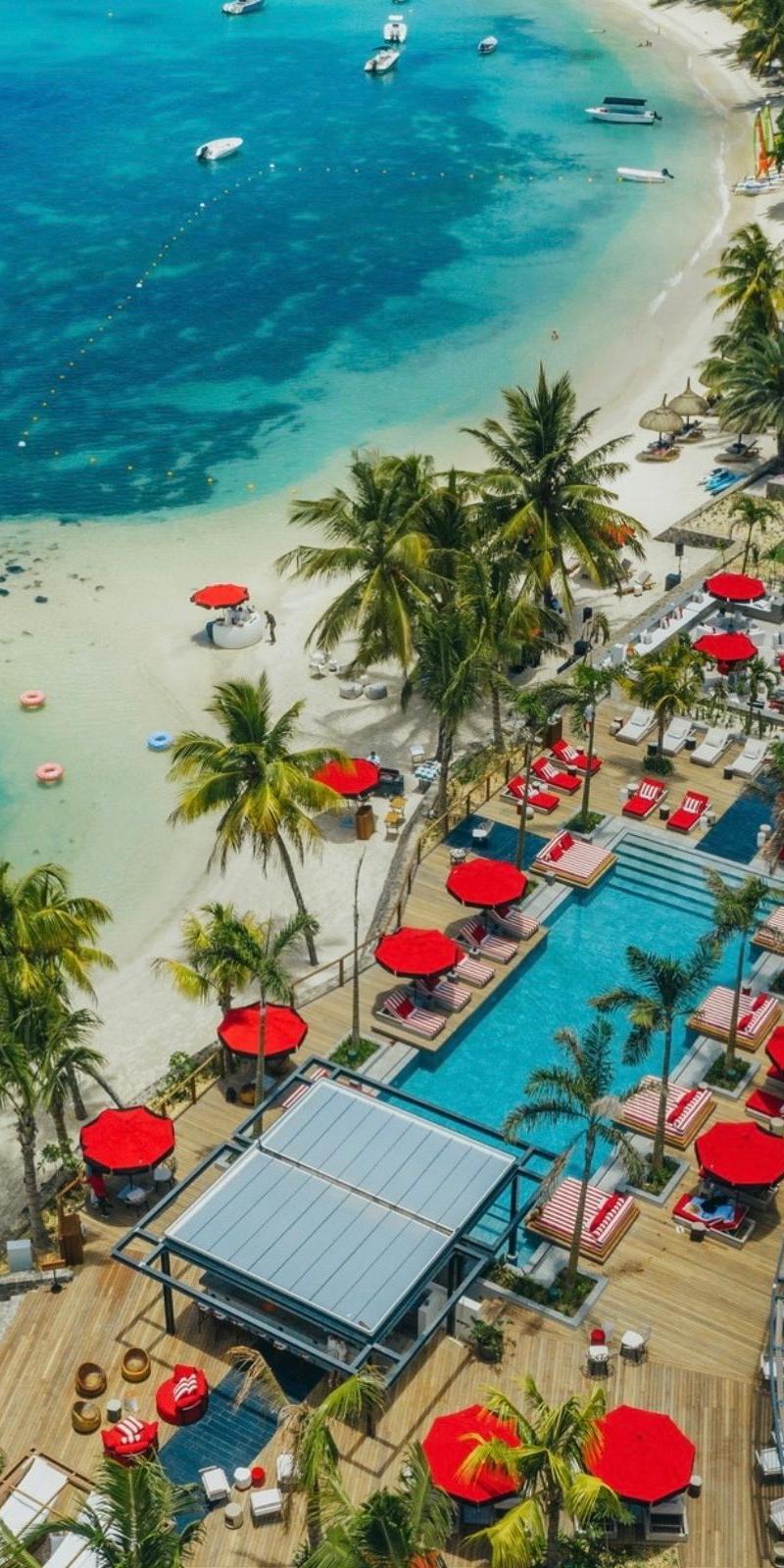
Royal Palm Beachcomber sits at the western end of the bay beside La Cuvette and has been the island's flagship address for decades. It is discreet rather than showy, with a service culture that older Mauritians still refer to as the standard against which other hotels are measured.
Le Canonnier, also Beachcomber, occupies a private peninsula at Pointe aux Canonniers on a historic site, with an old lighthouse converted into a children's club and a wellness centre reached by stairs into the branches of an enormous banyan tree. It suits families who want luxury without formality.
For boutique travellers willing to drive twenty-five minutes north-east, Zilwa Attitude at Calodyne is built entirely around Mauritian design, Mauritian food and Mauritian staff, and looks out over a scatter of small islands rather than open sea.
Mid-Range
Veranda Grand Baie sits directly on the bay within walking distance of the village, which is its main argument: you can eat out every night without arranging transport. Rooms are simple and the atmosphere is unpretentious.
In Pereybere, Hibiscus Boutique Hotel is a small, long-established property a short walk from the beach, run at a scale where staff learn your name. Self-catering apartments across Grand Baie and Pereybere occupy the same price band and suit stays of a week or more, particularly with a supermarket ten minutes away.
Budget and Guesthouses
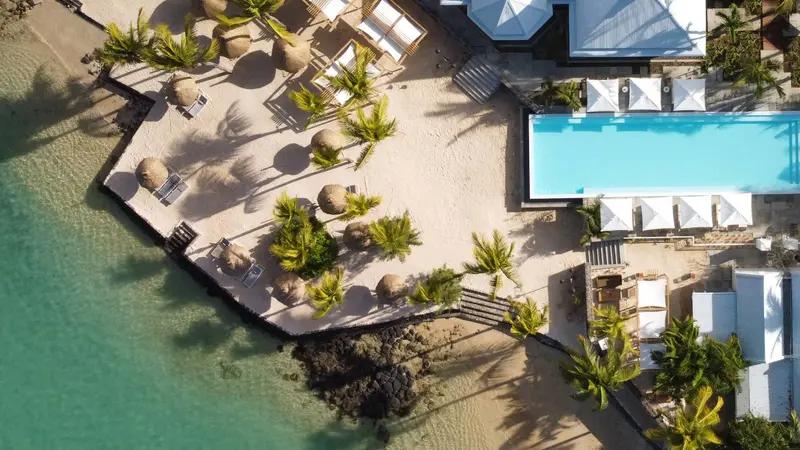
The guesthouse and apartment scene in Grand Baie has grown enormously and is now the best-value accommodation in the north. You give up the private beach, the buffet breakfast and the pool towel service. You gain a kitchen, roughly half the nightly cost, and neighbours who are Mauritian rather than on holiday.
Location matters more at this end of the market. Anything on or immediately off Royal Road puts you within walking distance of the beach, restaurants and buses. Properties advertised as Grand Baie but sitting well inland along Chemin Vingt Pieds are quieter and cheaper, but you will need a car or scooter. Ask for the actual street name before booking, not just the village.
Where to Eat — The Best Restaurants Around Grand Baie
Grand Baie restaurants run from beach shacks to serious kitchens, and the food is one of the strongest arguments for basing yourself here.
La Rougaille Créole is the one we send people to first. Family-run, tucked back from the coastal road in a garden, and focused entirely on Mauritian Creole cooking. Order the octopus — either curry ourite with aubergine or rougaille ourite in tomato sauce. It fills up from 6pm and the dining room is small, so book ahead, especially at weekends.
Coolen Chez Ram on Royal Road, near the Tamil temple, is the local institution: Creole, North Indian and seafood on one long menu, generous portions, plastic-tablecloth energy, and a mixed crowd of Mauritian families and travellers. Ask what the fish is before you order from the printed menu.
Le Capitaine sits on the waterfront and does straightforward grilled seafood with a view over the moored boats. It is not cheap and it is not trying to be clever. Go at sunset and order whatever came off the boat that morning.
Karai Kreol opens only for lunch and has no fixed menu — dishes rotate with what the market has, the way food works in a Mauritian home. It is the closest thing in the village to eating at somebody's grandmother's table.
The Beach House and La Kaza cover the smarter end. The Beach House runs along the waterfront with a bar that works well for a long lunch; La Kaza has a rooftop terrace in the Sunset Boulevard area that catches the evening light.
Luigi's handles Italian competently for anyone travelling with children who have reached their limit on curry, and Cocoloko is the all-day garden café for breakfast, coffee and a slow start.
For Chinese-Mauritian food, La Jonque is the reliable choice. Chinese cooking here is not an import; it is a native strand of Mauritian cuisine, and dishes like mine frite and bol renversé are eaten by everyone on the island.
Then there is the street food, which you should treat as a main event rather than a snack. Dholl puri — two thin split-pea flatbreads wrapped around bean curry, tomato chutney and fiery pickle — is the national dish in everything but name, sold from carts and hole-in-the-wall counters for the price of a coffee. Try also gâteau piment (fried lentil fritters), boulettes (steamed dumplings in broth, a Sino-Mauritian speciality) and alouda, a cold milk drink with basil seeds. Fruit sellers work the beaches and the roadside with pineapple, mango and pomme d'amour served with chilli salt. Our introduction to Mauritian street food explains what to order and how.
A Walk Through Grand Baie — Your Introductory Stroll
Begin at La Cuvette a little after seven, before the heat has any weight to it. The lagoon at that hour is almost colourless, silver rather than blue, and the only people on the sand are joggers and one or two fishermen coming back in. Swim if you like. The water in the early morning is noticeably clearer than it will be by ten, when the boats start moving.
Walk south along the coast toward the village. Within ten minutes the residential quiet gives way to the first shops opening their shutters, and you arrive on Royal Road, which is Grand Baie's spine and its entire personality. The traffic is already thickening. A bus to Port Louis will pass you with its door open. Somewhere along here you will pass a fruit seller setting up, and it is worth stopping for pineapple even if you have eaten breakfast.
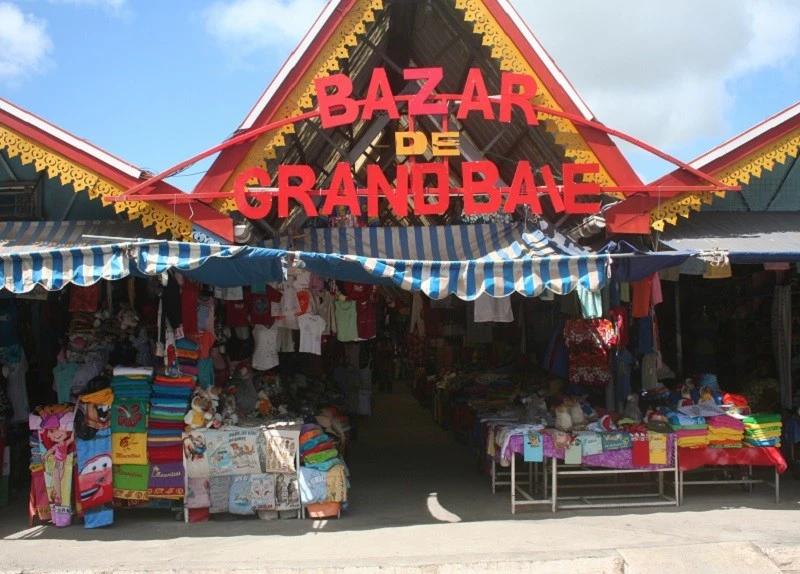
Take the time to turn inland where you can. The lanes off the main road hold the older village: single-storey houses with corrugated roofs painted green and rust-red, a temple with its gate open, laundry, chickens, somebody's cooking. Walk far enough and you will find the Grand Baie Bazaar, a craft market set back from the road selling Mauritian and Malagasy work, where prices are not fixed and the negotiation is expected to be friendly.
Come back out to the water and follow the bay. This is the stretch where you understand the shape of the place: pirogues and catamarans on their moorings, the arms of the cove closing on either side, boat boys negotiating tomorrow's excursions with people who have just arrived. Around midday, stop for lunch wherever the mix of customers looks most Mauritian.
The afternoon belongs to Sunset Boulevard, which is more shopping than boulevard, but it delivers what you want at that hour: shade, air conditioning, coffee, and the island's knitwear and textile shops, which are genuinely good and genuinely cheap by European standards.
End on the water at around half past five. The light in the north goes through a phase in the last twenty minutes before sunset where the lagoon turns almost metallic and the hills inland go violet. Order a rum. Ask for a rhum arrangé, the local infusion made with vanilla, or with tamarind if they have it, and watch the boats swing round as the tide turns.
Ready to plan your full day? Explore our complete Grand Baie itinerary with morning, afternoon and evening options.
Insider Tips for Visiting Grand Baie Mauritius — What Most Travel Guides Won't Tell You
Come in May, June or late September rather than the peak. The European high season lands in two waves: Christmas through January, and July through August when French and Réunionnais school holidays hit. May and June give you dry, stable weather, water still warm from summer, and hotel rates well below peak. Late September to early November is the other window, before the cyclone season builds. January to March is the wettest stretch and the one to avoid if you have a choice.
Walk the village on a Sunday morning, not a Saturday night. Saturday night shows you Grand Baie's tourism. Sunday morning shows you Grand Baie. Families arrive at La Cuvette from Port Louis with cooking pots and speakers, the churches and temples fill, the strip is quiet, and the entire social character of the place inverts. It is the single best two hours you can spend here for understanding where you are.
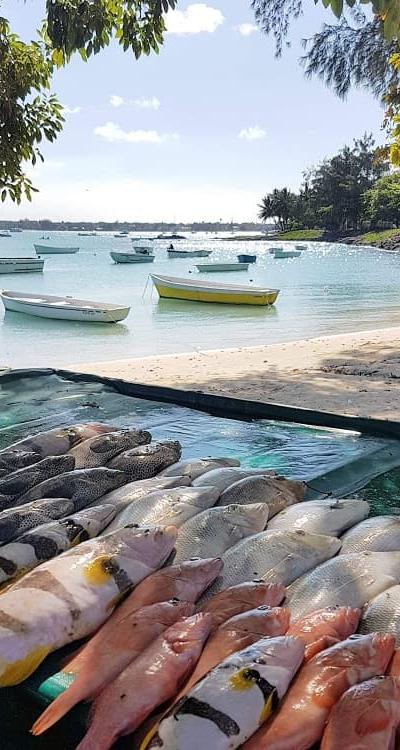
Spend twenty minutes in Super U. The supermarket on Royal Road is not glamorous and is more informative than most museums. The rum aisle alone will teach you the difference between agricultural and industrial rum and why Mauritians argue about it. The fish counter shows you what actually comes out of these waters — vieille rouge, capitaine, octopus, red snapper — so you can order confidently later. And the shelves of curry pastes, pickled achards and Chinese sauces make the island's whole culinary history legible in one aisle.
Judge a catamaran operator by the boat, not the flyer. Walk to the beach in the late afternoon and watch the boats come in. Count how many people get off. A legitimate operator will give you a company name, a written booking, a stated departure and return time, and a boat with visible safety equipment and enough shade for the passenger number. Be wary of anyone who quotes only in cash, cannot say which islands you will actually land on, or is vague about whether you set foot on Île Plate or just look at it. Coin de Mire is a reserve and nobody lands there, so any promise otherwise is a warning sign.
Sleep off the main strip. The lanes running inland off Chemin Vingt Pieds, the road that shadows the coast a few hundred metres back, keep a good deal of the older, quieter village character, with residential streets, small shops and none of the night noise. Pointe aux Canonniers, on the western arm of the bay, does the same on the coast side. Either puts you five minutes from the action without sleeping inside it.
Rent a scooter, not a car, if it is just the two of you. Grand Baie sits at the hinge of the entire northern circuit: Cap Malheureux, Pereybere, Mont Choisy, Trou aux Biches and Pamplemousses are all within a twenty-minute ride. Parking in the village is genuinely difficult and a scooter removes the problem entirely. Remember that Mauritius drives on the left, that rain makes the roads slick very quickly, and that a helmet is mandatory. See our notes on getting around Mauritius before you book anything.
Always carry reef shoes. This is the one thing most visitors forget and most regret. Several beaches around Grand Baie, Pereybere in particular, have sea urchins in the rockier shallows, and stonefish exist in Mauritian lagoons even if encounters are rare. A pair of cheap reef shoes costs less than a cocktail and removes the entire category of problem. Buy them at Super U on your first day.
Carry small cash for the beach and the buses. Cards work everywhere that has a till. They do not work with the fruit seller, the dholl puri cart, the bus conductor or the man renting you a kayak. Keep a few hundred rupees in small notes and you will never be stuck.
Frequently Asked Questions About Grand Baie, Mauritius
Is Grand Baie safe for tourists?
Yes. Mauritius has low levels of violent crime and Grand Baie is well used to visitors. The realistic risks are opportunistic: bag snatching and theft from unattended belongings on the beach or from parked cars. Do not leave valuables on the sand while you swim, and use the hotel safe. At night the main strip is busy and well lit; take a taxi rather than walking unlit back roads, and agree the fare in advance.
What is the best time of year to visit Grand Baie?
May, June, September, October and early November offer the best balance of warm water, dry weather and manageable crowds. The cyclone season runs roughly November to April, with January to March the wettest and most humid stretch. December to January and July to August are peak periods for European visitors, so book well ahead and expect higher rates.
How far is Grand Baie from the airport?
Sir Seewoosagur Ramgoolam International Airport sits in the south-east, roughly 65 to 75 km away depending on the route. Allow between one hour and one hour twenty minutes by car on the motorway. Pre-booked private transfers are the simplest option after a long flight; taxis are available at arrivals but agree the price before departing.
Is Grand Baie good for families with children?
Very. The lagoon is shallow and sheltered, La Cuvette and Mont Choisy are both easy with young children, and the shade at Mont Choisy makes long beach days practical. Family-oriented resorts such as Le Canonnier run children's clubs. The main caution is the nightlife strip, which is loud until late, so choose accommodation accordingly.
Can I visit Grand Baie on a budget?
Yes, more easily than most Mauritian resort areas. Guesthouses and self-catering apartments cost a fraction of the resorts, the public buses are inexpensive and reach most of the north, street food is excellent and cheap, and the beaches are all public. A group catamaran excursion is the one expense worth paying full price for.
What language do people speak in Grand Baie?
Mauritian Creole is the everyday language, French is widely spoken in hospitality and media, and English is the language of government, schools and most official signage. In practice you will be understood in either English or French almost everywhere in Grand Baie.
Do I need a car to get around Grand Baie?
Not to enjoy the village itself, which is walkable end to end. You will want a car, scooter or regular taxi use to reach Trou aux Biches, Cap Malheureux, Pamplemousses or the west coast. Buses run frequently along the coast road and to Port Louis, and are cheap, slow and a genuinely good way to see the island.
Are there vegetarian or vegan food options in Grand Baie?
Plenty. Mauritian cuisine has deep Indian roots, so vegetarian curries, lentil dishes, dholl puri, gâteau piment and vegetable achards are everywhere and are ordinary local food rather than a special menu. Chinese-Mauritian restaurants offer good vegetable dishes, and a growing number of cafés in Grand Baie cater explicitly to vegan diets.
What currency is used and are cards accepted?
The Mauritian rupee (MUR). Cards are accepted at hotels, restaurants, supermarkets and larger shops, and ATMs are easy to find along Royal Road. Carry cash for markets, street food, buses, boat boys and tips.
Is Grand Baie better than Flic en Flac or Belle Mare?
It depends what you want. Grand Baie offers the best combination of restaurants, nightlife, boat excursions and access to other parts of the island, which makes it the strongest single base for a first visit. Flic en Flac on the west coast has a longer beach, calmer evenings and better sunsets. Belle Mare in the east has the finest sand and the largest resorts, but the trade winds are stronger and there is far less to do outside your hotel.
About the Author
Mauritius Explored is a team of Mauritian travel writers, guides and photographers who live on the island and have spent years documenting its coastline, its kitchens, its festivals and the corners that never make the brochures. We grew up eating dholl puri on these streets and swimming in these lagoons, and we write for travellers who want the island as Mauritians actually experience it: the family beaches on a Sunday, the lunch-only Creole kitchens, the dive sites worth the early start. Honest, specific, and always local.
Explore this topic
Get new Mauritius guides by email
Join the Mauritius Explored list for trip ideas, practical updates and downloadable planning help.

Written by the Mauritius Explored editorial team, a Mauritian travel guide focused on beaches, activities, local places, and practical island planning.
Local Mauritius travel research, itinerary planning, and destination coverage since 2011.