Divali in Mauritius 2026: Date, Celebrations, Food & Visitor Guide
Mauritius Lights Up for Divali: What Visitors Need to Know in 2026
Last checked: 4 October 2026.
When is Divali in Mauritius in 2026?
Divali falls on Sunday 8 November 2026. The Government also treats Monday 9 November as a public holiday, under a new rule that extends a Sunday holiday into the following Monday — so plan for a two-day effect. There is no single festival venue: the celebration happens island-wide, in homes and neighbourhoods, with lamps, lights, rangoli and sweets shared between families and neighbours.
The date, and the two-day holiday
The official date for Divali — Sunday 08 November".
Why Divali in Mauritius is not a copy of Divali in India
Hinduism came to Mauritius through indenture. The first ships carrying indentured labourers left India in 1836, and the families who arrived over the following decades came from Bihar, Uttar Pradesh, Tamil Nadu, Andhra Pradesh, Maharashtra and beyond. Their descendants make up the largest religious group on the island — just under half the population, a little over 48% at the 2022 census. Divali has been kept here for generations, and it has taken on a local character.
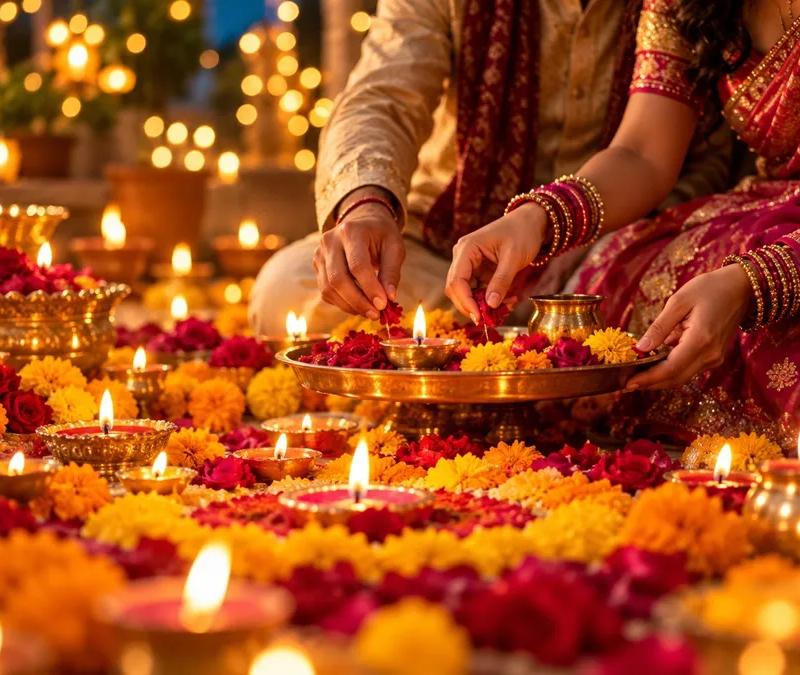
This description captures the main change: "Divali is the most jovial of all Hindu festivals. Celebrated in October/November it marks the victory of righteousness over evil in the Hindu mythology. Traditionally, clay oil lamps were placed in front of every home turning the island into a fairyland of flickering lights; these have now been replaced mostly by decorative electric lights." That shift is real but not total — Mauritian reporting on this year's preparations describes thousands of clay diyas alongside LED bulbs and laser projections. One resident, remembering earlier decades, told Defi Media: "Nous n'avions que quelques lampes de terre que nous utilisions année après année" — we had only a few clay lamps, which we used year after year.
Two observances, not one
Mauritian sources are clear that the festival is not kept at the same hour by everyone. Tamil Mauritians observe Deepavali earlier — before dawn or in the morning, sometimes beginning the previous evening, with a ritual oil bath — while Hindus of Bhojpuri descent observe Divali in the afternoon and evening, lighting lamps at dusk and sitting down to a meal of seven curries. Mauritian commentators give different reasons for the difference, so the honest thing to say is that the practice differs and the explanations vary. If you are invited to something, ask what time.
A festival that crosses communities
This is what surprises visitors most, and it is documented in the Mauritian press rather than being a tourist-board flourish: plates of sweets go to neighbours regardless of religion. Le Mauricien quotes a neighbour, Sandrine: "J'attends chaque année les gâteaux de mes voisins. C'est une tradition à laquelle nous tenons beaucoup" — every year I look forward to my neighbours' cakes; it is a tradition we care about a great deal. Be precise about what that means, though. Mauritians of other faiths take part in the festivities, receive sweets and exchange greetings on a day that is a national holiday for everyone. The religious observance itself belongs to Hindu households; the sharing belongs to the island.
What visitors will see: diyas, lights, rangoli and sweets
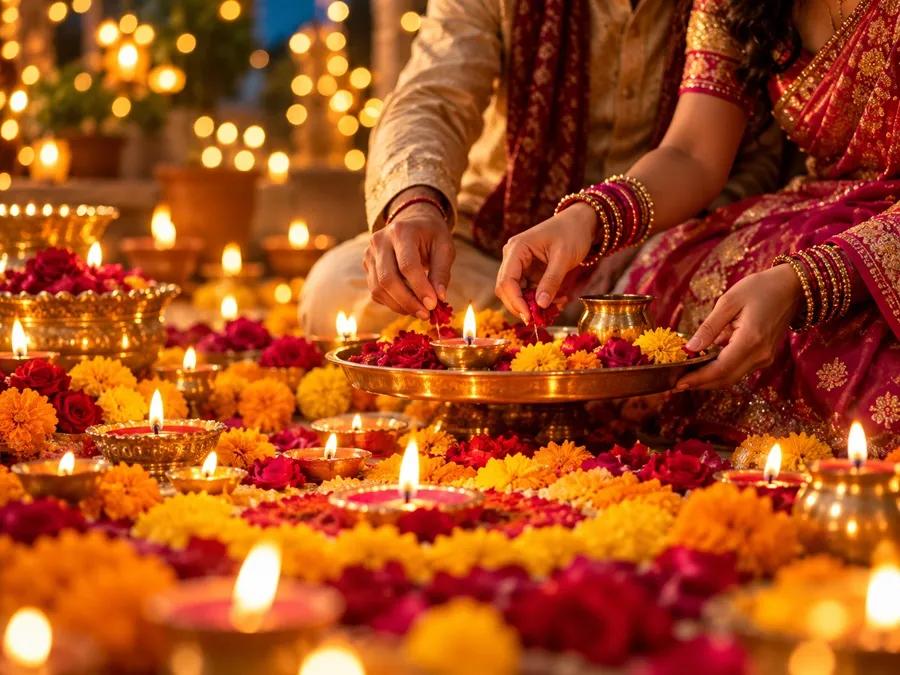
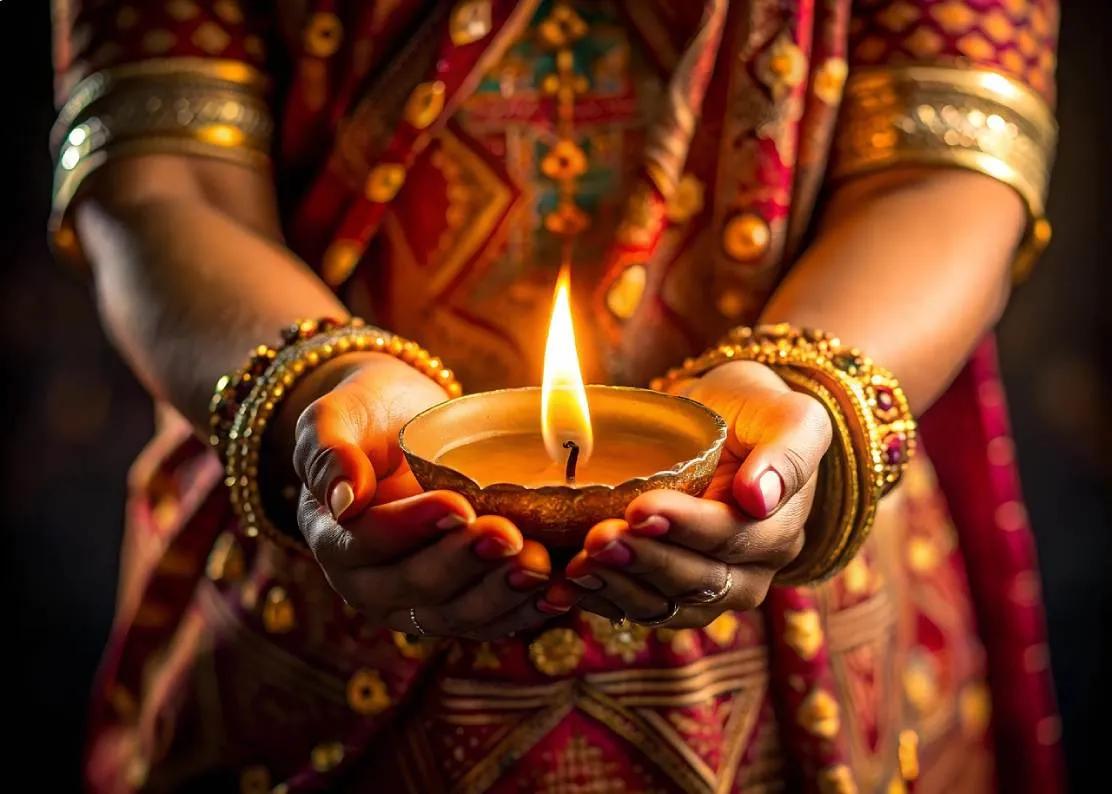
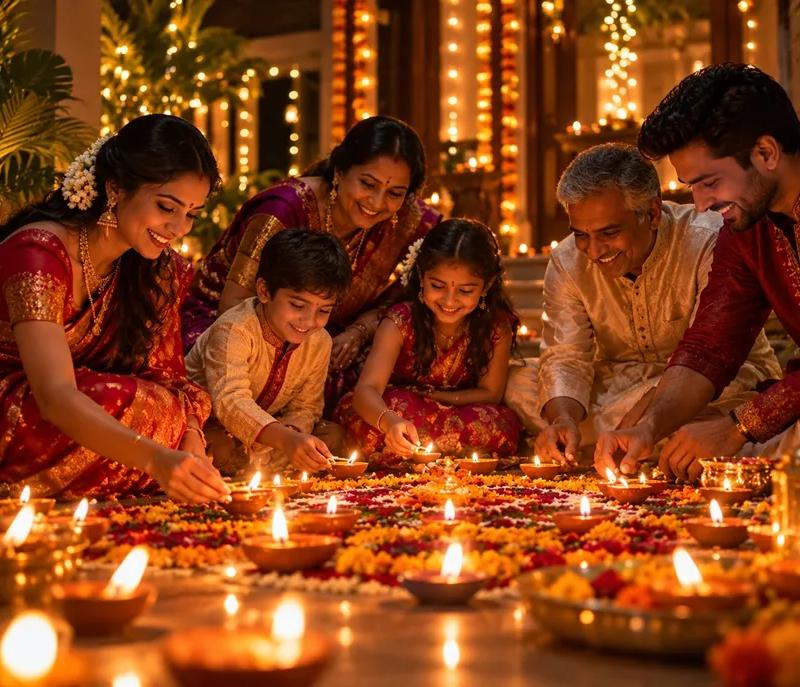
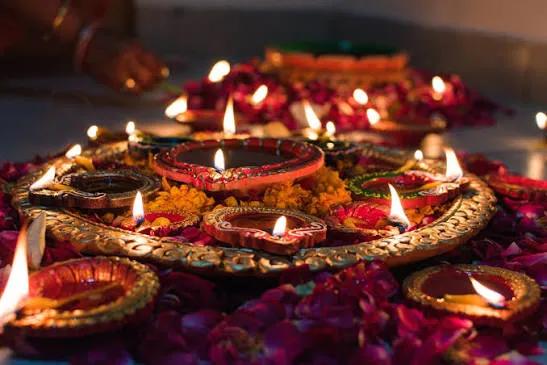
● Diyas. Small clay oil lamps, set out along walls, steps, balconies and garden boundaries at dusk. In an unlit lane the effect is genuinely striking.
● Electric lights. Strings along rooflines and railings, and in some places far more elaborate displays. Houses are often lit for several evenings around the festival, not only on the night.
● Rangoli. Coloured patterns laid at the entrance to a home, usually on the ground, made with powders, rice flour or petals. They are a welcome, and they are temporary.
● Sweets. Boxes and plates of mithai being carried between houses all day. The Tourism Promotion Authority's description is accurate: "Islanders traditionally spend Diwali decorating their homes with lights, preparing traditional sweets and drawing colourful rangolis."
● Firecrackers. Loud and domestic rather than organised. Expect bangs after dark in residential areas.
What you will not see is a central public display. There is no national fireworks show, no parade and no main venue. That is the single most useful thing to understand before planning your evening.
Where to experience the lights respectfully
Because Divali is domestic, the experience is a drive or a walk through lit-up neighbourhoods rather than a ticketed event. Villages and residential streets in the centre and north of the island, in areas with large Hindu populations, are where the lamps are thickest. We are deliberately not publishing a ranked list of best villages, because no public programme or local authority event exists to point you at, and sending visitors to stand outside particular people's houses is not something this guide will do.
Some practical limits that make the difference between being welcome and being a nuisance:
● Stay on public roads and pavements. A lit garden is not an attraction. Do not walk up a driveway or through a gate for a better angle.
● Do not stop in traffic. Residential roads are narrow, and on Divali evening they are busy with families visiting each other. Park properly or keep moving.
● Do not step on or move rangoli. It is laid at a threshold on purpose.
● Keep your distance from prayers. If a family is at worship in a courtyard, walk on.
● Go early rather than late. The lamps are lit at dusk and the atmosphere is at its best in the first couple of hours, which is also when being out with a camera is least intrusive.
If you would rather see Hindu Mauritius in a setting that is designed for visitors, go on a different day. Grand Bassin, or Ganga Talao, is the island's most significant Hindu site, and the Maheswarnath Mandir at Triolet is the largest Hindu temple in the southern hemisphere. Both have visitor guidance on dress and behaviour. Our cultural places guide covers the wider set.
Confirmed Divali 2026 events and hotel programmes
This module was last checked on 4 October 2026 and will be updated weekly until the festival. Everything below is drawn from the organiser's own published page. Anything that could not be verified first-hand has been left out, and the honest summary is that the published offering for Divali 2026 is unusually thin.
Open to visitors, with a published time
LUX* Grand Baie — Diwali Celebrations, Sunday 8 November, 12:30 to 16:00, at Beach Rouge. An Indian lunch buffet at the resort's beach club. The resort's own page says: "This exclusive event welcomes resident guests as well as visiting guests upon reservation." That makes it the one Divali event in Mauritius this year explicitly open to people not staying at the hotel. No price is published — ask when you book, on +230 5942 9773. See the LUX* events page.
Announced, details still to come
Sands Suites Resort & Spa — "Diwali: A Celebration of Light", Sunday 8 November. The resort's experiences calendar describes a celebration "expressed through festive dining and considered island touches" and states that "programme and reservation details to follow". No time, venue, price or access policy is published yet. Worth a call if you are staying nearby.
A commercial party, and not the festival
The Grand Diwali Night 2026 — Saturday 14 November, 18:00 to 02:00, Valentina Hall, Phoenix. A ticketed concert and club night with live singers, DJs and dance performances, at Rs 1,500 standing, Rs 2,700 VIP and Rs 4,500 VVIP, sold through Otayo. Note the date: it is six days after Divali, and it is a commercial event rather than a religious observance. Enjoyable on its own terms, but do not book it expecting the festival.
What is not happening
● No public fireworks display. No government body, municipality, mall or hotel publishes one. Firecrackers in Mauritius are a domestic tradition.
● No municipal light display or community event is published by any town or district council.
● No temple or socio-cultural organisation publishes a public Divali event with a stated visitor access policy. Do not turn up at a temple assuming a spectacle is laid on.
● Most hotel groups have published nothing. Beachcomber, Constance, Heritage, Attitude, Veranda, Sunlife, Four Seasons, Shangri-La, One&Only, Maradiva, Hilton and the Marriott properties have no dated Divali 2026 programme on their own sites as of 4 October. Several will announce something; none has yet.
● The Mauritius Gymkhana Club has a Divali Night on 8 November with dinner and a white dress code, but it is a members' club and publishes no guest or visitor policy at all. We are not listing it as something a traveller can attend.
If your hotel matters to you here, ask it directly whether it is running anything on 8 November, and whether a non-resident could join. Half the properties on the island will put on a dinner that never appears on a website.
What to eat: Divali sweets, and what is actually in them
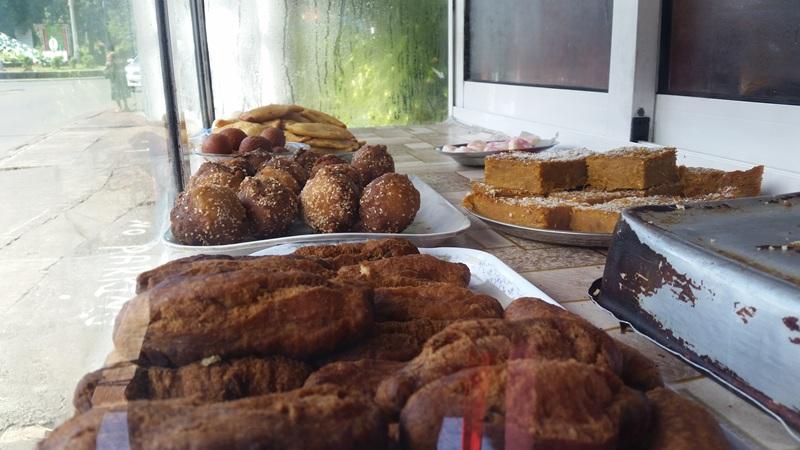
Sweets are the heart of the festival's social life. A Mauritian box costs from around Rs 75 for five pieces, and in the fortnight beforehand the sweet shops run flat out. Bombay Sweets Mart in Port Louis, trading since 1969, is the best-known name; confirm its hours directly, because its website is not reliably current. Here is what you are likely to be handed, and the dietary detail, because this is where guides tend to go wrong.
● Gato patate. The most Mauritian item on the table, and the name misleads: it is not a cake and not savoury. Mashed sweet potato is kneaded with flour to make a dough, which is folded around sweetened grated coconut and fried into a half-moon turnover. Usually vegan — most recipes use plain oil and no dairy — but some cooks fry in ghee, so a vegan visitor should ask.
● Ladoo. Spheres of chickpea or other flour with sugar and ghee. Vegetarian; not vegan, as ghee is central.
● Barfi, known locally as gato dile, milk cake. Fudge-like, made from reduced milk solids and sugar, often with cashew or coconut. Vegetarian; not vegan. Note the trap: coconut barfi still contains milk.
● Gulab jamun. Milk-solid dough balls, fried and soaked in cardamom and rose syrup. Vegetarian; not vegan.
● Mawa samoussa. The familiar samosa shape with a sweet filling of mawa, which is milk reduced to a solid. Vegetarian; emphatically not vegan.
● Rasgulla, nankatai and khaja all turn up too. All vegetarian, none vegan — cheese curd, butter and mawa respectively.
● Jalebi and halwa are both families rather than single recipes, and their ingredients vary. Both are vegetarian. Whether either is vegan depends entirely on who made it and with what fat, so ask.
● Gato zinzli. Sesame-coated glutinous rice and sweet potato balls, Sino-Mauritian in origin, which appear on Divali tables alongside the Indian sweets. Vegetarian and vegan. Their presence is the festival's creolisation in one mouthful.
● Gato piment, the split-pea chilli fritters, often appear among the savoury things shared. Vegetarian and vegan.
Mauritian families also make sweets whose names barely appear in print — gato ros, adourson, tonpon, tekwa, roth — and if someone offers you one, you are being let in on something. If you have real dietary requirements rather than preferences, our vegetarian food guide handles vegetarian, vegan, pure veg and Jain questions properly, including the terminology to use when you ask. For the wider story of how Mauritian food came to be, see the local food guide, and for where to eat the rest of the week, the island food guide.
Can tourists join Divali celebrations in Mauritius?
Partly, and the honest answer has two halves.
The public half is open to anyone: walking or driving through lit neighbourhoods, buying sweets, eating at a hotel or restaurant programme, enjoying a festive atmosphere that genuinely extends across the island. Nobody will begrudge you any of it.
The private half is not a visitor activity. Lakshmi puja in a family's home, the prayers, the family meal — these are not open events, and an invitation is a real one rather than something to angle for. If a Mauritian you have met does invite you, that is a kindness; take a box of sweets, take your shoes off at the door, and follow what everyone else is doing.
If you are offered sweets by a neighbour or a host, accept if your diet allows it. Refusing politely is fine too, but explain why rather than just declining.
Photography and visitor etiquette
● Street scenes are fine. Lit houses from the public road, lamps along a wall, a street of lights — photograph away, as you would anywhere.
● Do not point a camera into a home. A doorway framing a family at dinner is a private moment, not a composition.
● Ask before photographing people, and particularly before photographing anyone praying. Our own temple guides say it plainly: ask before photographing people or ceremonies.
● Temples have rules. Shoes off where indicated, shoulders and knees covered, and no photography where it is restricted. If you cannot see a sign, ask someone.
● Do not move anything for a better shot — not a diya, not a rangoli, not a decoration.
● Leave the drone at the hotel. Flying over residential celebrations is intrusive, and Mauritian recreational drone rules require authorisation. Divali evening in a crowded village is the wrong time to test either.
What closes on 8 and 9 November
Here is the awkward truth, and it is worth saying plainly: almost nothing in Mauritius publishes its public holiday hours in advance. We checked the banks, the malls, the markets and the major attractions. A handful publish something useful; most publish nothing at all, which means you cannot look this up and will have to phone.
What is published
● Metro Express runs "from Monday to Sunday, including public holidays, from 6:00 to 19:00", every ten minutes. A single timetable, every day of the year. On 8 and 9 November it is the most dependable way to move between Port Louis, Rose Hill, Quatre Bornes and Curepipe.
● Buses run on Sundays and public holidays, but the National Land Transport Authority notes that holiday frequencies differ from weekday ones. Allow more time and do not rely on a late bus.
● Casela publishes 9am to 5pm daily and states it is open on public holidays, closing only on 25 December and 1 January. See caselaparks.com.
● L'Aventure du Sucre publishes "10am to 4pm Monday to Saturday (public holidays included)" — which means it is probably shut on Divali itself, Sunday 8 November, and open on Monday 9 November. That is the opposite of what most people would assume, so check with them before you drive to Beau Plan.
● Grand Baie La Croisette publishes Sunday and public holiday hours of 09:30 to 16:00 for its shops, shorter than its weekday hours. Those are its standard published times rather than a Divali announcement, but they are the best guide available. Details at gblc.mu.
Transport, driving and planning your evening
● Pre-book a driver if you want to see the lights. Residential roads after dark, in an unfamiliar area, with heavy local traffic, is not where you want to be learning to drive on the left. A hotel can usually arrange a driver for a few hours.
● If you are self-driving, our car rental page covers the practicalities. Park properly, keep your lights dipped in residential lanes, and do not stop in the road.
● Use the Metro for the central corridor and a taxi or driver for villages.
● Expect firecrackers. They startle, and they can unsettle nervous passengers and dogs.
● Carry mosquito repellent. You will be outdoors after dark in early summer.
● Check the weather the same day. Outdoor plans in early November are weather-dependent.
● Check for traffic notices in the two or three days beforehand, as local authorities occasionally manage roads around busy areas.
Where to stay if Divali falls during your trip
Divali is island-wide, so the sensible order is to choose your hotel for the holiday you want and then add the festival, rather than picking a resort because of one evening. A few things do follow from where you end up:
● North or west makes an evening out easiest. You are close to Grand Baie, to restaurants and shopping, and to populous neighbourhoods where the lamps are thickest. The north Mauritius guide covers the area.
● A remote east or south-west resort means a long drive back after dark. If you are out there, an on-site programme is worth more than it sounds.
● If a confirmed hotel celebration matters, that currently narrows the field considerably — see the events section above, and ask properties directly.
● For families, prioritise a short, pre-arranged return journey over seeing one more street of lights. The family-stay guide covers suitable bases.
● Do not assume a luxury hotel's Divali dinner is the same experience as the festival in a Mauritian neighbourhood. They are different things, and both are fine.
Compare properties and meal plans in the all-inclusive guide and the luxury hotels guide.
A simple 7 to 9 November plan
● Saturday 7 November — a normal day, plus errands. Beach or an activity in the morning. In the afternoon, a market or a sweet shop: Port Louis Central Market and Chinatown are at their best on a Saturday, and our Port Louis walking guide and markets guide cover both. Do your banking and draw cash today. Confirm Sunday and Monday hours for anything you care about.
● Sunday 8 November — Divali. Keep the day light: a beach morning, a long lunch, a swim. If you have booked a hotel programme, that is your afternoon. Then go out at dusk, when the lamps are lit, and spend an hour or two walking or driving through lit neighbourhoods. Be back before the roads get busy with families visiting each other late.
● Monday 9 November — a slow day. Banks and offices closed, many businesses on holiday hours. This is a resort day, a beach day, or a day for something you have confirmed is open. L'Aventure du Sucre is a good candidate precisely because it publishes that it opens on public holidays.
For a longer frame, our itinerary planner has three to ten day routes, and the things to do guide and activities hub cover the rest.
November weather, briefly
Early November is warm and heading into summer, with the cyclone season opening on 1 November and risk low that early. For a festival page the only thing that matters is that your evening plans are outdoors, so check the forecast on the day. Our Mauritius in November guide has the weather, sea temperatures and coast comparison, and the best time to visit guide sets November against the rest of the year.
Frequently asked questions
When is Divali in Mauritius in 2026?
Sunday 8 November 2026. The date is set by General Notice No. 1195 of 2025 from the Prime Minister's Office, which lists "Divali — Sunday 08 November", and was left unchanged by the amended notice of 25 May 2026. The Government also treats Monday 9 November as a public holiday, so plan for two days rather than one.
Is Diwali the same as Divali in Mauritius?
Yes — same festival, different spellings. The Government of Mauritius writes Divali and uses that spelling in its public holidays notices. The Mauritius Tourism Promotion Authority writes Diwali. Deepavali is also used, particularly by Tamil Mauritians, whose observance begins earlier in the day. All three refer to the same festival of lights.
Is Monday 9 November 2026 a public holiday in Mauritius?
The Government is treating it as one. A measure in the Budget Speech 2026-2027 provides that where a public holiday falls on a Sunday, the following Monday is declared a holiday, legislation amending the Public Holidays Act was assented in August 2026, and Cabinet's published highlights of 2 October 2026 refer to 9 November 2026 as a public holiday while rescheduling national examinations around it. No fresh gazetted notice naming the date has been issued, so treat it as a holiday for planning and confirm anything critical nearer the time.
Where can I see Divali lights in Mauritius?
Anywhere people live. Villages and residential areas with large Hindu populations, especially in the centre and north, are where diyas and light displays are thickest. There is no official viewing site and no ranked list worth publishing, because these are people's homes rather than attractions. Stay on public roads, go out at dusk, and do not walk onto private property.
Is there one main Divali event in Mauritius?
No, and this is the most common misunderstanding. Divali in Mauritius is a domestic and neighbourhood festival rather than a staged public one. There is no central venue, no parade and no national fireworks display. The nearest thing to a public event is a hotel dinner or cultural programme, and very few are published for 2026.
Can tourists join Divali celebrations?
You can enjoy the public side freely — the lights, the atmosphere, the sweets, a hotel programme. The private side, meaning prayers and the family meal in someone's home, is not a visitor activity unless you are personally invited. If you are invited, accept graciously, take sweets, remove your shoes at the door and follow your hosts.
What do Mauritians do for Divali?
Homes are cleaned and decorated in the days beforehand. On the day, clay diyas and electric lights are set out, rangoli patterns are laid at entrances, prayers are said at home, and sweets are made or bought and shared with relatives, friends and neighbours — including neighbours of other faiths. Hindus of Bhojpuri descent typically observe in the afternoon and evening, often with a meal of seven curries; Tamil Mauritians observe Deepavali earlier in the day.
What sweets are eaten at Divali in Mauritius?
Ladoo, barfi (known locally as gato dile), gulab jamun, jalebi, halwa, mawa samoussa, rasgulla, nankatai and khaja are all common. The most distinctively Mauritian is gato patate — a fried turnover of sweet potato dough filled with sweetened coconut. Gato zinzli, a Sino-Mauritian sesame ball, often appears too, which tells you something about how Mauritian the festival has become.
Is Divali food vegetarian?
The sweets are vegetarian, and the traditional seven-curry meal is explicitly vegetarian. Vegan is a different question: most Divali sweets contain dairy in some form, whether ghee, milk solids, mawa or curd cheese, and coconut barfi contains milk despite the name. Gato patate is usually vegan but is sometimes fried in ghee, and gato zinzli and gato piment are reliably vegan. If you have a strict requirement, ask rather than assume, and see our vegetarian food guide for the right terminology.
Are shops open on Divali in Mauritius?
It varies and very little is published. Large malls generally open on Sundays and public holidays with shorter hours — Grand Baie La Croisette, for example, publishes 09:30 to 16:00 on Sundays and public holidays. Smaller independent shops may close for all or part of both days. Sweet shops are busy right up to the festival. Check the specific place you need rather than assuming.
Are restaurants open on Divali?
Hotel restaurants operate normally. Independent restaurants vary, and some close on both 8 and 9 November for family reasons, which is exactly when you most want to eat out. If there is a particular restaurant you want, book it and confirm it is opening. Resort guests on a meal plan are unaffected.
Are malls open on 9 November 2026?
Probably, on public holiday hours, but no Mauritian mall publishes holiday-specific opening times in advance. Bagatelle, Phoenix Mall, Cascavelle and Caudan publish nothing for these dates. Grand Baie La Croisette's published Sunday and public holiday hours are 09:30 to 16:00. Phone ahead if a mall trip is the plan.
Do buses run on Divali?
Yes, on a reduced holiday service — the National Land Transport Authority notes that Sunday and public holiday frequencies differ from weekdays. Metro Express is the more dependable option: it publishes a single timetable, 06:00 to 19:00, every day of the year including public holidays, running every ten minutes.
Do hotels celebrate Divali?
Some do, but surprisingly few publish it. As of 4 October 2026, LUX* Grand Baie has a Diwali lunch buffet on 8 November open to visitors by reservation, and Sands Suites has announced a celebration with details to follow. The other major groups have published nothing dated. Many hotels will run something unannounced, so ask yours directly.
Does Mauritius have public fireworks for Divali?
No. No government body, municipality, mall or hotel publishes a fireworks display for Divali 2026. Firecrackers are a domestic tradition set off by families in residential areas after dark, which is a different thing entirely. Do not plan an evening around a show that does not exist.
Can I take photos of Divali decorations?
Street scenes and lit houses from the public road, yes. Pointing a camera into a home, no. Ask before photographing people, and especially before photographing anyone at prayer. Do not touch or move diyas or rangoli for a better shot, follow temple photography rules, and leave drones out of residential areas.
Is Divali a good time to visit Mauritius?
It is a good time to be in Mauritius if you want to see the island at its most characterful, and a slightly awkward one logistically. Early November weather is warm and prices are still below the December surge. Against that, you have two public holidays in one week, unpredictable opening hours and a long weekend when Mauritians themselves are travelling and booking restaurants. Come for it knowingly, book ahead, and keep the Monday flexible.
What should I book before Divali weekend?
Accommodation, if you are travelling over 6 to 9 November, because it is a domestic long weekend. Any hotel Divali programme, directly with the property, since it is unlikely to be included in your room rate. A driver for the evening of the 8th if you want to see the lights. Any restaurant you have your heart set on. And your banking, done before Friday 6 November.
One last thing
Divali in Mauritius rewards a particular kind of attention. There is nothing to queue for and nothing to tick off. What there is, on one evening in November, is an entire island turning its lights on at once — and a long tradition of sending a plate of sweets next door regardless of what anyone believes. Walk a lit street at dusk, buy a box of gato patate from a shop that has been making them since before you were born, and let the rest of your holiday be a holiday. Our festivals guide covers the rest of the Mauritian year.
Other Useful Links
● Mauritius in November — from the weather section. The link-out the brief wanted, so the festival page carries no weather tables.
● vegetarian food guide — from the sweets section, carrying all dietary intent. Live and published 3 October 2026.
● local food guide — the parent cuisine pillar, from the sweets section.
● island food guide — substituted for the brief's dead local-restaurants URL.
● public holidays guide — from the date section. Correct this page before the link goes live; see below.
● festivals guide — the parent festival hub, from the closing section.
● markets guide and Port Louis walking guide — from the Saturday leg of the mini-plan.
● Grand Bassin and Maheswarnath Mandir, Triolet — from the respectful-viewing section. Both carry visitor dress and photography guidance, which is why they are the right destinations for readers who want a temple visit rather than a neighbourhood walk.
● cultural places guide — from the same section.
● north Mauritius guide — from the hotel section, and the best available substitute for the brief's dead nightlife URL, since it carries a restaurants and nightlife section.
● car rental — from the transport section.
● all-inclusive guide and luxury hotels guide — from the hotel section.
● family-stay guide — substituted for the brief's dead families-and-kids URL. Narrower in scope, but live.
● itinerary planner, things to do and activities hub — from the mini-plan.
● best time to visit — from the weather section.
Explore this topic
Get new Mauritius guides by email
Join the Mauritius Explored list for trip ideas, practical updates and downloadable planning help.

Written by the Mauritius Explored editorial team, a Mauritian travel guide focused on beaches, activities, local places, and practical island planning.
Local Mauritius travel research, itinerary planning, and destination coverage since 2011.