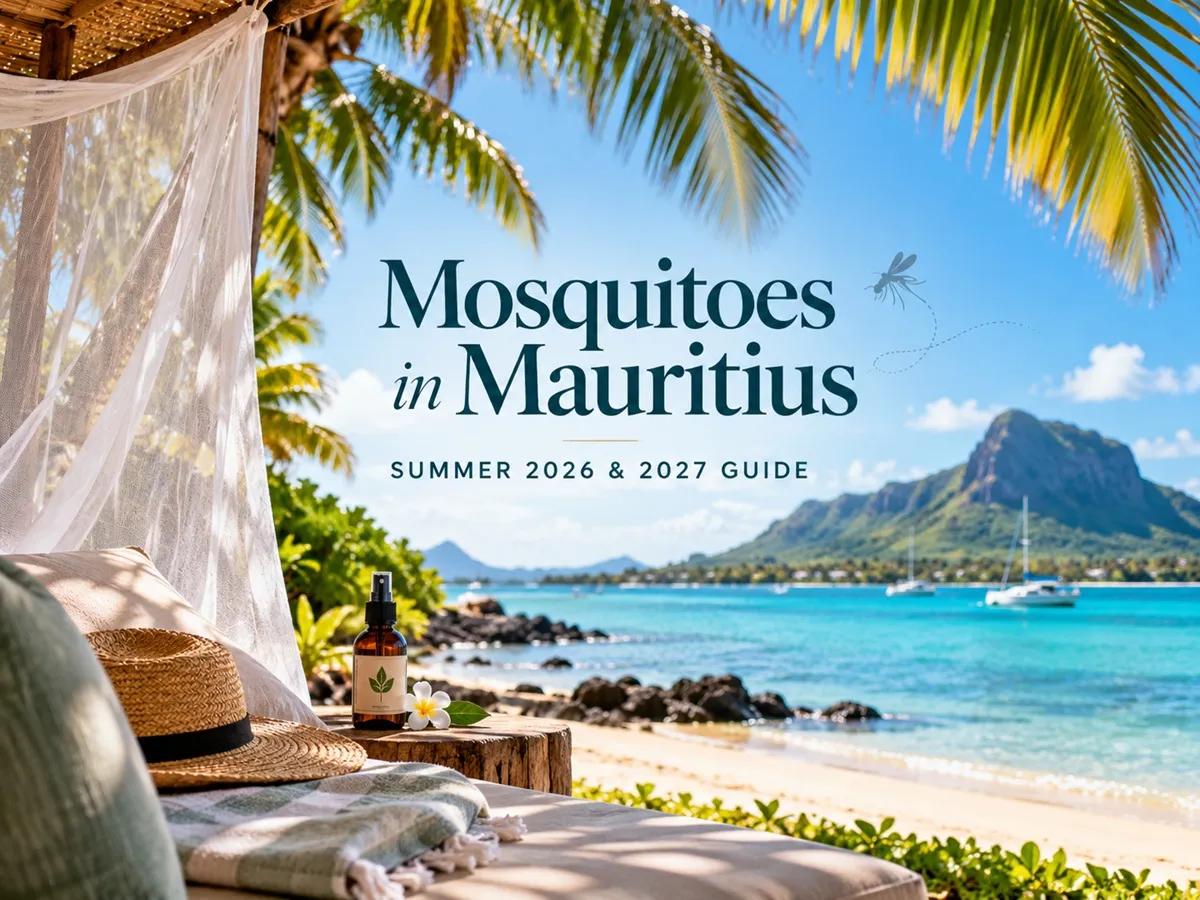
Mosquitoes in Mauritius | Summer 26 & 27 Guide
Mosquitoes in Mauritius: Summer Risks, Prevention and Travel Health Advice
Last reviewed: October 2026. Mosquito-borne disease situations change quickly. Verify current conditions with official sources before you travel.
Mauritius is one of the safest tropical destinations in the world from a health perspective. There is no malaria, and the island has a well-developed public health system with a strong track record in disease surveillance. Most visitors return home with nothing worse than a few itchy bites.
Mosquitoes are still part of life here, and two of the viruses they carry — dengue and chikungunya — turn up periodically. At the time of writing the island is working through a chikungunya outbreak that began in January 2026. None of this is a reason to cancel a trip. It is a reason to pack repellent and use it, which is the single most effective thing any traveller can do. This guide explains what is circulating, when and where risk is highest, and what to do about it.
The Current Mosquito Situation in Mauritius
The mosquito that matters most in Mauritius is Aedes albopictus, the Asian tiger mosquito. It is small, black-and-white striped, and — importantly — it bites during the day, with activity peaking in the early morning and again in the late afternoon. This is the vector for both dengue and chikungunya on the island. Aedes aegypti, the other major arbovirus vector globally, is not established in Mauritius.
Culex species, particularly Culex quinquefasciatus, are the night-time biters responsible for most of the buzzing around your bedroom. They are a nuisance rather than a significant disease risk here.
Chikungunya. Mauritius has been managing a chikungunya outbreak since early January 2026. Ministry of Health and Wellness figures reported through mid-August 2026 put the total at roughly 6,900 confirmed cases across Mauritius and Rodrigues, with no deaths. Weekly numbers fell sharply through the austral winter, down to low double figures by August, which is the expected pattern as temperatures and rainfall drop. The US CDC issued a Level 2 travel health notice in May 2026, still in place as of early September. The last comparable outbreak was in 2009.
Dengue. Dengue circulates at low levels most years, with occasional larger seasons — the most significant recent one in early 2024, when several thousand cases were recorded across Mauritius and Rodrigues. Cases tend to cluster in specific neighbourhoods rather than spreading evenly.
Context matters. The wider south-west Indian Ocean has seen substantial arbovirus activity recently — neighbouring Réunion had a very large chikungunya epidemic in 2025 — and mosquito populations do not respect borders. Mauritian authorities respond to clusters with larviciding, targeted fogging, case tracing and community clean-up campaigns. Figures move week to week, so treat the numbers above as a snapshot rather than a forecast.
Summer in Mauritius and Mosquito Activity
The austral summer runs roughly from November to April, and it is when mosquito-borne illness in Mauritius consistently peaks. Three factors combine:
For the wider seasonal picture, read our Mauritius rainy season guide.
- Heat. Coastal temperatures sit around 27–33°C. Warmth shortens the mosquito life cycle, so populations build faster, and shortens the time between a mosquito taking an infected blood meal and becoming able to transmit.
- Rainfall. Summer is the wet season and the cyclone season. Downpours leave standing water in blocked gutters, plant saucers, tyres, tarpaulins and construction sites. Aedes albopictus breeds in very small volumes of clean, still water; a bottle cap is enough.
- Humidity. High humidity extends adult mosquito survival, giving each insect more chances to bite.
February and March are historically the highest-risk months, with risk tapering through April and bottoming out between June and September. Winter reduces transmission considerably without eliminating it.
You might also want to check those:
Mauritius Weather Says Rain Every Day — Should You Worry?
Read our Mauritius cyclone season guide for the broader travel context.
Staying on the Coast: What Visitors Should Know
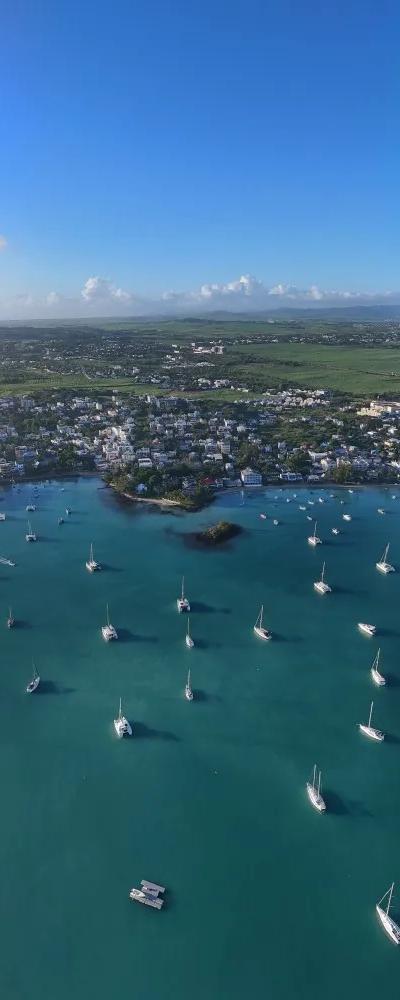
For a coastal holiday, mosquito protection can fit easily into your daily routine. Open, breezy beachfronts can be less favourable to mosquito activity than sheltered areas, making time beside the ocean more comfortable. Conditions vary, however, and a sea breeze does not eliminate the possibility of bites.
Densely populated neighbourhoods can provide breeding opportunities close to people, particularly where containers and drainage collect water. Exposure is not confined to these neighbourhoods, so tourist areas should not be considered exempt.
Wherever you explore Mauritius, simple precautions—including regular repellent use during the day and evening—help reduce bites and the risk of mosquito-borne illness. Making prevention part of your daily routine allows you to enjoy the island with greater confidence.
For coastal trip planning, compare the best beaches in Mauritius by region.
Where Mosquito Exposure Can Be Higher
High-Risk Locations on the Island
Risk in Mauritius is best understood by environment rather than by postcode, and it shifts from year to year depending on where clusters emerge.
Higher-exposure settings generally include:
- Densely built urban and suburban areas, where domestic water containers, construction sites and drainage problems concentrate breeding. The 2026 chikungunya outbreak has centred on the lower and middle Plaines Wilhems conurbation — Rose Hill, Beau Bassin, Quatre Bornes and surrounding localities — with additional attention on parts of Port Louis.
- Low-lying areas with poor drainage, where water pools after rain, including near active construction.
- Vegetated residential areas, since tiger mosquitoes rest in shaded foliage and bite close to where they breed. A leafy garden can carry more exposure than an open beach.
- Rodrigues, which has recorded its own cases in both dengue and chikungunya seasons.
Past dengue clusters have been reported in districts including Port Louis, Rivière du Rempart, Pamplemousses and the Vacoas area. Coastal resorts are not risk-free, but well-maintained grounds with active vector control, screened rooms and air conditioning generally mean lower exposure than dense residential neighbourhoods. Wind helps too: breezy stretches of coast have noticeably fewer mosquitoes than sheltered inland valleys.
Choosing and Using Mosquito Repellent
Look for a registered insect repellent containing DEET, picaridin—also called icaridin—or IR3535. Choose a product appropriate for the user’s age and the time you expect to spend outdoors. Follow the label: protection time varies by formulation, and one morning application may not last through an entire day of sightseeing.
Apply sunscreen first and repellent second. Reapply as directed, taking account of swimming and sweating. Avoid eyes, mouths, broken skin and application underneath clothing. Do not rely on an untested natural product simply because it smells pleasant. CDC mosquito bite prevention
Clothing and Accommodation Precautions
Loose, long sleeves, trousers and socks provide useful coverage for garden visits, walks and outdoor meals. Lightweight clothing makes this more comfortable in humid weather.
Permethrin-treated clothing can offer additional protection when used according to instructions. Permethrin clothing treatments must not be applied directly to skin.
Use intact window and door screens and air conditioning where available. Keep doors closed when practical. If your sleeping area is exposed to mosquitoes, use a properly fitted mosquito net; daytime naps also need consideration. Ask your host to address damaged screens or persistent standing water around the property.
Protect Yourself During the Day and Evening
Aedes mosquitoes bite during daylight hours, often with increased activity around the beginning and end of the day. Do not wait until sunset to apply repellent. Protection matters during sightseeing, lunch outdoors and time spent in gardens, as well as in the evening. Mosquitoes can also bite at night, so maintain room protection.
How to Protect Yourself
There is no vaccine that removes the need for bite prevention, so this section is the core of the guide.
Use an effective repellent, and use it properly. Look for one of these active ingredients:
- DEET at 20–50% (higher concentrations extend duration, not strength)
- Picaridin (also called icaridin or KBR 3023) at 20%
- IR3535 at 20%
- Oil of lemon eucalyptus / PMD, not for children under three
Apply to all exposed skin, reapply as the label directs, and put repellent on after sunscreen. Because Aedes albopictus bites in daylight, morning application matters as much as evening.
Dress for it. Loose, light-coloured long sleeves and trousers in the early morning and late afternoon make a real difference. For longer stays, permethrin-treated clothing adds useful protection — treat the clothing, never the skin.
Choose accommodation well. Air conditioning and intact window and door screens are the two most useful features. If you are staying somewhere open to the outdoors, use a bed net, ideally insecticide-treated, and check it for holes. Plug-in vaporisers help in enclosed spaces.
Know the clock. Dengue and chikungunya risk is highest in daylight, particularly the first hours after sunrise and the last few before dusk. Night-time bites are more likely to be nuisance Culex mosquitoes.
Remove standing water. Walk your property weekly and empty or cover anything holding water: plant saucers, buckets, roof gutters, pet bowls, tarpaulins, blocked drains, unused tyres. Scrub containers rather than just tipping them, since eggs stick to the sides. This is the measure Mauritian public health teams push hardest, because it works.
Medical Preparation Before You Travel
Book a travel health consultation four to six weeks before departure, and bring your itinerary and medical history.
Vaccines. This picture has changed significantly in the last two years, so check current availability where you live rather than relying on older articles:
- Chikungunya: two vaccines now exist. Vimkunya, a virus-like particle vaccine, is licensed in the US, EU and UK for people aged 12 and over. Ixchiq, a live-attenuated vaccine, was withdrawn from the US market in January 2026 following an FDA licence suspension, and remains licensed in Europe, the UK, Canada and Brazil with age restrictions after safety signals in older adults. Whether vaccination makes sense depends on your age, health, trip length and conditions at your destination — a conversation for a travel medicine specialist, not a checkbox.
- Dengue: Dengvaxia is being discontinued and was only ever suitable for people with laboratory-confirmed prior dengue infection. Qdenga is licensed in the EU, UK and elsewhere, but most national advisory bodies recommend it for travellers only where previous dengue infection is documented. It is not available in the US.
- Malaria: no antimalarial tablets are recommended for Mauritius; there is no ongoing local transmission. Make sure routine vaccinations are current, and ask about hepatitis A and typhoid.
Symptoms to watch for. Both dengue and chikungunya typically begin three to seven days after a bite:
- Dengue: sudden high fever, severe headache, pain behind the eyes, muscle and joint aches, nausea, rash.
- Chikungunya: sudden fever with prominent, often severe joint pain, sometimes with swelling and rash. Joint pain can persist for weeks or months in some people, though most recover within a week or two.
Seek medical attention promptly if you develop a fever in Mauritius or within two weeks of returning home, and tell the clinician where you have been. Avoid aspirin and ibuprofen if dengue is a possibility, because of bleeding risk; paracetamol is the usual choice. Warning signs needing urgent care include severe abdominal pain, persistent vomiting, bleeding gums or nose, blood in vomit or stool, extreme lethargy or difficulty breathing, particularly in the day or two after a fever breaks. Mauritius has public hospitals and good private clinics, and most resort areas can arrange a doctor quickly.
Insurance. Take out cover for medical treatment, hospitalisation and medical evacuation, and check that it covers trip disruption during cyclone season if you travel between November and April. Confirm whether you must use specific providers or pay upfront and claim back.
A Note on Staying Informed
Outbreak situations evolve over weeks, not years. A destination with active transmission last summer may be quiet now, and the reverse is equally true. Rather than relying on any single article — including this one — check official sources shortly before you travel, and again during longer stays. If you are already in Mauritius, local news and Ministry of Health communiqués will tell you which localities are under active vector control.
Official Resources & Government Guidance
Mauritius Ministry of Health and Wellness
The Ministry maintains public health advisories, outbreak communiqués and prevention guidance, and is the authoritative source for case numbers and affected localities.
- Official government portal: https://govmu.org — navigate to the Ministry of Health and Wellness section
- Ministry of Health and Wellness site: https://health.govmu.org
Planning a trip next year? Start with our Mauritius 2027 travel guide.
Explore this topic
Get new Mauritius guides by email
Join the Mauritius Explored list for trip ideas, practical updates and downloadable planning help.

Written by the Mauritius Explored editorial team, a Mauritian travel guide focused on beaches, activities, local places, and practical island planning.
Local Mauritius travel research, itinerary planning, and destination coverage since 2011.