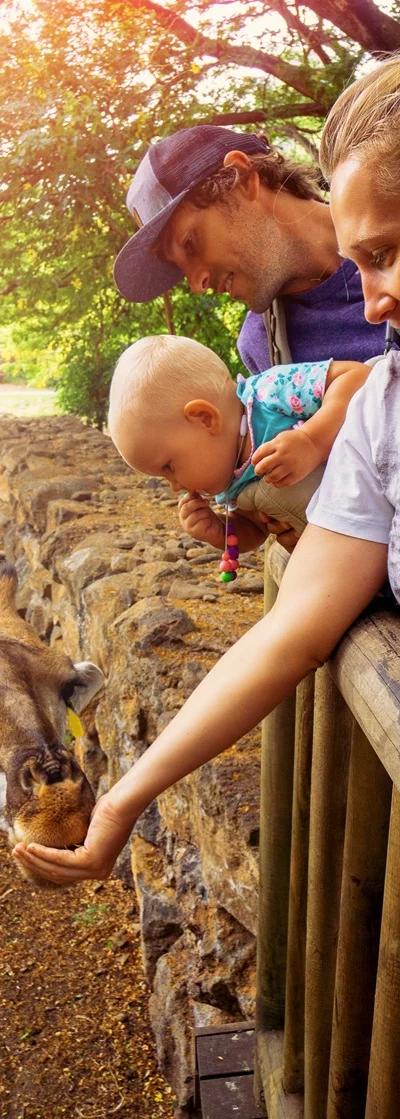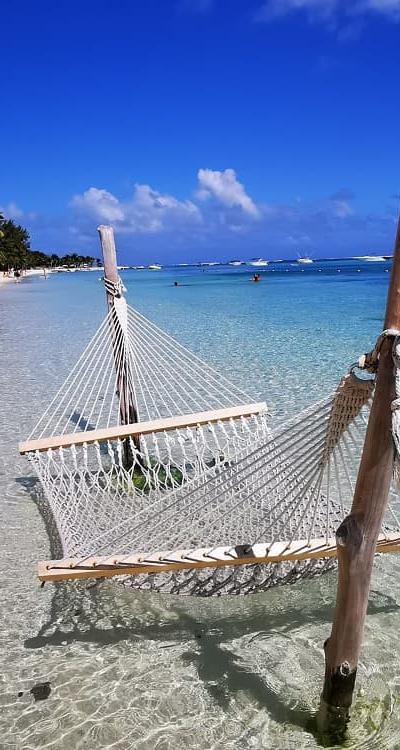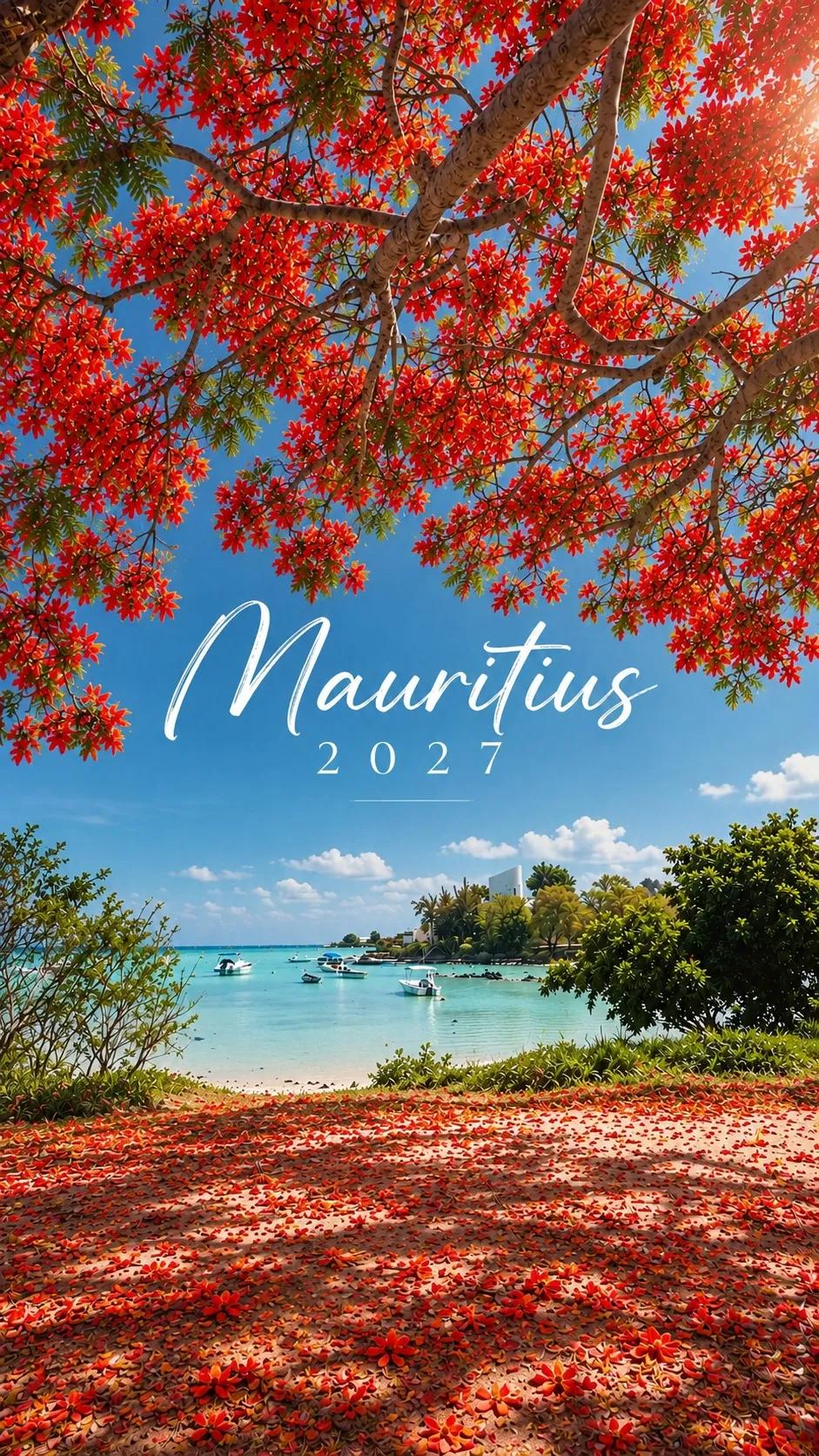
Mauritius 2027 Guide - All you need to know
Mauritius 2027 Travel Guide: Best Time, Weather, Hotels & Things to Do
Welcome to the Mauritius Explored Travel Guide — your starting point for planning a trip to Mauritius.
Mauritius is more than a beach destination. It is an island of turquoise lagoons, mountain roads, waterfalls, local food, luxury resorts, family-friendly beaches, catamaran cruises, wildlife, golf courses, boutique hotels and hidden nature experiences.
This page is designed as your main Mauritius travel planning hub. Instead of searching across many different pages, you can use this guide as a reference point to find the right Mauritius blogs for every part of your trip.
Whether you are visiting Mauritius for the first time, planning a honeymoon, travelling with kids, booking tours, choosing where to stay, or building a 7-day or 10-day itinerary, this page will help you move quickly to the right guide.
If you are planning a 2027 trip, three things will shape it more than anything else: which months you travel, which coast you stay on, and how early you book. Mauritius is small enough to cross in ninety minutes and varied enough that the same week can feel completely different depending on where you base yourself. This guide sets out the official climate data month by month, the verified 2027 public holiday calendar, an honest comparison of the five main coasts, and the trade-offs behind every recommendation. It is built for planning, not browsing.
All links at the end
Mauritius in 2027: Quick Answer
Mauritius is worth visiting in 2027 for warm-sea beach holidays, luxury and family resorts, and a compact island that combines coast, mountains and Creole culture. The best months are broadly September to November and April to June. The Mauritius Meteorological Services defines a warm, humid summer from November to April and a cooler, drier winter from June to September, with May and October as transition months. Mean summer temperature is 24.7°C and mean winter temperature 20.4°C — a difference of only 4.3°C, so there is no bad-weather season, only trade-offs.
Summer gives you the warmest sea and the festive season, but higher humidity, more rain and the cyclone season. Winter gives you dry, comfortable days and firm hiking ground, but cooler water and stronger trade winds. The shoulder months at either end resolve most of that tension.
Where Is Mauritius, Exactly?
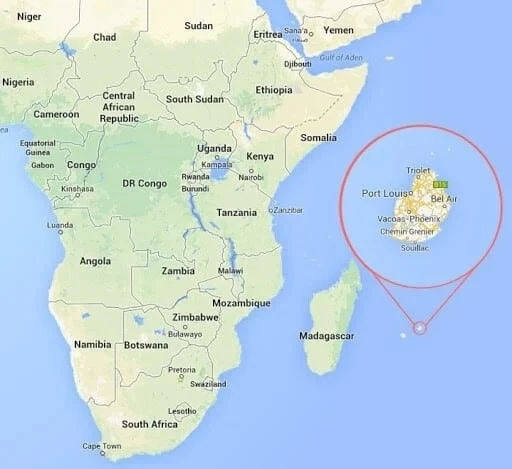
Let's clear this up first, because it trips a lot of people up. Mauritius is a small island nation in the Indian Ocean, sitting roughly 2,000 kilometres off the southeast coast of Africa, east of Madagascar. It's volcanic in origin, which is the secret behind almost everything that makes it special: the dramatic mountains, the lush green interior, the sugarcane plains, and the coral reefs that ring the island and turn the water inside them into warm, calm lagoons.
Mauritius 2027 Quick Facts
● Best overall months: September to November and April to June, for the balance of warmth, lower rainfall and manageable crowds. No single month is best for everyone.
● Warmest period: January and February, with average day maximum reaching 29.2°C island-wide
● Coolest period: July and August, with average night minimum falling to 16.4°C
● Cyclone season: The South-West Indian Ocean season runs 1 November to 15 May
● Sea temperatures: Roughly 27–28°C in summer and 23–25°C in winter (indicative coastal figures)
● Main airport: Sir Seewoosagur Ramgoolam International Airport (MRU), in the south-east
● Popular regions: North, West, South-West, East and South
● Top trip styles: Beach, luxury, family, honeymoon, nature and road trip
● Currency: Mauritian rupee (MUR). Cards are widely accepted in hotels, restaurants and supermarkets; carry small notes for markets, street food, buses and boat operators
● Public holidays 2027: 16 dates announced by Cabinet — see the section below
It's one main island (plus the smaller, even sleepier Rodrigues Island, and a scattering of islets).
It's about four times the size of Seychelles, with a population of roughly 1.3 million.
The capital is Port Louis, on the northwest coast.
It's a genuine cultural melting pot — Indian, African, Chinese, French, and Creole heritage all woven together.
English and French are widely spoken, alongside Mauritian Creole. You will have no trouble being understood. Note that the official language is however English
Climate figures are Mauritius Meteorological Services long-term means. They describe what is normal, not what will happen on a given date in 2027.
Is Mauritius Worth Visiting in 2027?
Mauritius does a specific set of things unusually well, and it is worth being clear about which.
It suits you if you want reef-protected lagoons that are calm enough for children and weak swimmers, a genuinely high concentration of luxury resorts for the size of the island, short driving distances between completely different landscapes, and a food culture built from Creole, Indian, Chinese and French traditions that you can eat at street-cart prices. The island is also politically stable, English and French are both widely spoken, and the tourism infrastructure is mature rather than experimental.
It suits you less if you want big-game wildlife, a large-scale cultural sightseeing circuit, or budget backpacker travel. There are no large native land mammals. The historical sites are interesting but compact. And while guesthouses and self-catering apartments have made the island far more affordable than its reputation suggests, the headline resorts are genuinely expensive in peak weeks.
The honest weather position: every month is swimmable and every month has sun. What changes is humidity, rainfall and sea temperature, and the gap between the best and worst months is smaller here than in most tropical destinations. With a mean seasonal temperature difference of just 4.3°C, you are choosing between good and slightly different, not between good and bad.
Best Time to Visit Mauritius in 2027
The short answer: September to November and April to June offer the best all-round conditions. These sit either side of the two seasons and avoid the extremes of both — the humidity and rainfall peak of high summer, and the strongest trade winds of deep winter.
But "best" depends entirely on what you are optimising for.
Best for beaches and swimming: November to March, when the sea is at its warmest. October and November combine warm water with the lowest rainfall of the year.
Best for warm sea temperatures: January to March, when coastal water sits at the top of its range. If warm water is the single deciding factor, this is your window, and you accept the humidity that comes with it.
Best for hiking and road trips: June to October. Ground is firm, humidity is lower and midday walking is comfortable. Black River Gorges and Le Morne are markedly easier in these months than in February.
Best for families: April to June and September to November. Sea is warm enough, humidity is manageable for young children, and these periods fall outside the tightest booking crunches.
Best for honeymooners: May, September, October and November. Warm without being oppressive, and priced below the festive and European-summer peaks.
Best for lower humidity: August to October, when the northern reference station records its lowest humidity readings of the year, at 77–80%.
Best for fewer crowds: the shoulder periods immediately before and after the two demand peaks — early December before the festive surge, and late January through March after it, when weather is at its wettest but visitor numbers fall away. Demand in Mauritius is driven mainly by European and South African school holidays rather than by the island's own climate.
Best for Christmas and New Year atmosphere: late December, with the caveat that this is the single most competitive booking window of the year.
For month-level detail and a deeper comparison, see our best time to visit Mauritius guide.
Mauritius Weather by Month 2027
Two things before the table.
These are climate averages, not a 2027 forecast. Nobody can tell you what the weather will do on a specific date in 2027. The figures below come from Mauritius Meteorological Services long-term means and describe what is normal for each month.
The figures are from one station. The table uses Pamplemousses, the MMS reference station for the north, to keep the year internally consistent. The north is warmer and drier than the east and cooler than the west in places, so treat these as the shape of the year rather than as the number for every beach.
January
● Temperature: 31.1°C / 22.1°C (average day maximum / night minimum)
● Rain and humidity: 206.2mm across 16 rain days, 82% humidity
● Sea and beaches: Warmest sea of the year, with calm lagoons
● Best for: Warm-water swimming, snorkelling and the tail end of the festive season
● Consider: Peak humidity and rainfall, and inside the cyclone season
February
● Temperature: 30.8°C / 22.2°C (average day maximum / night minimum)
● Rain and humidity: 239.9mm across 16 rain days, 84% humidity
● Sea and beaches: Very warm sea, with occasional swell after a passing system
● Best for: Diving, sea temperature and the lowest visitor numbers of the year
● Consider: The wettest month island-wide, alongside March
March
● Temperature: 30.6°C / 21.7°C (average day maximum / night minimum)
● Rain and humidity: 158.9mm across 15 rain days, 83% humidity
● Sea and beaches: Warm sea and good visibility between rain events
● Best for: Value, warm water and quieter resorts
● Consider: Still humid, and the cyclone season continues
April
● Temperature: 29.8°C / 20.8°C (average day maximum / night minimum)
● Rain and humidity: 157.6mm across 15 rain days, 84% humidity
● Sea and beaches: Sea still warm as conditions begin to settle
● Best for: Shoulder-season value and honeymoons
● Consider: Rain is decreasing but not yet low
May
● Temperature: 28.1°C / 18.6°C (average day maximum / night minimum)
● Rain and humidity: 99.2mm across 12 rain days, 83% humidity
● Sea and beaches: Comfortable swimming in calmer lagoons
● Best for: A transition month — warm days with far less rain
● Consider: Trade winds beginning to strengthen
June
● Temperature: 26.5°C / 16.7°C (average day maximum / night minimum)
● Rain and humidity: 68.1mm across 12 rain days, 82% humidity
● Sea and beaches: Cooler water, with the east coast turning choppier
● Best for: Hiking, road trips and dry days
● Consider: Cooler evenings, and wind picking up on exposed coasts
July
● Temperature: 25.7°C / 16.1°C (average day maximum / night minimum)
● Rain and humidity: 72.9mm across 14 rain days, 82% humidity
● Sea and beaches: Coolest sea of the year; sheltered north and west are the best bet
● Best for: Walking, culture and the west-coast whale-watching season
● Consider: The coolest month, with the strongest winter feel
August
● Temperature: 25.9°C / 16.2°C (average day maximum / night minimum)
● Rain and humidity: 75.1mm across 13 rain days, 80% humidity
● Sea and beaches: Cool but swimmable in sheltered lagoons
● Best for: Kitesurfing, hiking and the European summer holidays
● Consider: The windiest month at the northern station
September
● Temperature: 27.0°C / 16.6°C (average day maximum / night minimum)
● Rain and humidity: 46.0mm across 9 rain days, 78% humidity
● Sea and beaches: Warming, with very reliable beach weather
● Best for: Dry weather, hiking, birdlife and value
● Consider: Sea still on the cool side of comfortable
October
● Temperature: 28.4°C / 17.7°C (average day maximum / night minimum)
● Rain and humidity: 47.9mm across 8 rain days, 77% humidity
● Sea and beaches: Warming steadily, with clear water
● Best for: The driest month island-wide, and the best all-round conditions
● Consider: Sea not yet at summer temperature
November
● Temperature: 30.0°C / 19.1°C (average day maximum / night minimum)
● Rain and humidity: 49.5mm across 8 rain days, 78% humidity
● Sea and beaches: Sea warming fast as the trade winds ease
● Best for: The highest sunshine of the year, at 8.7 hours a day
● Consider: The cyclone season opens on 1 November
December
● Temperature: 30.7°C / 20.9°C (average day maximum / night minimum)
● Rain and humidity: 127.5mm across 10 rain days, 80% humidity
● Sea and beaches: Warm sea and the longest days of the year
● Best for: Festive season, warm water and long daylight
● Consider: Rainfall jumps sharply, and demand and pricing peak
Reading the year
Three patterns matter more than any single month.
The dry window is September to November. The northern station records 46.0mm, 47.9mm and 49.5mm across those three months — less than a quarter of February's total. October is officially the driest month across the island.
Rainfall does not track temperature. December is only marginally warmer than November but records more than twice the rain. If you are choosing between the two, you are choosing between festive atmosphere and dry weather.
Sunshine peaks in November, not midsummer. The northern station's highest figure is 8.7 hours a day in November, ahead of January's 8.1. Cloud builds with the wet season.
For month-by-month depth, see our Mauritius weather by month pages and the Mauritius summer guide.
Mauritius Cyclone Season in 2027
The South-West Indian Ocean cyclone season runs from 1 November to 15 May, so it overlaps the Mauritian summer. Being inside the season does not mean a cyclone will affect your holiday — activity concentrates in January, February and March, and most visits pass with no tropical system nearby. The realistic effects are rain, wind, cancelled boat trips and occasional flight disruption rather than anything dramatic.
Here is what that means in practice. A named system somewhere in the basin is not a threat to Mauritius; the basin is enormous. Systems that do pass within range usually affect a holiday through rainfall and sea state — excursions cancelled, the lagoon turning rough, a day rearranged. On the rare occasions a system approaches directly, the Mauritius Meteorological Services issues cyclone warnings in classes, broadcast on radio, television and its website, and hotels relay them to guests promptly and take them seriously.
Three practical steps cover it. Save the Mauritius Meteorological Services bulletin page to your phone before you travel. Take travel insurance that explicitly covers weather disruption, bought before any system is named, since cover typically closes once a storm is announced. And if you are travelling January to March, build one flexible day into the itinerary and book weather-dependent excursions early in your stay so there is room to move them.
What this should not do is rule out summer travel. It should shape how much slack you leave in the plan.
Which Coast of Mauritius Is Best?
There is no universally best coast. Each answers a different question, and the choice matters more here than the choice of hotel.
North — Grand Baie, Pereybère, Trou aux Biches, Mont Choisy
● Beaches: Sheltered, shallow lagoons at Trou aux Biches and Mont Choisy
● Wind exposure: Low — the coast faces away from the prevailing south-easterlies
● Sunsets: Good
● Dining and nightlife: The widest choice on the island, and the only real nightlife, at Grand Baie
● Families: Excellent
● Best for: First-time visitors, walkable dining and boat excursions
West — Flic en Flac, Tamarin, Black River
● Beaches: Long and sheltered at Flic en Flac, with calm water
● Wind exposure: Low
● Sunsets: The best on the island — you face the horizon
● Dining and nightlife: Good and improving, with quieter evenings than the north
● Families: Very good
● Best for: Divers, dolphin trips, weather-sensitive travellers and couples
South-West — Le Morne
● Beaches: A dramatic setting beneath Le Morne Brabant
● Wind exposure: Higher — which is exactly why kitesurfers come
● Sunsets: Excellent
● Dining and nightlife: Limited outside the resorts
● Families: Good within resorts
● Best for: Kitesurfing, scenery and luxury resort stays
East — Belle Mare, Trou d'Eau Douce, Palmar
● Beaches: The finest white sand in Mauritius, at Belle Mare and Palmar
● Wind exposure: Highest — fully exposed to the trade winds
● Sunsets: Limited; this is the sunrise coast
● Dining and nightlife: Mostly within the resorts
● Families: Good within resorts
● Best for: Large resort stays, Île aux Cerfs access and windsurfing
South — Blue Bay, Mahébourg, Bel Ombre
● Beaches: Varied — Blue Bay's marine park, then cliffs and surf toward Gris Gris
● Wind exposure: Moderate to high
● Sunsets: Good
● Dining and nightlife: Local rather than resort-led; Mahébourg has real village life
● Families: Good at Blue Bay
● Best for: Road trips, Creole culture, snorkelling and quiet
The seasonal overlay. The south-easterly trade winds are the mechanism behind most of this. They blow for much of the year and are strongest in winter, which is why the east and south-east feel breezier and choppier from roughly June to September, and why the north and west stay calmer. In the Mauritian summer, the trades ease and the east becomes noticeably more comfortable — but summer is also when rainfall rises fastest on the east coast.
If you want one rule: the north is the strongest all-round first-time base, the west is the best bet if dry weather and calm water drive your decision, and the east is where you go when the resort itself is the holiday.
Where to Stay in Mauritius in 2027
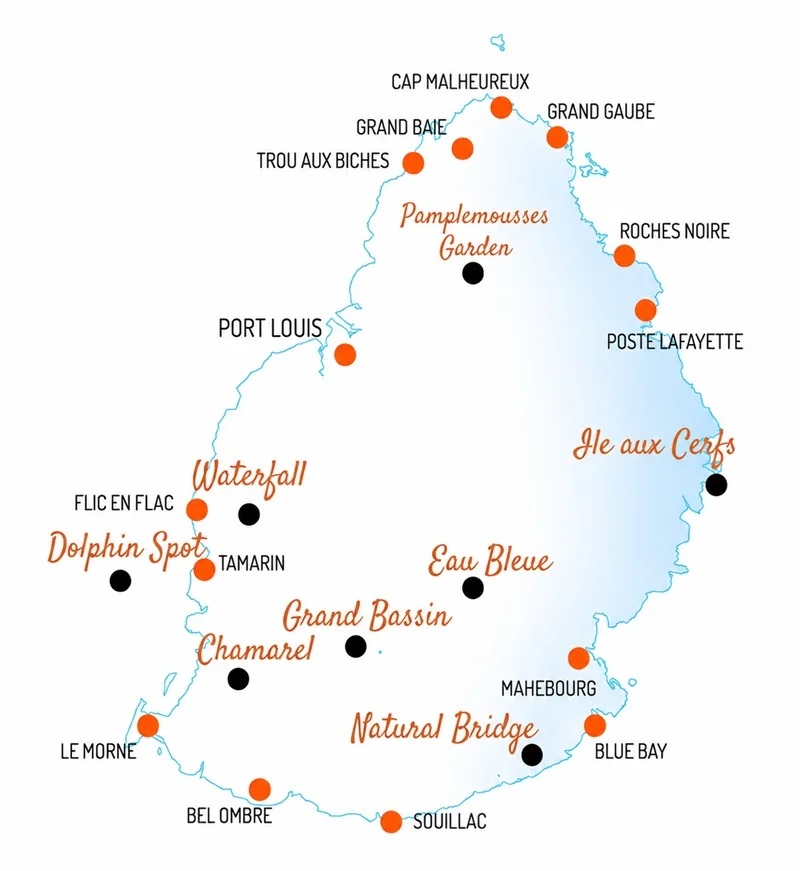
Choose the coast first, then the category. Getting this order right avoids the most common Mauritius booking mistake — falling for a photograph of a resort on the wrong side of the island for the way you actually want to travel.
North Mauritius — Grand Baie, Pereybère, Trou aux Biches, Mont Choisy. The most complete base. Restaurants and bars within walking distance, the widest choice of boat excursions departing from Grand Baie public beach, sheltered swimming and the deepest supply of mid-market hotels, guesthouses and self-catering apartments. Grand Baie is a working village as well as a resort strip, so it stays busy year-round. Choose it for a first trip, a mixed-interest group or a tighter budget.
West Mauritius — Flic en Flac, Tamarin, Black River. The driest coast, with calm water and the island's best sunsets. Dolphin trips leave from Tamarin and Rivière Noire at dawn, dive centres cluster at Flic en Flac, and Black River gives quick access to Chamarel and Black River Gorges. Quieter evenings than the north. Choose it for diving, weather sensitivity or a couples' trip.
South-West Mauritius — Le Morne, Bel Ombre fringe. The most dramatic landscape on the island, with the UNESCO-listed Le Morne Brabant rising straight out of the lagoon. Consistent wind makes it the kitesurfing centre. Dining outside the resorts is limited, so this suits people who intend to stay put or who have hired a car. Choose it for scenery, watersports or a high-end resort stay.
East Mauritius — Belle Mare, Trou d'Eau Douce, Palmar. The finest sand and the greatest concentration of large luxury resorts, plus access to Île aux Cerfs. The trade-off is exposure: this is the windiest coast for much of the year and the wettest in summer. Choose it when the resort is the point and you are not planning to leave it daily.
South Mauritius — Blue Bay, Mahébourg, Bel Ombre. The quietest and most local. Blue Bay Marine Park is the clearest snorkelling lagoon on the island. Mahébourg is a genuine working town with a Monday market. The coastline toward Gris Gris is cliff and surf rather than swimming beach. Choose it for road trips, Creole culture and the closest base to the airport.
Compare properties region by region in our Mauritius hotels guide.
Best Hotels & Resorts in Mauritius
A necessary caveat that applies to every property below: rates, packages, minimum stays, facilities, festive programmes and availability are set by each hotel and change constantly. Nothing here should be read as a claim about 2027 pricing or programming. Check the property's official website or contact it directly before booking.
What follows describes permanent characteristics — location, scale, layout, setting — and who each suits.
Best luxury hotels
Royal Palm Beachcomber (north, Grand Baie) has been the island's flagship address for decades. Discreet rather than showy, on a sheltered northern bay, with a service culture older Mauritians still cite as the benchmark. One&Only Le Saint Géran (east) sits on a peninsula with lagoon on one side and open sea on the other. Constance Prince Maurice (east, Poste de Flacq) is smaller and calmer than its peers. The Oberoi Beach Resort Mauritius (north-west, Turtle Bay) occupies large gardens on a quiet bay — the least crowded-feeling luxury property on the island.
Best for families
Shangri-La Le Touessrok (east, Trou d'Eau Douce) has villas with private pools and its own island at Ilot Mangénie, which gives families somewhere to go without leaving the property. Four Seasons Resort Mauritius at Anahita (east) is villa-based, which suits multi-generational groups needing space and separate bedrooms. Heritage Awali (south, Bel Ombre) sits within a large estate with golf and nature-reserve access. LUX\ Grand Gaube* (north) is set on two bays with a relaxed, design-led feel.
Best for honeymoons and couples
Constance Prince Maurice and Royal Palm Beachcomber for quiet luxury. The St. Regis Le Morne Resort Mauritius and LUX\ Le Morne for drama — both sit beneath Le Morne Brabant on a coast known for sunsets. Heritage Le Telfair* (south) pairs colonial-style architecture with an estate setting and golf.
Best all-inclusive
All-inclusive is less dominant in Mauritius than in the Caribbean, and most premium resorts sell half-board with paid dining upgrades instead. Where all-inclusive is offered, read what it covers carefully — premium restaurants, excursions and some drinks are often excluded. Heritage Awali and several LUX\ and Beachcomber* properties offer inclusive plans; confirm the current terms directly with the hotel.
Best beachfront and private villas
Constance Belle Mare Plage and LUX\ Belle Mare sit on the longest and finest stretch of sand on the island, each with multiple restaurants. Dinarobin Beachcomber and Paradis Beachcomber share the same south-western peninsula with golf attached — Dinarobin is suite-and-villa based and quieter, Paradis livelier. For private villas, Shangri-La Le Touessrok and Four Seasons at Anahita* offer the most developed villa product.
Best by coast, at a glance
North: Royal Palm Beachcomber, LUX\ Grand Gaube, The Oberoi. West: the Flic en Flac and Tamarin mid-market and boutique cluster. South-West: The St. Regis Le Morne, LUX\ Le Morne, Dinarobin, Paradis. East: One&Only Le Saint Géran, Shangri-La Le Touessrok, Constance Prince Maurice, Constance Belle Mare Plage, LUX\* Belle Mare, Four Seasons at Anahita. South: Heritage Le Telfair, Heritage Awali.
Best Things to Do in Mauritius in 2027
Almost nothing here is more than ninety minutes' drive from anything else, which means you can combine two or three of these in a day if you plan around the light — outdoor activity early, culture or canopy at midday, coast in the late afternoon.
On the water. Snorkelling at Blue Bay Marine Park is the clearest lagoon snorkelling on the island, best done with a licensed operator rather than from the beach, since the good coral sits well offshore. Catamaran cruises run to Île aux Cerfs from Trou d'Eau Douce in the east, and to Île aux Bénitiers and Crystal Rock from the west — the former is busier and more developed, the latter more scenic. Speedboat tours cover the same ground faster and with fewer people. Diving is strongest in the north, on wrecks and drop-offs.
Mountains and waterfalls. Le Morne Brabant is a UNESCO World Heritage site associated with maroon slaves who took refuge on the mountain; the upper section is guided-only and should be started before 7am in summer. Black River Gorges National Park holds the island's largest surviving native forest and its main populations of endemic birds, with trails from about 3km to 14km and viewpoints that need no walking at all. Tamarind Falls — the Seven Waterfalls above Henrietta — is the island's best canyoning and waterfall-swimming outing, run by licensed operators.
The south-west circuit. Chamarel combines the Seven Coloured Earth, the Chamarel waterfall and a rum distillery, and pairs naturally with the Black River Gorges viewpoint on the drive up. It is the single most efficient half-day of sightseeing on the island.
Culture and food. Port Louis rewards a morning: the Central Market, the waterfront, Aapravasi Ghat. Pamplemousses Botanical Garden is worth half a morning for the giant water lilies and talipot palms alone. Mahébourg in the south-east has a working waterfront, a national history museum and a Monday market. The Creole food tradition is the real cultural experience — dholl puri from a street cart, rougaille and octopus curry in a family kitchen, gâteau piment at a roadside counter.
Road trips. The drive across Plaine Champagne, the southern coastal run from Mahébourg toward Souillac and Chamarel, and the northern circuit through Cap Malheureux are the three that consistently reward the effort.
Browse the full range in our best things to do in Mauritius and Mauritius activities guides, and plan a route with Mauritius road trip ideas.
Best Beaches in Mauritius
Match the beach to the day rather than chasing a single "best" one.
Le Morne (south-west) — the most dramatic setting on the island, beneath the mountain. Windier than most, which makes it the kitesurfing centre and less suited to lazy swimming.
Flic en Flac (west) — long, sheltered and backed by restaurants and dive centres, on the driest coast. Fills with Mauritian families on Sundays, which is worth experiencing.
Trou aux Biches (north) — shallow, calm and shaded by filao trees, with good snorkelling close in. One of the most reliable family beaches in the country.
Mont Choisy (north) — a three-kilometre arc with deep shade and water that stays shallow a long way out. The default choice for young children.
Pereybère (north) — compact and livelier than its neighbours, with water deep enough for proper swimming close to shore. Rockier edges mean reef shoes are sensible.
Belle Mare (east) — the finest white sand in Mauritius and the longest open stretch. Exposed to the trade winds, so check conditions.
La Cambuse (south) — undeveloped, wild and backed by filao, near the airport. No facilities, which is the appeal.
Blue Bay (south-east) — a marine park with exceptionally clear, shallow water and the best beach-accessible snorkelling on the island.
See the full list in our best beaches in Mauritius guide, or go deeper on Le Morne, Flic en Flac, Grand Baie and Belle Mare.
Flights to Mauritius in 2027
All commercial international traffic arrives at Sir Seewoosagur Ramgoolam International Airport (MRU), in the south-east of the island near Plaine Magnien. It is roughly an hour to an hour and twenty by road to the northern and western resort areas, 45 minutes to an hour to Port Louis and Flic en Flac, and 10 to 20 minutes to Blue Bay and Mahébourg.
Route patterns rather than schedules. Airline schedules change seasonally and are revised without much notice, so verify any specific route, frequency or timing directly with the operating airline before booking.
From Europe, Paris has historically been the strongest direct market, with other European cities usually connecting via a hub. UK travellers typically connect unless flying from London. Via the Gulf, Dubai and other Middle Eastern hubs are common one-stop routings from across Europe and beyond. From South Africa, Johannesburg is the main regional gateway with the shortest flying time of any long-haul market. From India, direct and one-stop routings reflect the deep historical and family links between the two countries. From Australia, connections are usually via a Gulf hub, Asia or South Africa rather than direct.
Air Mauritius is the national carrier and the most consistent long-haul operator into MRU, alongside a range of European, Gulf, African and regional airlines. Check current routes on the airline's own site and on the airport's published schedules.
Booking timing. For the December festive fortnight and the European summer holidays, book flights as early as you book accommodation — six to twelve months ahead is not excessive. Shoulder months are far more forgiving.
Mauritius Itineraries: 5, 7, 10 & 14 Days
The island rewards staying put more than most destinations, because driving times are short enough that you can day-trip widely from one base. Moving hotels every two nights wastes a disproportionate share of a short trip.
● 5 days — One coast as your base plus two or three signature day trips. North or west works best. Expect one beach day, one boat day and one inland day.
● 7 days — Two regions, four or five nights in the first and two or three in the second. Add a full nature day: Black River Gorges, Chamarel or Tamarind Falls.
● 10 days — A north-and-east or west-and-south-west combination, with time for a proper activity programme: diving or snorkelling, a catamaran day, a hike and a road trip.
● 14 days — A slower multi-region trip with real rest days built in. Three bases rather than four, and at least two days with nothing planned.
A framework that works for most first trips: north or west for the first half, south-west or east for the second, with the airport transfer bookended so that the final base is closer to MRU.
Build the route with our Mauritius road trip guide.
Mauritius for Families
The reef is the reason Mauritius works so well for families. It creates shallow, calm lagoons at most beaches, which removes the anxiety that comes with open-water coastlines. Trou aux Biches and Mont Choisy in the north are the most reliable, with shade from filao trees and water that stays shallow far out.
Practical notes. Most large resorts run kids' clubs, with age ranges and hours that vary by property and should be confirmed directly. Villa and apartment stays suit larger or multi-generational groups better than connecting rooms. Driving distances are short enough that day trips do not become endurance tests. And the island has no malaria and no required vaccinations beyond routine ones, which simplifies travel with young children.
The main caveat: the nightlife strip at Grand Baie is loud until late, so choose accommodation position carefully if you are in the north with young children.
Mauritius for Couples & Honeymoons
Mauritius has one of the highest concentrations of honeymoon-oriented resorts of any Indian Ocean destination, and the competition shows in the standard.
For quiet and privacy, the west and the north-west deliver sunsets and calmer evenings. For drama, the south-west beneath Le Morne is unmatched scenically. For the classic resort experience, the east has the largest properties and the finest sand.
Timing matters more than most couples expect. May, September, October and November give warm days, comfortable evenings and prices below the festive and European-summer peaks. February and March are the quietest months on the island but also the wettest.
Ask about honeymoon arrangements at the point of booking rather than on arrival, and confirm what is actually included — this varies enormously between properties and is frequently misrepresented by third-party sites.
Mauritius for Luxury Travellers
The luxury tier in Mauritius is deep enough that the interesting question is not whether a property is good but which kind of good it is.
Understated and service-led: Royal Palm Beachcomber, Constance Prince Maurice, The Oberoi. These are quiet properties where the service culture rather than the architecture does the work.
Scale and facilities: One&Only Le Saint Géran, Shangri-La Le Touessrok, Constance Belle Mare Plage. Multiple restaurants, extensive grounds, and enough going on that you need not leave.
Design-led: the LUX\* properties at Le Morne, Belle Mare and Grand Gaube.
Estate settings with golf: Heritage Le Telfair and Heritage Awali in the south, Dinarobin and Paradis on the south-western peninsula, Four Seasons at Anahita in the east.
What luxury buys you here that it does not everywhere: genuinely private beach frontage, villa product with private pools, and access to golf courses that are among the best in the Indian Ocean. What it does not buy you: better weather. A resort on the east coast in February has the same rainfall as a guesthouse next door.
Public Holidays & Cultural Dates in 2027
Mauritius has announced 16 public holidays for 2027. The dates below come from the Cabinet announcement of 28 August 2026, published by the Government Information Service on 1 September 2026.
● Friday 1 January — New Year's Day
● Saturday 2 January — New Year holiday (second day)
● Friday 22 January — Thaipoosam Cavadee
● Monday 1 February — Abolition of Slavery
● Saturday 6 February — Chinese Spring Festival
● Saturday 6 March — Maha Shivaratree
● Wednesday 10 March — Eid-Ul-Fitr*
● Friday 12 March — Independence and Republic Day
● Wednesday 7 April — Ougadi (Ugadi)
● Saturday 1 May — Labour Day
● Sunday 5 September — Ganesh Chaturthi
● Monday 6 September — Public holiday following Ganesh Chaturthi
● Friday 29 October — Divali
● Monday 1 November — All Saints Day
● Tuesday 2 November — Arrival of Indentured Labourers
● Saturday 25 December — Christmas Day
\Eid-Ul-Fitr* is announced for 10 March 2027 but remains subject to confirmation following moon sighting.
Three things worth knowing. Mauritius grants two public holidays for New Year, not one — unusual, and it extends the quiet period into early January. A 2026 change to the law creates a following-day holiday when certain holidays fall on a Sunday, which is why Monday 6 September appears after Ganesh Chaturthi; the rule applies to Sundays only, so Christmas Day on a Saturday in 2027 does not generate an additional Monday. And 29 October to 2 November forms a five-day stretch — Divali on the Friday, the weekend, All Saints Day on the Monday and Arrival of Indentured Labourers on the Tuesday. Expect that week to be busy domestically.
What holidays mean for visitors. Government offices and banks close. Many shops and independent restaurants close or reduce hours. Public transport typically runs a reduced service. Hotels, hotel restaurants and the main tourist attractions generally operate normally. Specific closures vary by business and year, so confirm anything your plans depend on directly with the operator.
Culturally, several of these are genuinely worth timing a trip around. Thaipoosam Cavadee in January and Maha Shivaratree in March are among the most visually striking religious observances in the Indian Ocean. Divali in late October lines villages with oil lamps.
Christmas & New Year in Mauritius 2027
Christmas in Mauritius is a summer holiday, which reframes the whole thing: beach gatherings rather than fireside ones, seafood and barbecue rather than roast dinners, decorated hotel lobbies with the doors open to 30°C heat.
Christmas Day falls on Saturday 25 December 2027 and is an official public holiday. With the weekend, that creates a natural long break. Expect a quiet island outside the resorts — government offices closed, most shops and independent restaurants closed or on reduced hours, public transport reduced. Public beaches, by contrast, fill early with Mauritian families who arrive with food, folding chairs and speakers and stay all day.
Look for the flamboyant trees (Delonix regia), which flower across the island from roughly November to January and peak in December. Mauritians call the tree the pied bonus, because its flowering coincides with the payment of annual bonuses. It is, in effect, the Mauritian Christmas tree.
New Year's Eve is the bigger of the two celebrations and has a distinct character — less a single organised event than a whole-island one, happening simultaneously in homes, villages, restaurants and resorts. Fireworks are strongly associated with midnight: private households, neighbourhoods, businesses and hotels commonly set them off, and the effect across populated coastal areas is a scattered, prolonged display rather than one coordinated show. There is no confirmed official island-wide display, and not every beach or hotel will have fireworks — it depends entirely on what people and businesses nearby choose to do. If fireworks matter to your plans, ask your hotel directly.
New Year's Day 2028 falls on a Saturday. The 2028 public holiday calendar had not been announced at the time of writing; check the Prime Minister's Office notice when it is published.
Festive hotel programmes. Resorts decorate from late November and most run some form of festive programme — Christmas Eve dinners, Christmas Day lunches, gala dinners on 31 December. The specifics are set by each hotel and change every year, and festive dinner supplements are frequently compulsory for guests staying over the dates. None of this should be assumed. Confirm directly with the property, including whether festive dinners are included in your rate or charged separately.
Booking. The fortnight from roughly 20 December to 3 January is the highest-demand window in the Mauritian calendar, drawing European, South African and regional visitors simultaneously. Six to twelve months ahead is a sensible target for a specific room category at a well-known resort. Confirm minimum-stay requirements and cancellation terms at the point of booking rather than later.
What to Pack for Mauritius
Light, breathable fabrics — linen and cotton outperform synthetics in humidity. Swimwear, reef shoes for the lagoons, high-factor sunscreen and a hat: UV is high at 20° south year-round. A packable rain shell rather than an umbrella, since showers arrive with wind. One long-sleeved layer for evenings, air-conditioned restaurants and the central plateau, which runs several degrees cooler than the coast.
Add insect repellent containing DEET, picaridin or IR3535 — mosquito activity rises with the wet season, and the Aedes mosquitoes that matter here bite in daylight rather than at dusk. Walking shoes with grip if Black River Gorges or Le Morne is on the list. Something smart for resort dining, as many properties apply a dress code in the evening. UK-style Type G plugs.
More detail in our mosquitoes in Mauritius guide.
Practical Travel Tips for 2027
Getting around. A hire car is the honest answer if you intend to explore; the island is small and the roads are good, though driving is on the left and Mauritian traffic is assertive. Taxis work on negotiated half-day and full-day rates rather than meters, agreed in advance. Public buses are cheap, slow and serve the towns near attractions better than the attractions themselves.
Money. The Mauritian rupee. Cards are accepted in hotels, restaurants, supermarkets and larger shops, and ATMs are easy to find. Carry small notes for markets, street food, buses, boat operators and tips. Tipping is not obligatory and not built into pricing; rounding up or around 10% for good service is normal.
Language. Mauritian Creole is the everyday language, French is widely spoken in hospitality and media, and English is the language of administration and most official signage. You will be understood in either English or French almost everywhere.
Health. No malaria and no antimalarial tablets required. No special vaccinations beyond routine ones; ask a travel clinic about hepatitis A and typhoid. Tap water is generally treated but many visitors prefer bottled.
Entry requirements change and should be verified with official Mauritian sources close to departure rather than taken from any travel article, including this one.
One scheduling principle that improves most trips: do outdoor activity at dawn, culture or indoor sightseeing at midday, and the coast in the late afternoon. Mauritius rewards people who move with the light rather than against it.
Final Verdict: Who Should Visit Mauritius in 2027?
Mauritius in 2027 is a strong choice for beach-focused travellers who want calm, reef-protected water; for families who value short driving distances and safe swimming; for couples and honeymooners choosing from an unusually deep luxury market; and for road-trippers and food travellers willing to leave the resort belt and find the island underneath it.
It is a weaker choice if you are chasing big wildlife, a major cultural circuit or genuinely low-cost travel at the top end.
On timing: September to November and April to June give the best all-round conditions, October is the driest month island-wide, November records the highest sunshine, and December through March gives you the warmest sea in exchange for humidity, rainfall and the cyclone season. There is no month you cannot travel — only trade-offs to choose between.
Pick your months first, then your coast, then your hotel. In that order, the trip mostly plans itself.
Frequently Asked Questions
Is Mauritius worth visiting in 2027?
Yes, particularly for beach holidays, families and luxury or honeymoon travel. The reef creates calm, shallow lagoons at most beaches, driving distances are short, and the island combines coast, mountains and a distinctive Creole food culture. It is less suited to big-wildlife travel or a large cultural sightseeing circuit. Every month is swimmable; what changes is humidity, rainfall and sea temperature.
What is the best time to visit Mauritius in 2027?
Broadly September to November and April to June. These shoulder periods avoid the humidity and rainfall peak of high summer and the strongest trade winds of deep winter. October is officially the driest month across the island, and November records the highest daily sunshine. If warm sea is your priority, travel January to March instead and accept the humidity.
What month has the best weather in Mauritius?
October and November come closest to a balanced answer. Both record low rainfall, warming temperatures and high sunshine, with November reaching 8.7 hours of daily bright sunshine at the northern reference station. But "best" depends on purpose: February has the warmest sea, August the driest hiking conditions, and September the lowest humidity of the warm half of the year.
When is cyclone season in Mauritius?
The South-West Indian Ocean cyclone season runs from 1 November to 15 May. Being inside the season does not mean a cyclone will affect your trip — activity concentrates in January, February and March, and most visits are unaffected. The usual impact is rain, wind and cancelled boat excursions. Follow Mauritius Meteorological Services bulletins and take insurance covering weather disruption.
What is Mauritius weather like by month?
Summer runs November to April — warm and humid, with rainfall peaking in February and March. Winter runs June to September — cooler, drier and breezier, with the coolest nights in July and August. May and October are officially transition months. The mean seasonal temperature difference is only 4.3°C, so the year is defined by rainfall and humidity rather than heat.
How many days do you need in Mauritius?
Seven to ten days suits most first trips. Five days works if you stay on one coast and accept two or three day trips. Ten days allows a two-region split with a proper activity programme. Fourteen days lets you slow down and add rest days. Because driving times are short, staying put and day-tripping beats moving hotels every two nights.
Which coast of Mauritius is best?
The north is the strongest all-round base, with sheltered lagoons, the widest dining choice and most boat excursions. The west is driest and calmest, with the best sunsets. The south-west has the most dramatic scenery and the most wind. The east has the finest sand and the largest resorts but the most exposure. The south is quietest and best for road trips.
Where should first-time visitors stay in Mauritius?
The north — Grand Baie, Trou aux Biches or Mont Choisy — for a first trip. It offers sheltered swimming, the widest range of restaurants within walking distance, the deepest supply of accommodation at every price level, and most northern boat excursions departing nearby. The west at Flic en Flac is the alternative if you want the same convenience with quieter evenings.
What are the best things to do in Mauritius?
Snorkelling at Blue Bay Marine Park, a catamaran trip to Île aux Cerfs or Île aux Bénitiers and Crystal Rock, the Chamarel circuit with the Seven Coloured Earth and waterfall, hiking or driving into Black River Gorges, climbing Le Morne with a guide, canyoning at Tamarind Falls, and a morning at Port Louis Central Market. Most combine two or three to a day.
Which are the best beaches in Mauritius?
Trou aux Biches and Mont Choisy in the north for families and calm shallow water. Flic en Flac in the west for length, shelter and restaurants. Belle Mare in the east for the finest sand. Blue Bay in the south-east for snorkelling. Le Morne in the south-west for scenery and kitesurfing. La Cambuse in the south for undeveloped wildness.
What are the best hotels in Mauritius?
It depends on what you want. Royal Palm Beachcomber, Constance Prince Maurice and The Oberoi for understated luxury. One&Only Le Saint Géran and Shangri-La Le Touessrok for scale and facilities. Four Seasons at Anahita and Shangri-La for families needing villa space. The St. Regis Le Morne and LUX\* Le Morne for scenery. Confirm all current rates and inclusions directly with the property.
Is Mauritius good for families?
Very. The reef creates shallow, sheltered lagoons at most beaches, which removes the main safety worry of open coastlines. Driving distances are short, there is no malaria, and most large resorts run kids' clubs. Trou aux Biches and Mont Choisy are the most reliable family beaches. The main caveat is choosing accommodation away from the Grand Baie nightlife strip.
Is Mauritius good for a honeymoon?
Yes — it has one of the deepest honeymoon-resort markets in the Indian Ocean, and the competition keeps standards high. The west and south-west deliver sunsets and privacy; the east has the largest properties and finest sand. May, September, October and November give warm weather at prices below the festive and European-summer peaks. Confirm what honeymoon inclusions actually cover before booking.
Is Mauritius expensive in 2027?
It depends entirely on how you travel. Headline resorts are genuinely expensive in peak weeks, particularly the December festive fortnight. But guesthouses and self-catering apartments cost a fraction of resort rates, street food is excellent and cheap, public buses are inexpensive and all beaches are public. Shifting dates out of the two demand peaks produces the single largest saving available.
What airlines fly to Mauritius?
Air Mauritius is the national carrier and the most consistent long-haul operator into MRU, alongside European, Gulf, African and regional airlines. Paris has historically been the strongest direct European market, Dubai and other Gulf hubs are common one-stop routings, and Johannesburg is the main regional gateway. Schedules change seasonally, so verify routes directly with the operating airline.
Do I need a car in Mauritius?
Not to enjoy a single resort or a walkable base like Grand Baie. You do want one if you intend to explore — the island is small, the roads are good, and taxis on day rates get expensive quickly. Driving is on the left. Buses are cheap and slow, and serve towns near attractions better than the attractions themselves.
What should I pack for Mauritius?
Light breathable clothing, swimwear, reef shoes, high-factor sunscreen and a hat for strong year-round UV. Add a packable rain shell rather than an umbrella, a long-sleeved layer for evenings and the cooler central plateau, insect repellent with DEET, picaridin or IR3535, walking shoes with grip if you plan to hike, and something smart for resort dining.
What is Christmas like in Mauritius?
A summer public holiday with a strong beach element. Christmas Day falls on Saturday 25 December 2027 and is an official public holiday. Mauritian families gather early at public beaches with food and music and stay all day. Most non-tourist businesses close; hotels and major attractions operate normally. The flamboyant trees are in full scarlet flower across the island.
How is New Year's Eve celebrated in Mauritius?
Widely and informally. Families gather for long meals, resorts run gala dinners with live music, restaurants operate set menus by reservation, and beaches and villages fill before midnight. It is less a single organised event than a whole-island one happening simultaneously everywhere. Grand Baie is the busiest nightlife area on 31 December.
Are there fireworks in Mauritius on New Year's Eve?
Fireworks are a well-established part of Mauritian New Year celebrations, commonly set off around midnight by private households, neighbourhoods, businesses and hotels. Across populated coastal areas the effect is many scattered displays rather than one coordinated show. There is no confirmed official island-wide display, and not every beach or hotel will have fireworks — ask your property directly about its plans.
Start Here: Best Mauritius Planning Guides
Where to Stay in Mauritius
Luxury and resort stays
Boutique and unique stays
Family and budget stays
Best Beaches and Regions
Exploring Mauritius
Catamaran Cruises and Ocean Activities
North
West
East
Sunset
Need help choosing the right catamaran cruise? Contact Mauritius Explored for recommended operators and private charter options.
Nature, Waterfalls and Hiking
Honeymoon, Weddings and Romantic Mauritius
Food #localfood
Adventure and Special Interest Guides
The best way to plan Mauritius is not to rush from one attraction to another. Choose your base carefully, group your activities by region, leave time for the beach and include local food in your itinerary.
Use this page as your main Mauritius planning reference. Start with the big guides, then move into the detailed blogs for beaches, hotels, food, tours, family travel, waterfalls and regional experiences.
Mauritius is small, but every coast feels different. The more carefully you plan, the more you will enjoy the island — not only as a beach destination, but as a place full of culture, colour, food, nature and unforgettable local experiences.
Explore this topic
Get new Mauritius guides by email
Join the Mauritius Explored list for trip ideas, practical updates and downloadable planning help.

Written by the Mauritius Explored editorial team, a Mauritian travel guide focused on beaches, activities, local places, and practical island planning.
Local Mauritius travel research, itinerary planning, and destination coverage since 2011.