Mauritius in January 2027: Weather, Sea & Things to Do
Mauritius in January 2027: Weather, Cyclones, Sea Temperature & What to Do
Updated: 1 November 2026.
Is January a good time to visit Mauritius? Yes, if your priorities are warm water, long days and summer atmosphere, and you are willing to plan around heat, humidity and afternoon showers. January is one of the two warmest months of the year, the lagoons sit at roughly 28°C, and the month opens with the New Year holidays and closes with Thaipoosam Cavadee on Friday 22 January 2027. It is also squarely inside cyclone season, which changes how you book rather than whether you should come. This guide explains what January actually feels like, which coast gives you the best odds, and how to build a trip that uses the weather instead of fearing it. For the twelve-month comparison, see our best time to visit Mauritius guide.
January Quick Facts
Season - January falls in Mauritius' warm and humid summer season, which runs from November to April.
Typical daytime temperatures - Coastal daytime highs generally range from 29°C to 31°C, depending on the region. Around the warmest part of the year, the island-wide average maximum is approximately 29.2°C.
Typical night temperatures - Expect warm evenings and overnight temperatures of around 20°C to 23°C.
Coastal areas generally remain warmer at night than the central plateau.
Rainfall - The island-wide January rainfall normal is approximately 280 mm, based on the Mauritius Meteorological Services 1991–2020 climatology. Rainfall can vary considerably between different parts of the island, so the national average does not mean every coast receives the same amount of rain.
Driest reference region - The west coast is generally the strongest option for travellers prioritising drier January weather.
At Médine, the historical station normal records approximately 153 mm of rainfall and 9 days with more than 1 mm of rain. - This is substantially lower than the rainfall recorded at the eastern and central reference stations.
Sea temperature - Coastal sea temperatures are typically around 28°C.
The warm water makes January particularly suitable for swimming, snorkelling and lagoon activities.
Daylight - January offers some of the longest days of the year in Mauritius.
Sunrise is generally before 6:00 am, with sunset after 7:00 pm.
The extended daylight is useful for beach mornings, sightseeing and longer road trips.
Cyclone season - January falls within the South-West Indian Ocean cyclone season.
Historically, January to March is one of the more active periods of the season.
This does not mean a cyclone will affect Mauritius during your stay, but travellers should monitor official weather forecasts and warnings.
Public holidays
1 January — New Year's Day
2 January — New Year Holiday
22 January — Thaipoosam Cavadee
Public holidays can affect banks, government offices, shops, attractions and public transport, while most hotels and tourist services continue operating.
Crowds and visitor demand - The first week of January remains part of the peak Christmas and New Year travel period, with higher demand for hotels, restaurants, beaches and excursions.
Visitor pressure generally begins to ease as January progresses.
Travellers visiting in early January should book popular accommodation, boat trips and activities in advance.
What Is the Weather Like in Mauritius in January?
Hot, humid, bright and showery. January and February are the warmest months of the Mauritian year, with daytime maxima close to 30°C on the coasts and nights that rarely drop below 21°C at sea level. Sunshine is generous — coastal stations average 7.5 to just over 8 hours a day — but the same heat drives afternoon cloud build-up and short, heavy downpours. The best way to think about January is as a morning-first month: do the things that need calm sea and cooler air early, and keep afternoons loose.
Temperature and humidity
Mauritius Meteorological Services (MMS) gives an island-wide average daytime maximum of 29.2°C for the warmest months, and the coastal reference stations run a little higher than that in January. Humidity sits around 80–84 per cent, which is what makes 30°C in Grand Baie feel heavier than 30°C in a dry climate. Expect to sweat on any walk after 10 am, to want shade at lunch, and to find air-conditioned rooms and shaded terraces more valuable than they look on a booking page.
The central plateau behaves differently. Vacoas, at roughly 400 m, has a January mean maximum of 27.6°C and a mean minimum of 20.4°C in the MMS station normals — pleasant for a garden or market visit, but it is also the wettest reference region, so inland does not mean drier.
How much does it rain in January — and does it rain all day?
January is in the wetter half of the Mauritian year. The current MMS rainfall climatology (1991–2020) gives a January mean of 280 mm across the island. That number is an island-wide average that includes the very wet central highlands; the coastal station normals are lower, from about 153 mm in the west to 261 mm in the east.
A note on the numbers: the island-wide 280 mm figure comes from the 1991–2020 climatology, while the regional station figures used in this article come from MMS 1971–2000 reference-station normals. They are built on different periods and different spatial bases, so they are not directly comparable and we present them separately rather than blending them into a single “official average”.
What matters more than the total is how the rain arrives. January rain is mostly convective: heat builds through the day, cloud develops over the interior and the windward coast, and a shower can be heavy for twenty minutes and then stop. A “rain day” in the MMS tables is any day with more than 1 mm — it says nothing about duration. Sixteen rain days in the north does not mean sixteen lost days; it commonly means sixteen days with at least one shower, many of them brief. It is also possible to get a genuinely wet spell lasting two or three days when a trough or a tropical system sits near the island, so treat the quick-shower pattern as common, not guaranteed.
If your weather app shows a rain icon every day of your trip, read our explainer on why the Mauritius forecast shows rain before you panic — a 60 per cent chance of showers in summer is normal and rarely means a washout.
Sunshine and daylight
January has the longest days of the year. The sun rises before 6 am and sets after 7 pm, giving you around thirteen hours of daylight and some of the best early-morning light for the lagoon. Coastal stations record 7.5 to 8.1 hours of bright sunshine per day on average, the highest being the north. Practically, this means a 6.30 am swim or snorkel is not a sacrifice; it is the best part of the day.
Mauritius Weather in January by Coast
Mauritius is small, but a 2,000-metre mountain spine and the prevailing south-east trade winds split it into distinct microclimates. The MMS reference stations below use 1971–2000 long-term means.
West
The west sits in the lee of the mountains, and in the station normals it receives roughly half the January rainfall of the east with the fewest rain days. The trade-off is heat: afternoons are still and hot, and the sea breeze arrives later than on the east coast. The lagoon at Flic en Flac and the sheltered bay at Le Morne are usually calm in the morning, and the west is also where January sunsets are longest and clearest.
Mean maximum: 30.4°C
Mean minimum: 22.5°C
Humidity: 80%
Average sunshine: 7.5 hours per day
Long-term mean rainfall: 153.2 mm
Rain days above 1 mm: 9
What this means for your trip: The west is the driest of these five regions in the January climate normal, making it one of the strongest choices for a beach-focused stay. Expect hot days, warm evenings and comparatively fewer wet days than elsewhere on the island.
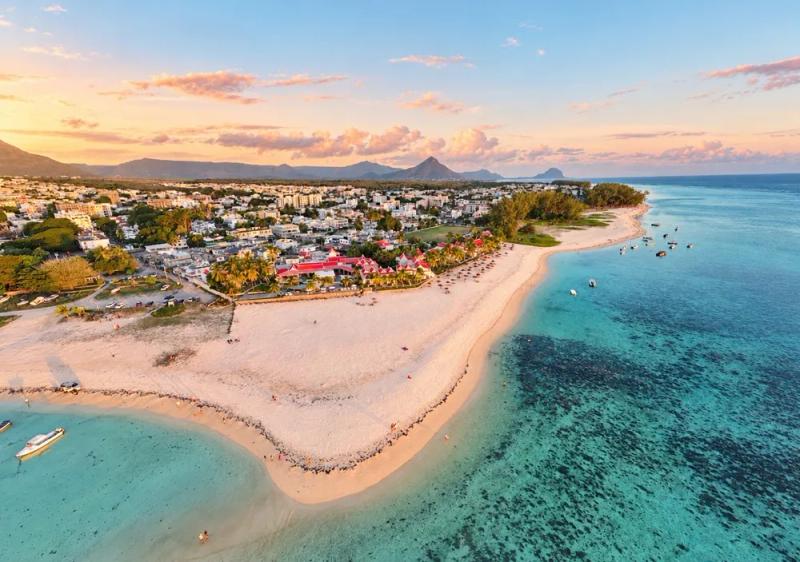
Flic en flac beach near Villa Caroline
North
The north is the hottest reference region and records the most sunshine, which is why it stays the most popular January base. Rain days are higher than in the west, but showers tend to be short and the coast has the densest choice of restaurants, shops and boat departures — useful when you need to change plans at short notice. Trou aux Biches and Mont Choisy face west-north-west, so they share the west’s calm mornings.
Mean maximum: 31.1°C
Mean minimum: 22.1°C
Humidity: 82%
Average sunshine: 8.1 hours per day
Long-term mean rainfall: 206.2 mm
Rain days above 1 mm: 16
What this means for your trip: The north is the hottest and sunniest of the five regions shown here. It is particularly convenient for travellers who want easy access to beaches, boat trips, restaurants, shopping and nightlife, although short summer showers remain common.
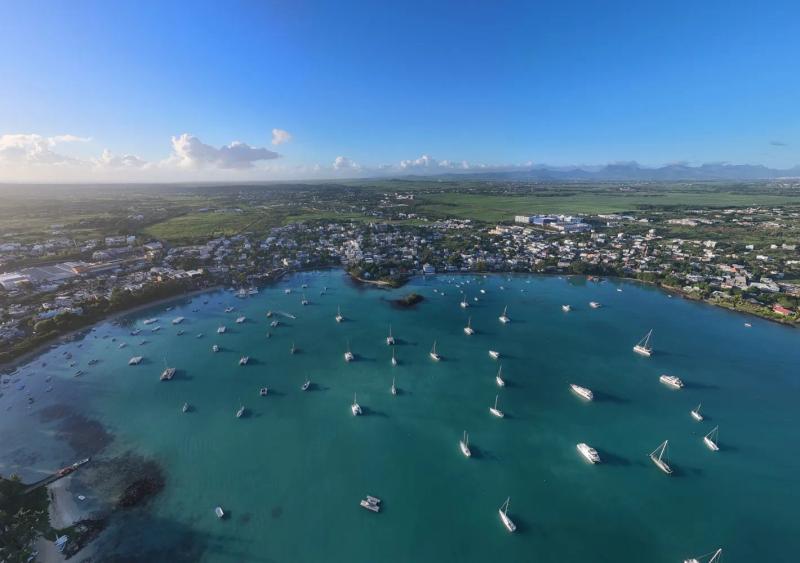
Grand Baie in the morning
East
The east faces the trade winds, so it is a degree or two cooler and noticeably breezier in January — a relief in the heat — but it is also wetter and more humid than the west. The lagoons are among the finest on the island, and the breeze keeps the air fresh, but expect more days with cloud and short rain, and check sea state before booking a boat day from this side.
Mean maximum: 28.8°C
Mean minimum: 22.0°C
Humidity: 84%
Average sunshine: 7.0 hours per day
Long-term mean rainfall: 261.3 mm
Rain days above 1 mm: 17
What this means for your trip: The east is generally cooler, breezier and wetter than the west and north. Its large lagoons can still be excellent in January, but the coast is more exposed to trade winds, showers and changing sea conditions.
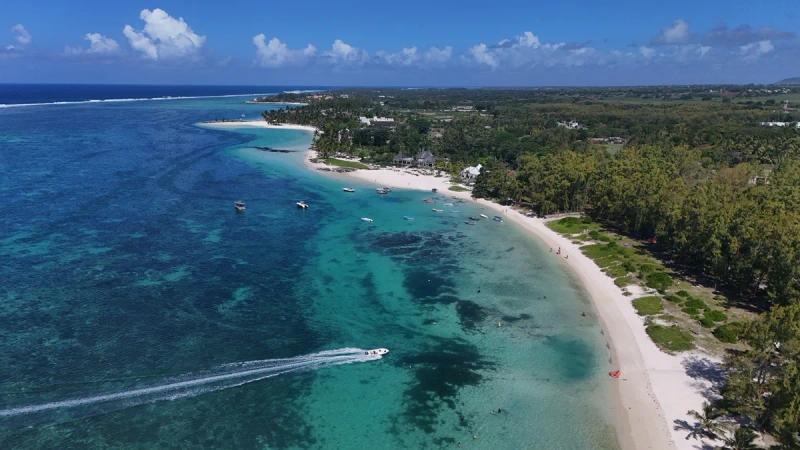
South
The south has warm nights (the highest mean minimum of the reference stations) and strong sunshine, but much of its coast is open to the ocean rather than enclosed by reef. After a stormy period the south’s beaches can carry swell and rough water for a day or two while the west stays calm. Blue Bay’s marine park is the sheltered exception.
Mean maximum: 29.8°C
Mean minimum: 23.0°C
Humidity: 81%
Average sunshine: 7.7 hours per day
Long-term mean rainfall: 236.6 mm
Rain days above 1 mm: 16
What this means for your trip: The south stays warm both day and night, with plenty of sunshine between showers. More exposed stretches of coastline can experience stronger swell after tropical weather or passing storms, so sea conditions should always be checked before swimming.
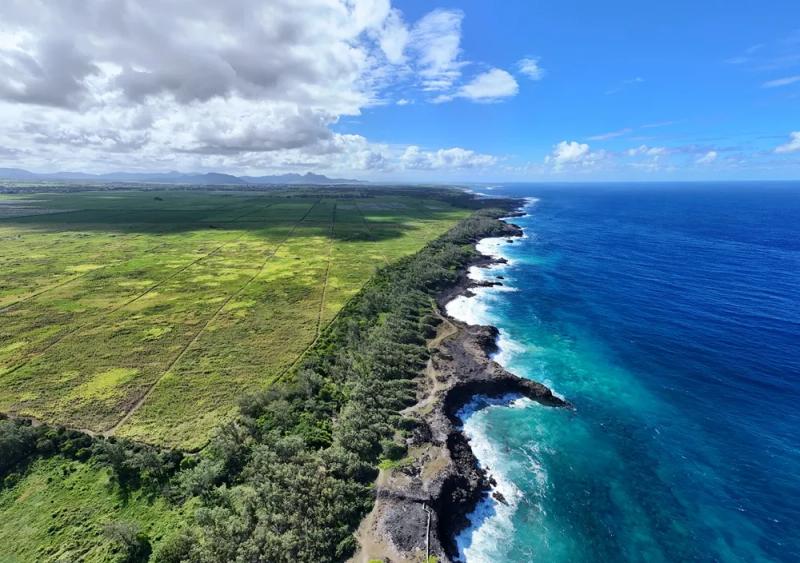
Le Soufleur and the wild south
Central Plateau
Cooler, wetter and often misty. The plateau is where you go for botanical gardens, tea estates and viewpoints, not for escaping the rain — in January it is the wettest region. Plan plateau days around the forecast rather than assuming “inland” means “dry”.
Mean maximum: 27.6°C
Mean minimum: 20.4°C
Humidity: 83%
Average sunshine: 7.3 hours per day
Long-term mean rainfall: 291.6 mm
Rain days above 1 mm: 16
What this means for your trip: The central plateau is cooler and the wettest of the five regions in this comparison. Inland drives, viewpoints and hiking plans should remain flexible, as cloud and showers can develop even when conditions are brighter along the coast.
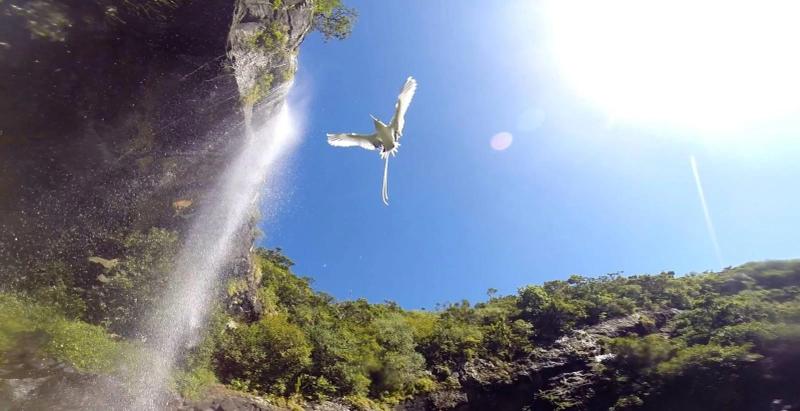
Seven Waterfall
Which Side of Mauritius Is Best in January?
The west, if beach weather is your top priority; the north, if you want heat, sunshine and convenience together. In the official regional station normals the west has the lowest January rainfall and by far the fewest rain days, which makes it the rational choice for a traveller whose trip depends on calm lagoon mornings. The north is hotter and sunnier with only slightly more rain, and it offers the most flexibility when plans change.
Choose the east if you value a cooling breeze and spectacular lagoons more than dry statistics, and the south if you want the wild coast and are happy to move between beaches as conditions change.
No coast is rain-proof. January rain is local and convective, so two resorts fifteen kilometres apart can have different afternoons, and once your trip is a week away the daily MMS forecast matters far more than any monthly normal. The honest version of the advice is: base yourself west or north to raise your odds, hire a car so you can chase the sun, and keep one day in reserve. Our best beaches in Mauritius guide ranks the beaches on each coast if you want to go deeper.
Sea Temperature, Swimming and Snorkelling in January
The sea is at its warmest of the year. Around 28°C is the figure we use for January coastal planning, consistent with our best-time guide and standard climatological sources; it is an indicative average rather than an MMS forecast, and the shallow lagoon in the afternoon can feel warmer still. Wetsuits are unnecessary for swimming, and children and reluctant swimmers find the water easy.
Two January-specific points shape where and when you get in:
Morning is calmer. Wind and chop build through the afternoon on most coasts, so snorkelling visibility and comfort are best between 7 am and 11 am.
Heavy rain reduces visibility. After a wet night, run-off from rivers can cloud the lagoon near estuaries for a day. If you have one snorkelling day that matters, pick a protected spot away from river mouths and check the previous night’s weather.
Lagoon swimming is safe in normal conditions inside the reef; the exposed south and the passes in the reef are where currents and swell become an issue, particularly after a storm. Lifeguarded public beaches post flags — respect them in January, when swell can arrive from systems far out at sea. For spot-by-spot detail see best snorkelling spots in Mauritius.
Is January Cyclone Season in Mauritius?
Yes. The South-West Indian Ocean cyclone season runs from November to April, and January sits inside the historically more active January–March stretch. That is the plain fact, and it should shape how you book — but it should not be read as a prediction that a cyclone will affect your holiday. Many Januaries pass with no system coming near the island, and a named storm elsewhere in the basin is not a warning for Mauritius.
What being in season means in practice:
1. Buy travel insurance that covers weather disruption and trip interruption before a named system threatens the island. Cover bought after a storm is named usually excludes it. Policy wording varies; check yours.
2. Keep one flexible day in any week-long trip, and do not put your only catamaran or boat trip on the last day.
3. Follow MMS bulletins once you are on the island. Hotels, airlines and tour operators act on official warning classes, not on headlines, and they will tell you when something closes.
4. Let the professionals cancel. Operators pull boats and close beaches at set warning levels; you do not need to second-guess them.
January 2026 was unusually dry, and it would be a mistake to assume January 2027 will follow it. Before you travel, check whether MMS has issued a 2026/27 summer seasonal outlook and read the current warning page. For how the season works across all five months, see our Mauritius cyclone season guide; if a system is active while you are travelling, go straight to what happens if a cyclone approaches Mauritius.
Best Things to Do in Mauritius in January — Based on the Weather
This is not a general top-ten. Every activity below is here because January changes how or when you should do it.
Beach mornings and lagoon swimming
Build days around the beach in the morning. The lagoon is glassy at 7 am on the west and north coasts, the sand is not yet hot, and you get two or three hours before the heat and breeze arrive. Save the afternoon for a shaded lunch, a pool or a drive. If you are on the south coast, have a sheltered alternative (Blue Bay, or a short drive west) in mind for days when swell is up.
Why January works: Sea temperatures are among the warmest of the year, with long daylight hours and excellent conditions for relaxed beach time.
Best time: Go before 11:00 am, when conditions are usually calmer and temperatures more comfortable.
Practical tip: Choose sheltered lagoons and always check local beach flags or sea conditions after storms.
Read next: Best beaches in Mauritius
Snorkelling
January snorkelling rewards the early riser. Visibility and comfort are highest first thing, and the warm water means you can stay in for an hour without chill. The one January caveat is run-off: after a heavy overnight storm, lagoons near rivers can turn cloudy for a day. Pick reef-side spots and check conditions on the morning rather than the week before.
Why January works: Warm water and generally good summer visibility can make January a rewarding month for snorkelling.
Best time: Head out early in the morning, before wind and surface conditions become stronger.
Practical tip: Avoid river mouths and runoff areas after heavy rain, as water visibility can temporarily decrease.
Read next: Best snorkelling spots in Mauritius
Catamaran and lagoon cruises
Catamaran searches peak in January, and so do bookings. Reserve your cruise early in the stay so that you have other days to move it to if wind, swell or a warning cancels the departure. Operators decide on the morning; a cancelled trip is not a lost deposit with reputable companies, but it can be a lost day if it was your last.
Why January works: January is one of the busiest months for boat trips, with warm weather and often calmer morning conditions.
Best time: Morning departures are usually preferable.
Practical tip: Book your cruise early in your holiday rather than on your final day, as departures can be affected by wind, rough seas or weather warnings.
Read next: Best catamaran cruises
Hiking
The island is at its greenest, and the waterfalls in Black River Gorges and the south run hard. The cost is heat and humidity: start at first light, finish by late morning, carry more water than you think you need, and expect muddy, slippery sections after rain. Exposed ridges (Le Morne, Pieter Both) and trails that cross rivers need a recent-conditions check, and the plateau trails sit in the wettest part of the island. Hiking in January is good if you accept early alarms and wet shoes.
Why January works: Summer rainfall keeps the interior lush and green, while waterfalls can be particularly impressive after rain.
Best time: Start at dawn to avoid the strongest heat and humidity.
Practical tip: Carry at least 2 litres of water per person, wear suitable footwear and expect muddy or slippery trails after rainfall.
Read next: Hiking in Mauritius
Port Louis, markets and cultural visits
The capital is the natural flexible-day option. The Central Market, the Caudan waterfront, the museums and the old streets around the Jummah Mosque and Chinatown are shaded or indoor, and the city empties after lunch. Go in the morning, eat lunch there, and head back to the coast when the afternoon shower has passed.
Why January works: Markets, museums, covered areas and city attractions offer a flexible alternative when beach weather becomes unsettled.
Best time: Visit in the morning, when temperatures are generally more comfortable.
Practical tip: Port Louis and market visits are particularly useful when coastal areas become showery during the afternoon.
Read next: Best markets in Mauritius
Road trips
Why January works: Weather can vary significantly around Mauritius, making a flexible road trip one of the best ways to follow clearer conditions.
Best approach: Plan your day around the weather rather than committing to one coast.
Practical tip: The west can work well in the morning, with the north, towns or shopping as afternoon alternatives. Remember that the central plateau is often wetter and cloudier than the coast.
Read next: 7-day Mauritius itinerary · 10-day Mauritius itinerary
Shopping and indoor activities
Why January works: High temperatures and occasional tropical showers make indoor activities a practical part of a January itinerary rather than simply a backup plan.
Best time: Use the hottest part of the day or rainy afternoons for shopping, markets and indoor attractions.
Practical tip: Keep one or two flexible indoor options available so you can adapt your plans without losing a day.
Read next: Shopping in Mauritius
Rainy-day backups
Keep a short list ready: a mall afternoon in Bagatelle or Cascavelle, the Blue Penny Museum, a rum or tea estate tour, a long lunch with a view, or simply a pool. The point is to have decided in advance so a shower at 2 pm costs you ten minutes rather than an argument.
What’s On in Mauritius in January 2027?
New Year — 1 and 2 January
New Year’s Day is a public holiday and Mauritius also observes 2 January, so the first days of the month are still the heart of the festive travel window. Resorts run New Year programmes, beaches and restaurants on the north coast are busy, and the mood is lively rather than restful. If your stay overlaps the first week, read our guide to Christmas & New Year hotel programmes 2026/27 before booking, because some resorts apply minimum stays or compulsory gala dinners across those dates.
Thaipoosam Cavadee — Friday 22 January 2027
Thaipoosam Cavadee is a Tamil Hindu observance, recorded as a public holiday on Friday 22 January 2027 in the Stock Exchange of Mauritius holiday list. Devotees who have fasted carry a decorated wooden arch (the cavadee) in procession to a kovil, many with skin piercings as an act of devotion, accompanied by drumming and chanting. It is one of the most striking sights of the Mauritian year and visitors are welcome to watch respectfully.
A few points of etiquette: dress modestly near temples and processions (shoulders and knees covered), do not step into the procession or touch the cavadees, ask before photographing individuals and never use flash close to devotees, and keep your voice down near the kovil. Expect road closures and slow traffic around major temples in the north, Port Louis and the plateau towns on the morning of the 22nd. For the full annual calendar see Mauritius public holidays 2027.
Mosquitoes and Summer Health Preparation
Summer humidity and rain increase mosquito activity, and the species of concern in Mauritius bite during the day, not just at dusk. Pack an effective repellent (DEET, picaridin or IR3535 formulations) and use it in the daytime as well as in the evening, especially near gardens, rivers and after rain. Light long sleeves at dusk and a room with screens or air-conditioning help. For the current health picture and what the island does about it, see mosquitoes in Mauritius.
Heat is the other January health factor. Drink more than feels necessary, keep the hours between noon and 3 pm for shade or water, and take the sun seriously: UV is at its highest, and a reflective lagoon doubles the exposure.
What to Pack for Mauritius in January
Lightweight, breathable clothing — linen and loose cotton over synthetics
High-factor sun protection, a wide hat and sunglasses; reef-safe sunscreen if you snorkel
A refillable water bottle
A light rain layer or compact umbrella — not a heavy jacket
Insect repellent effective against daytime-biting mosquitoes
Water shoes if you plan to walk on reef flats, and a small dry bag for boat days
Comfortable, quick-drying footwear for wet trails and wet pavements
One modest outfit (covered shoulders and knees) for temples and Cavadee
Offline copies of your bookings and the MMS forecast page saved on your phone
January Travel Planning: Bookings, Flex Days and Before You Fly
Early January follows peak festive demand, so popular resorts, specific room categories and headline activities can be tight across the first week; by mid-January availability eases. Book accommodation and your one must-do boat trip early, but keep the rest of the week open. A hire car is the single most useful January booking because it lets you move to whichever coast has the better afternoon.
Build in flexibility. A seven-night trip in January works best as five planned days and two floating ones. Put water activities early in the week and early in the day, and keep the last day for something that does not depend on the sea. Our Mauritius 7-day itinerary and 10-day itinerary show how to structure the week; adapt them with a weather-sensitive day in reserve.
Insurance. Choose a policy that covers weather disruption, trip interruption and medical care, and buy it when you book. Wording varies by insurer and country, so read the cyclone and natural-event clauses yourself.
Before you fly: check the current rules in our Mauritius entry requirements guide, complete the Mauritius All-in-One Travel Form, and see flights to Mauritius 2027 for route and timing options.
January vs December vs February — Which Month Fits You?
December is the festive month: similar heat, slightly less rain in the long-term averages, and the island’s busiest two weeks around Christmas and New Year. Choose December for atmosphere and if the festive programme is part of the appeal; read Mauritius in December for the full picture.
January is the warm-sea month with the longest days. After the first week, crowds thin while the water stays at its warmest. It carries full cyclone-season risk and the wettest conditions of the three on the east and plateau, but the west remains comparatively dry. Choose January for lagoon time, Cavadee and a trip that starts after the New Year rush.
February is just as warm and historically the wettest month, with cyclone risk at its highest. It is the quietest of the three and often the best value. Choose February if price and space matter more than the odds of a dry afternoon.
If you are choosing between January and February, January generally offers slightly better rain statistics and the Cavadee spectacle; February offers lower demand. Neither is the wrong answer if you follow the morning-first rule and insure properly.
Who Should Visit Mauritius in January — and Who May Prefer Another Month?
January suits you if you:
Want the warmest sea of the year and long, bright mornings
Are travelling with children or non-swimmers who like warm, calm lagoons
Enjoy green landscapes, full waterfalls and tropical summer atmosphere
Want to see Thaipoosam Cavadee or travel just after the New Year peak
Are happy to plan around the weather and keep a day in reserve
Another month may suit you better if you:
Struggle with heat and humidity — May to October is cooler and drier
Need a fixed, non-negotiable itinerary with no flexibility for showers or warnings
Are planning long daytime hikes or an exposed multi-day trek
Want the driest beach odds possible — September and October are the island’s driest months
Cannot accept any cyclone-season risk, however small in a given year
For the month-by-month comparison, our best time to visit Mauritius guide ranks all twelve.
FAQs
Is January a good time to visit Mauritius? Yes, for warm water, long days and summer culture, provided you accept heat, humidity, afternoon showers and cyclone-season planning. Base yourself west or north and keep a flexible day.
What is Mauritius weather like in January? Hot and humid with generous sunshine — coastal highs around 29–31°C, nights around 21–23°C, 7.5–8 hours of sun a day, and short heavy showers, most often in the afternoon.
How hot is Mauritius in January? Coastal daytime maxima average roughly 30°C (31.1°C at the north reference station, 30.4°C in the west), with humidity around 80 per cent making it feel warmer. The plateau is cooler at about 27–28°C.
Does it rain all day in Mauritius in January? Usually not. January rain is mostly convective — heavy, local and short. A “rain day” in the statistics is any day with more than 1 mm. Multi-day wet spells do happen when a trough or tropical system sits near the island.
How much rain does Mauritius get in January? The MMS island-wide 1991–2020 normal is 280 mm. Coastal reference stations in the 1971–2000 normals range from 153 mm in the west to 261 mm in the east, with the central plateau wettest at 292 mm.
What is the sea temperature in Mauritius in January? About 28°C — the warmest of the year. This is an indicative coastal average rather than an official forecast.
Can you swim and snorkel in Mauritius in January? Yes. Lagoon swimming is warm and comfortable, and snorkelling is best in the morning. Visibility can drop for a day near river mouths after heavy rain, and exposed southern beaches can carry swell after storms.
Is January cyclone season in Mauritius? Yes. The season runs November to April and January–March is the historically more active period. Being in season does not mean a cyclone will affect your trip; buy appropriate insurance and follow MMS bulletins.
Which side of Mauritius has the best weather in January? The west has the lowest January rainfall and fewest rain days in the MMS regional normals; the north is hottest and sunniest. The east is cooler but wetter; the plateau is wettest.
Is the west or north better in January? West for the best beach-weather odds and calm sunset lagoons; north for maximum sunshine, heat and convenience. Both are good January bases.
What are the best things to do in Mauritius in January? Morning beach and lagoon time, early snorkelling, catamaran cruises booked early in the trip, dawn hikes to full waterfalls, Port Louis markets on showery afternoons, and road trips that follow the sun.
Is hiking a good idea in Mauritius in January? Yes, with an early start. Trails are green and waterfalls full, but heat, humidity and mud are real. Finish by late morning, carry plenty of water and check recent conditions for exposed or river-crossing routes.
Are mosquitoes bad in Mauritius in January? Summer rain and humidity increase mosquito activity, and the species of concern bite in the daytime. Pack an effective repellent and use it day and evening.
What should I pack for Mauritius in January? Breathable clothing, strong sun protection, a hat, a refillable bottle, a light rain layer, insect repellent, water shoes or a dry bag for boat days, and one modest outfit for temples.
Is Mauritius busy or expensive in January? The first week is still peak festive season, with high demand for popular resorts and activities. Demand and prices generally ease from mid-January.
What public holidays are in Mauritius in January 2027? New Year’s Day (1 January), 2 January, and Thaipoosam Cavadee on Friday 22 January 2027.
When is Thaipoosam Cavadee in Mauritius in 2027? Friday 22 January 2027, according to the Stock Exchange of Mauritius 2027 holiday list. Confirm against the official government notice closer to the date.
Is January or February better for Mauritius? Both are hot and warm-sea months. January has slightly better rain statistics and Cavadee; February is quieter, often cheaper, historically wetter and at the height of cyclone season.
Dieses Thema entdecken
Neue Mauritius-Guides per E-Mail erhalten
Abonnieren Sie Mauritius Explored für Reiseideen, praktische Updates und herunterladbare Planungshilfen.

Geschrieben vom Redaktionsteam von Mauritius Explored, einem mauritischen Reiseführer für Strände, Aktivitäten, lokale Orte und praktische Reiseplanung.
Lokale Mauritius-Recherche, Routenplanung und Destinationsberichte seit 2011.