Mauritius Travel Advice 2027: Checklist, Weather, Safety & Entry
Mauritius Travel Advice 2027: What to Know Before You Go
Updated 17 October 2026
Most Mauritius travel advice arrives in pieces. One page tells you about visas, another about cyclones, a third about the arrival form, and you end up with seven tabs open and no sense of what to do first. This page exists to fix the sequence rather than repeat the detail.
What follows is the order of operations for a Mauritius trip: what to settle eight weeks out, what to do the week you fly, what has to happen in the final forty-eight hours, and what matters on the day you land. Each specialist guide on this site still owns its subject in full, and this page sends you to the right one at the right moment rather than summarising it badly. It also fills three gaps the specialist guides leave between them — what to actually pack, how to schedule weather-sensitive activities so one bad day does not cost you an experience, and why the public-holiday calendar deserves a look before you fix your plans.
Mauritius travel advice 2027
Before you fly to Mauritius, confirm your own nationality's entry position and passport validity, complete the free official All-in-One Travel Form once your travel and accommodation details are final, and keep the confirmation saved offline because proof is required at boarding. Understand the season you are travelling in rather than the forecast icon, sort money and connectivity before you land, book weather-sensitive activities early in your stay so they can be moved, check the public-holiday calendar against your plans, and keep passport, booking and insurance details reachable without a signal.
Start here: The six essential Mauritius travel advice guides
Each of these owns its subject in full. The note under each one tells you when you will actually need it.
What travellers are checking right now
Mauritius entry requirements
Start here before booking your trip. Check visa requirements by nationality, passport validity, proof of funds, onward travel, the tourist fee, duty-free allowances and prohibited items. Then verify the latest requirements for your nationality with official government travel advice.
CHECK REQUIREMENTSMauritius Cyclone Season
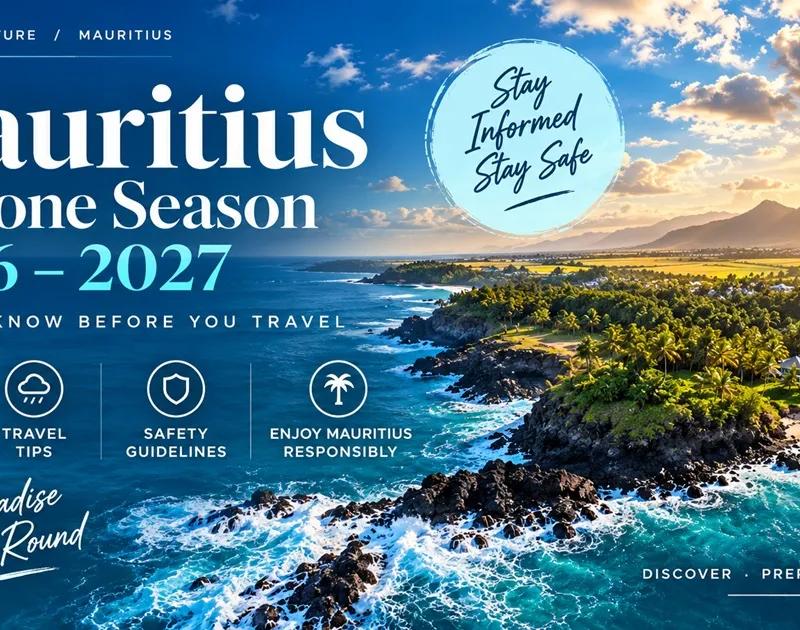
Travelling between November and May? Understand Mauritius cyclone season, official warning classes and what the season actually means for a holiday. Cyclone season is a period of increased weather awareness, not a forecast that a cyclone will affect your trip.
PLAN FOR CYCLONE SEASONMauritius All-in-One Travel Form
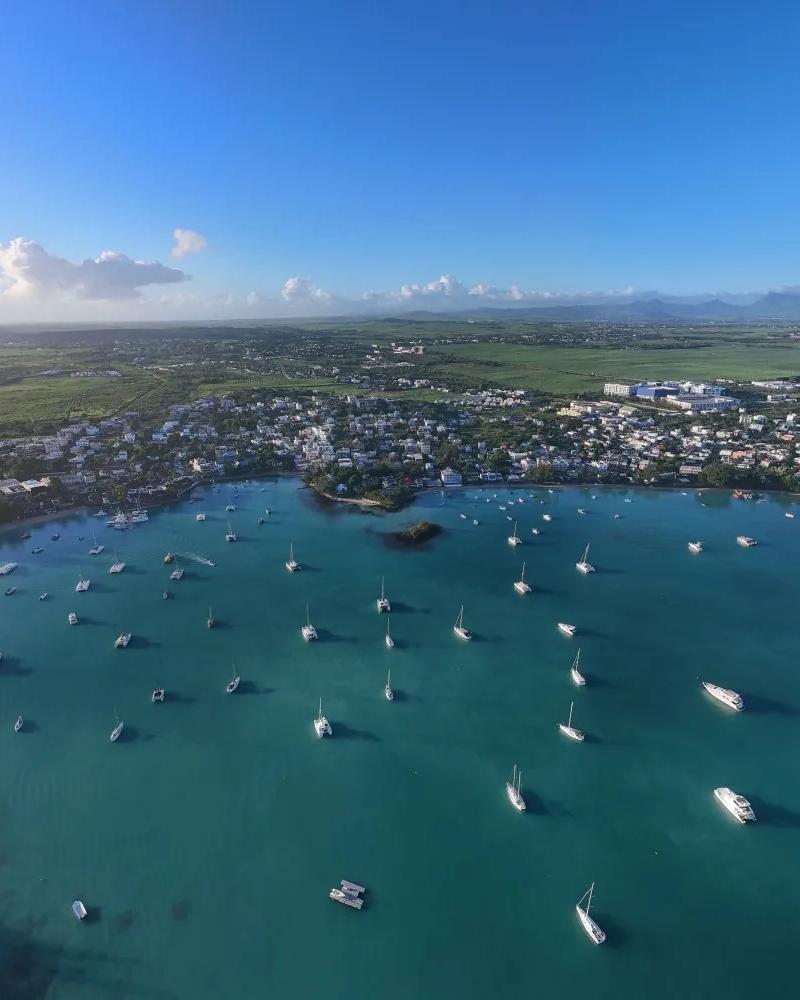
Learn how to complete the official free Mauritius All-in-One Travel Form step by step. See what information you need, where to find the genuine government portal, how the QR code works and how to avoid commercial websites charging for the free form.
COMPLETE THE FORM GUIDEWhat If a Cyclone Is Approaching Mauritius?
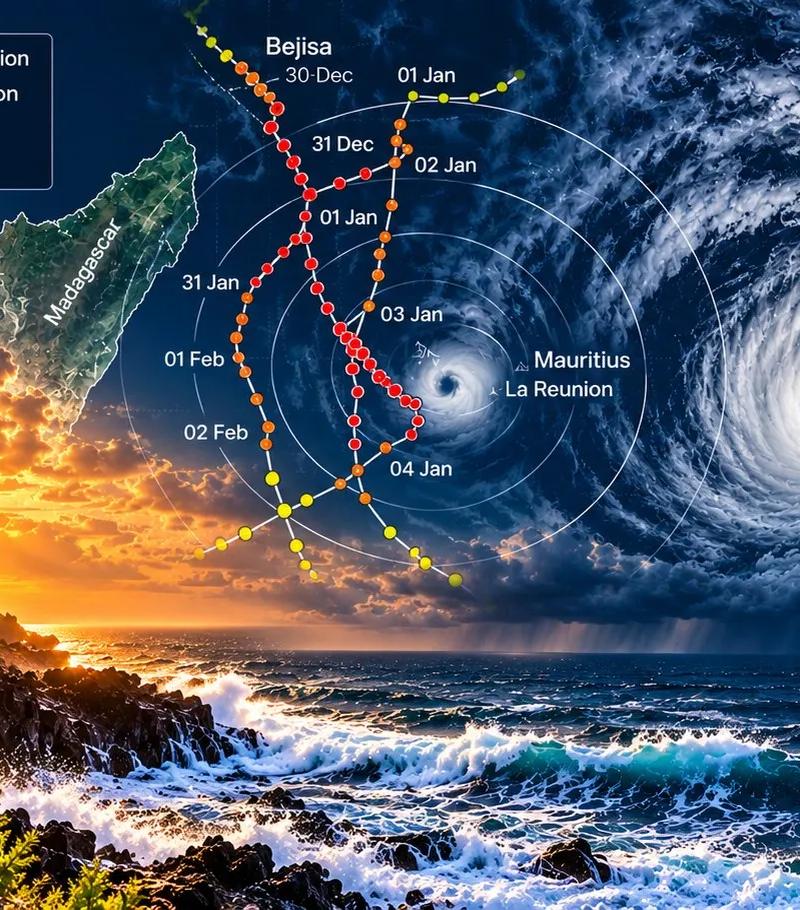
Use this guide when a tropical storm or cyclone appears in the news. Learn the difference between a cyclone existing in the Indian Ocean and an official warning for Mauritius, plus what warnings can mean for flights, airport operations, boat trips and daily travel plans.
CHECK CYCLONE ADVICEIs Mauritius Safe to Visit?
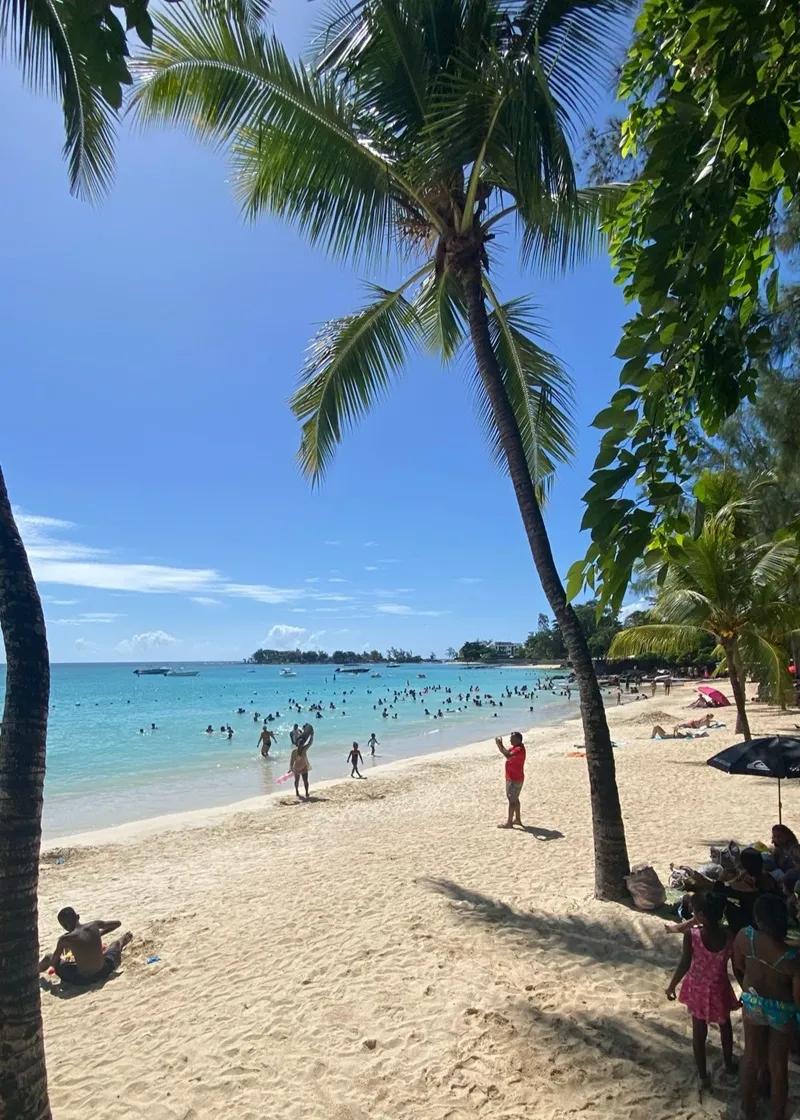
Get practical Mauritius safety advice alongside current official travel guidance. Understand precautions for belongings, evenings, solo and family travel, driving, hiking, beaches, sea conditions and reef-pass currents so you can prepare sensibly without unnecessary alarm.
READ SAFETY ADVICEMosquitoes in Mauritius

Learn when mosquitoes are most active in Mauritius, why the daytime-biting tiger mosquito matters, the seasonal pattern of dengue and chikungunya risk, and what type of repellent to bring. Especially useful when preparing for travel between November and April.
MOSQUITO GUIDEYour Mauritius pre-travel checklist
Four stages, in order. Nothing here replaces the specialist pages; it tells you when to open them.
Four to eight weeks before you travel
● Confirm your own nationality's entry position and passport validity against the entry requirements guide and your government's official advice. Do not rely on a general rule you read somewhere, including here.
● Buy travel insurance, and read what it says about weather disruption and about any higher-risk activity you intend to do. If you are travelling between November and April, this is not an optional step.
● Book flights, accommodation and the airport transfer. Our flights to Mauritius guide covers routes and timings, and the holiday cost guide gives the budget shape.
● Check whether a major public holiday or festival falls inside your dates, using the public holidays guide. It changes road traffic, opening hours and how busy beaches feel.
● If a particular activity is the reason for the trip — a specific dive, a catamaran day, a hike — shortlist it now but do not lock it to your last day. The reason is in the activity section below.
● If you are still choosing dates, the best time to visit guide owns the month-by-month picture.
One week before you travel
● Read the current official travel advice for your nationality, and our safety guide for the practical detail behind it.
● Decide connectivity: roaming, a local SIM or an eSIM. Our eSIM and internet page is a short checklist of the options rather than a long guide.
● Check your bank's foreign-transaction and ATM fees, and tell your bank you are travelling. Carry a second card kept somewhere separate.
● Reconfirm the airport transfer or car hire, in writing, with a name and a number you can reach on the day.
● Download offline maps for the whole island, not just your resort area.
● Look again at the holiday calendar for the days you plan to drive, visit Port Louis or go to a market.
● Move any critical sea or air activity away from your final day, so there is somewhere to reschedule it to.
Forty-eight hours before you travel
● Complete the official All-in-One Travel Form now that your travel and accommodation details are final. It is free, and the only official address is the government portal — the guide names it and shows the commercial imitations to avoid.
● Save the confirmation offline. Keep the PDF on your phone, take a screenshot as a backup, and print it if you like paper. Proof of completion is required at boarding, which moves the real deadline to your departure airport rather than the Mauritian border.
● Save passport, booking, airline, hotel, transfer and insurance details somewhere reachable without a signal.
● Check your airline's status and the Mauritius Meteorological Services for any current warning.
● Charge a power bank. The first hour after landing is the hour you most need a phone and the least likely to have found a charger.
One deliberate omission: we do not publish a 24-hour, 72-hour or 30-day submission window for the form, because no official Mauritian source publishes one. Complete it once your details are final and before you leave for the airport.
On arrival
Keep the order simple: formalities, then bags, then onward transport, then money and connectivity if you still need them. Have the form confirmation and your passport together, and your accommodation address written down rather than buried in an inbox. Travellers who arrive without a usable digital form are not turned away — airport guidance describes a paper immigration disembarkation card as the fallback — but it is slower, and the form takes ten minutes at home. For the arrival process itself, the entry requirements guide carries the detail.
What to pack for Mauritius, the practical version
Mauritius is warm all year, which makes packing easy to get almost right and surprisingly easy to get slightly wrong. The errors people actually make are footwear, rain, and evenings.
Year-round, whatever month you travel
● Breathable clothing in natural fibres, and more of it than you think — humidity means you change more often than at home.
● Swimwear you can wear two days running, because one set will rarely be dry.
● Sun protection: high-factor sunscreen, a hat with a brim, sunglasses. The sun is stronger than the temperature suggests.
● Two kinds of shoes at minimum — sandals for the day and something with a proper sole for walking. Flip-flops are not footwear for a waterfall path.
● Water shoes, if you intend to get in anywhere that is not raked hotel sand. Reef and rock are sharp.
● A reusable water bottle, a travel adapter, a power bank, and any prescription medication in its original packaging with a copy of the prescription.
● Insect repellent. Which type, and why it matters more in some months, is covered in the mosquitoes guide.
Warm, humid months, roughly November to April
● Quick-dry clothing rather than heavy cotton, which stays damp.
● A light rain shell. Not a waterproof coat — a shell you can fold into a day bag, because showers here tend to be brief rather than all-day. The forecast guide explains why that distinction matters.
● A dry bag or waterproof pouch for phone and camera on boat days.
● More repellent than you would pack for a European summer.
Cooler, windier months, roughly June to September
● One light layer for evenings, and a second if you are going up to the central plateau, where it is noticeably cooler than the coast.
● Wind protection for exposed coasts and boat days. The met service's own seasonal outlook names the southern and western shores as the coasts most likely to see high-energy waves in winter, so a windproof layer earns its space.
By activity
● Hiking, waterfalls and gorges — shoes with real grip, water, and compact rain protection. Waterproof gear does not make a flooded path safe, and a route that was fine yesterday can be dangerous after heavy rain.
● Resort and restaurant evenings — one smart-casual outfit. Several hotels apply a dress code at dinner, and it is easier to pack a shirt than to discover the rule on arrival.
● Religious sites and cultural visits — clothing that covers shoulders and knees. This is a courtesy, not a formality.
Plan activities around the weather, not against it
The single most useful scheduling rule for Mauritius: book weather-sensitive activities early enough in your stay that they can be moved. An experience booked for your final morning has no second chance.
● What is condition-sensitive. Catamaran and speedboat trips, diving, snorkelling, dolphin and whale watching, parasailing and scenic flights all depend on sea state and wind. So does any boat transfer to an islet.
● Wind and swell cancel trips on days that look fine. A clear sky does not mean a workable sea. This surprises people more than rain does.
● Put the priority experience in the first half of the trip. If it is the reason you came, give it two or three possible days, not one.
● Reconsider mountains and waterfalls after heavy rain. River and gorge routes change character quickly, and a waterfall at full force is a reason to look from a distance rather than get closer. Never plan around chasing one after a downpour.
● Keep one wet-weather day in your pocket. A market morning, a museum, a rum distillery, a long lunch, a slow drive. Decide what it is before you need it, so a grey morning does not become a wasted one.
● Read the cancellation terms before you pay. Ask specifically what happens if the operator cancels for weather, and whether you are rebooked or refunded.
● Check the forecast properly, not anxiously. Our forecast guide is the antidote to a ten-day screen full of rain icons.
When you are ready to choose what to do, the things to do in Mauritius hub lists what is bookable, the top 15 things to do is the editorial shortlist, and the itinerary planner turns it into days.
Seasonal culture and public holidays can change your day
Mauritius has one of the fullest public-holiday calendars anywhere, and a visitor who ignores it will eventually plan a city day or a long drive on exactly the wrong date. Check the public holidays guide against your dates before you fix anything.
● Major pilgrimages and processions affect roads. Some observances draw very large numbers of people on foot over several days, with road restrictions across parts of the island. That is a day to be somewhere local, not a day to drive across the country.
● Religious festivals are worth seeing, and worth approaching carefully. Divali in particular transforms the island at night. It is a community observance, not a show put on for visitors.
● Christmas and New Year are peak season twice over. Mauritian families and international visitors are both out at once. Beaches are busier, restaurants need booking, and some hotels apply compulsory gala dinners. Our Mauritius in December guide covers that period specifically.
● Banks and government offices close on public holidays, and some businesses cut their hours, while resorts carry on as normal. Plan any errand that needs a counter around them.
● A note on etiquette. Dress modestly at religious sites, ask before photographing people, give a procession room rather than stepping into it, and treat an observance as something you are being allowed to witness. That is all it takes.
Choose your next guide by the trip you are taking
● First time in Mauritius — entry requirements, then the travel form, then best time to visit and the itinerary planner.
● Travelling between November and April — cyclone season for context, the forecast guide for the daily reality, what happens if a cyclone approaches if one does, and mosquitoes.
● An activity-led holiday — things to do, best time to visit, safety and the itinerary planner.
● Driving yourself — the itinerary planner for the routes and the safety guide for road conditions, which are the part most visitors underestimate.
● Travelling from India — Mauritius for Indian travellers covers visa, flights, food and cost together, alongside entry requirements.
● Christmas or New Year — Mauritius in December, the public holidays guide and the holiday cost guide, because this is the most expensive fortnight of the year.
What to check again the week you fly
Everything above is evergreen. These five are not, and a live source beats any article, including this one.
● Your own nationality's entry position, with the Passport and Immigration Office and your government's travel advice.
● The official travel form portal, which is the only place the form should ever be completed.
● The Mauritius Meteorological Services for any current warning. During a high-waves warning its own instruction is simply to avoid going to the beach and into the sea.
● Your operating airline, for schedule changes.
● Your hotel, transfer and any activity operator, to reconfirm and to ask what their weather policy actually is.
Mauritius travel advice FAQs
What should I do one week before travelling to Mauritius?
Check current official travel advice, settle connectivity, check your bank's foreign-transaction fees, reconfirm your airport transfer in writing, download offline maps, and move any critical sea or air activity away from your final day.
What should I pack for Mauritius?
Breathable clothing, swimwear you can rotate, strong sun protection, sandals plus proper walking shoes, water shoes, repellent, adapter and power bank. Add a light rain shell and dry bag from November to April, and one warm layer from June to September.
Which Mauritius activities should I book early in my trip?
Anything that depends on the sea or the air: catamaran and speedboat trips, diving, snorkelling, dolphin watching and scenic flights. Booking them in the first half of your stay leaves somewhere to reschedule if conditions cancel them.
Do public holidays affect tourists in Mauritius?
Yes, more than most visitors expect. Banks and government offices close, some businesses reduce hours, major observances bring road restrictions and heavy traffic, and beaches and restaurants get busy. Resorts generally operate as normal.
What documents should I save offline before flying to Mauritius?
Your travel form confirmation and QR code, passport details, accommodation booking and address, airline reference, transfer confirmation, insurance policy number and emergency line, and a payment-card loss number. Keep a screenshot backup of each.
Should I book weather-sensitive activities at the start or end of my holiday?
The start, or the middle. An activity booked for your last morning cannot be moved if wind or swell cancels it, and operators cancel for sea state on days that look perfectly clear from the beach.
What is the best backup plan if the weather changes?
Decide your wet-weather day before you need it. A market, a museum, a distillery, a long lunch or an inland drive all work in conditions that stop a boat, and having one chosen stops a grey morning turning into a lost day.
Your next step
The order that works is simple: confirm entry, complete the form, settle the flight and arrival, then choose what you actually want to do and build the days around it. When you reach that last part, the things to do hub and the itinerary planner are where the trip stops being admin and starts being a holiday.
Explorer ce sujet
Recevez les nouveaux guides de Maurice par e-mail
Rejoignez la liste Mauritius Explored pour des idées de voyage, des mises à jour pratiques et des aides de planification à télécharger.

Rédigé par l'équipe éditoriale de Mauritius Explored, un guide mauricien consacré aux plages, activités, lieux locaux et conseils pratiques.
Recherche voyage locale à Maurice, planification d'itinéraires et couverture de destination depuis 2011.