Mauritius 14 Day Itinerary 2027: Deep inside the island
You know the Destination, Now Explore it
Two Weeks in Mauritius: The 14-Day Itinerary That Actually Slows Down
Updated 9 October 2026
The mistake people make with two weeks in Mauritius is treating the extra days as extra attractions. Up to you but there is so much more to explore. The island is 65 kilometres long and you can see the headline sights in ten days — our 10-day itinerary does exactly that. What fourteen days buys is the removal of compression: two genuinely empty days, a hotel move that stops being a scramble, and the room to lose a boat trip to the weather without the plan collapsing…and extra shopping 😊
Cover photo Patricia Brito
Is 14 days too long in Mauritius?
No, but only if you resist filling it. Fourteen days works best with two hotel bases, not four, and with two days left deliberately empty. The extra four days over a ten-day trip are best spent on an inland culture stop, a proper southeast block and two rest or weather-buffer days, rather than four more long excursions.
14 days at a glance
Two bases, one move, two blank days. Driving intensity is marked because it is the thing that decides whether a holiday feels restful.
● Day 1 — Arrival, west base. Check-in, nearest beach, supermarket, local dinner. Low.
● Day 2 — West orientation. Flic en Flac or Tamarin, sunset. Low.
● Day 3 — Port Louis and Pamplemousses. Capital, market, botanical garden. Medium.
● Day 4 — North coast loop. Grand Baie, Mont Choisy, Cap Malheureux. Medium.
● Day 5 — Northern islets by sea. Catamaran or snorkelling. Weather-dependent.
● Day 6 — Le Morne, Chamarel, Black River Gorges. The signature southwest day. Medium to high.
● Day 7 — Nothing booked. Beach, spa, long lunch. Very low.
● Day 8 — Move base via inland Mauritius. One or two stops en route. Medium.
● Day 9 — Mahébourg, Île aux Aigrettes, Blue Bay. Low to medium.
● Day 10 — Île aux Cerfs and the east lagoon. Weather-dependent.
● Day 11 — The Wild South. Gris Gris, Souillac, Rochester Falls. Medium.
● Day 12 — East-coast slow day. Beach, village, resort time. Low.
● Day 13 — Flex day. The weather reschedule, or a favourite repeated. Variable.
● Day 14 — Departure. Breakfast, short walk, airport. Low.
Why this route uses only two hotel bases
Mauritius tempts people into three or four bases because the island looks big on a hotel map and small on a road map. Both impressions are wrong in the ways that matter. Nowhere is more than about ninety minutes from anywhere, so a third base saves perhaps forty minutes of driving on two days and costs you a packing morning, a check-out, a check-in, and the thing a long stay actually gives you: knowing which café opens early and which reef you can swim to.
Two bases, seven nights and six nights, with one move on Day 8. The west for the first week because arrival from the airport is straightforward, the southwest sights are close and the sunsets are on your side. The east or southeast for the second because that is where the lagoon boat trips leave from, where the conservation sites are, and because it puts you nearer the airport on the last morning.
● Base 1, west — Flic en Flac or Wolmar for walkability, restaurants and easy no-car logistics. Tamarin or Grande Rivière Noire for a quieter feel and faster southwest access.
● Base 2, east or southeast — Trou d'Eau Douce for boat departures and village life. Mahébourg, Blue Bay or Pointe d'Esny for culture, conservation and a twenty-minute airport run. Belle Mare or Palmar for resort-led beach time.
● June to September variant — if sheltered swimming matters more than geography, consider the north rather than the east for the second base. The reasoning is in the seasonal section, and it is not as simple as most itineraries suggest.
Book the two hotels before you book anything else. The bases determine the route, not the other way round. For choosing between them, our regional guides to the west and east are the place to start.
The route map
The route map accompanying this guide communicates one idea at a glance: fourteen days does not require moving hotels every two or three nights. It pins the airport, two base markers, a single base-change arrow, and day-trip spokes out to Port Louis and Pamplemousses, the north coast, Le Morne and Chamarel, Black River Gorges, Mahébourg with Île aux Aigrettes and Blue Bay, Île aux Cerfs, and the Wild South. Easy, medium and full-excursion days are styled differently, and the legend separates bases, day trips, boat departures and weather-dependent plans.
What the extra four days actually change
Set against a ten-day trip, the differences are structural rather than additive. Nothing new gets seen; everything gets more room.
● You get two blank days instead of one, plus a flex day. That is the difference between a rest day and a rest day you have already spent absorbing a cancelled catamaran.
● The southeast becomes a region rather than an add-on. Mahébourg, Île aux Aigrettes and Blue Bay get their own day, and the Wild South gets another, instead of being compressed into one long loop from a base an hour away.
● Inland Mauritius stops being skipped. The base move on Day 8 is the one day you are crossing the island anyway, so the central plateau costs you nothing extra.
● Weather stops being a threat. Two sea days and a mountain hike all have somewhere to move to, which is the single biggest practical gain.
Before you start: car, driver, tours or no car?
This decision shapes fourteen days more than any hotel choice, and the honest answer is that most people should drive.
You will be on the left, which suits British, Australian, South African, Indian and Japanese drivers. A foreign licence is accepted for short visits — the US State Department states that a US licence can be used for up to four weeks and recommends an International Driving Permit only for longer stays — so a fortnight needs no special paperwork. Rental companies generally require drivers to be 21 or over, a company and insurer rule rather than a published statutory minimum. Roads are narrow and often unlit, and the official US and UK travel advisories both note the lack of pavements and guardrails.
Private driver. The sensible middle. One Mauritian operator publishes a full-day rate of €100 for a sedan, €145 for a minivan and €170 for a minibus for eight hours including fuel, with extra hours at Rs 500, as of August 2026. That is per vehicle, not per person, and excludes entrance fees and boat tickets. For a family of four on the three big driving days, it competes well with a rental car plus parking stress.
Taxis and tours only. Workable if your bases are chosen for it, and genuinely restful. It is not cheaper than renting over fourteen days unless you barely leave the hotel.
No car at all. Possible, with real constraints — see the no-car section below. For the decision itself, our car rental, transfer and taxi pages carry the operator detail.
The 14-day itinerary, day by day
Day 1 — Arrive, and do almost nothing
Clear the airport, collect the car or meet the driver, and go straight to the west base. Allow around an hour to an hour and a quarter to Flic en Flac or Tamarin; the airport taxi guidance quotes roughly one hour to one hour fifteen for the west coast. Do not schedule anything. Find the nearest beach, find a supermarket, buy water and fruit, and eat somewhere within walking distance. If you have landed on an overnight flight from Europe, this is the day that protects the next thirteen.
Day 2 — Learn your own stretch of coast
The first full day stays local on purpose. Swim at Flic en Flac in the morning while the lagoon is calm, walk the long public beach, and eat lunch at a roadside stall rather than the hotel. In the afternoon drive the short distance to Tamarin bay, where the river mouth meets the sea and the sunsets are the best on the island. Our west Mauritius guide covers the stretch in detail.
Day 3 — Port Louis and Pamplemousses
Leave early. Port Louis is a working capital and the traffic reflects it, so aim to be parked by nine. The Central Market is officially open Monday to Saturday from 05:00 in summer and 05:30 in winter until 18:00, and closes at noon on Sundays and public holidays. Add the Blue Penny Museum, Aapravasi Ghat and the Caudan waterfront. In the afternoon, drive twenty-five minutes north to the Sir Seewoosagur Ramgoolam Botanical Garden at Pamplemousses for the giant water lilies and the talipot palms.
Day 4 — The north coast loop
A day of short hops rather than one long drive. Grand Baie for the harbour and the shops, Pereybere for a sheltered swim, Mont Choisy for the long curve of sand and the filao trees, and Cap Malheureux at the top of the island for the red-roofed church and the view across to Coin de Mire. Our north Mauritius guide and the northern road trip route carry the stops in order.
Day 5 — Out to the northern islets
The first of two sea days. Catamaran trips run from Grand Baie out to Coin de Mire, Îlot Gabriel and Flat Island, usually with snorkelling and lunch aboard. Book it for Day 5 and accept that it may move: if the forecast is poor, this is the day that swaps with Day 7 or Day 13. Confirm with the operator the day before rather than the week before, and ask specifically whether the trip lands or only anchors.
Day 6 — Le Morne, Chamarel and the gorges
The signature southwest day, and the one that justifies the west base. Start at Le Morne Brabant, a UNESCO World Heritage site and the hardest half-day walk on the island. Then Chamarel for the seven-coloured earths and the waterfall, and finish with a drive up through Black River Gorges National Park to the Gorges and Alexandra Falls viewpoints. It is a long day with real elevation change, so carry more water than feels necessary. If you only have energy for two of the three, drop the gorges and keep them for Day 13.
Day 7 — Nothing booked
No stops, no reservations, no driving. This is not filler: thirteen days of a fortnight will involve a decision about where to go, and one should not. Sleep late, swim, read, walk the beach at dusk. If the weather turned on Day 5, this is where the catamaran goes instead, which is why it sits here rather than at the end.
Day 8 — Cross the island, change base
Check out mid-morning and take the long way. The direct run from the west to the east is roughly an hour and a quarter — the tourism board gives the island as about 45 kilometres east to west and about an hour fifteen to cross — so you have a morning and an afternoon to spend. Stop at Curepipe or Floreal on the central plateau, and if your dates allow it, at the sacred lake at Grand Bassin. Read the festival note below before you commit to that stop. Check in to the east or southeast base by late afternoon.
Day 9 — Mahébourg, Île aux Aigrettes and Blue Bay
The culture-and-conservation day, and the strongest argument for the southeast. Mahébourg has the National History Museum, the waterfront and the best-known of the weekly fairs. Offshore, Île aux Aigrettes is a 25-hectare coral island managed as a restoration site, visited by guided tour only, where you can see pink pigeons and Aldabra giant tortoises. Finish snorkelling at Blue Bay Marine Park, which is a protected area with genuinely good coral close to shore. Very little driving.
Day 10 — Île aux Cerfs and the east lagoon
The second sea day. Boats to Île aux Cerfs leave from Trou d'Eau Douce, the crossing is short, and most trips offer a stop at the Grand River South East waterfall. Go early; by midday the island is busy. The east lagoon is wide and shallow and reads turquoise even on a grey day, which is part of why this is a better bet in marginal weather than the northern catamaran. Our east Mauritius guide covers the alternatives if the island does not appeal.
Day 11 — The Wild South
South-coast day, and a change of register: no lagoon, no reef, just open ocean against black rock. Gris Gris and the cliff walk, the blowhole at La Roche Qui Pleure, Souillac and the Rochester Falls. The sea here is not for swimming and the signs saying so are serious. Our Wild South route and the south Mauritius guide take it stop by stop.
Day 12 — East-coast slow day
The second deliberately quiet day, and the one most people cut when they plan a fortnight themselves. Stay near the base. Swim, walk to the village, eat where the menu is in Creole, watch the fishing boats come in. If you want one small outing, Bras d'Eau or the Belle Mare stretch is twenty minutes away.
Day 13 — Flex day
Whatever the fortnight owes you: the cancelled boat trip, the Le Morne climb you were too tired for, the gorges you dropped on Day 6, a second visit to the beach that turned out to be the best one, or an inland day at Eureka House. Keep it unbooked until Day 11, then decide with a forecast in front of you.
Day 14 — Departure
From Mahébourg, Blue Bay or Pointe d'Esny the airport is around twenty minutes, which buys you a real breakfast and a last swim. From Trou d'Eau Douce or Belle Mare allow an hour to an hour and a half. Fuel the rental car before you return it, and if you are on a late flight, leave the bags at the hotel and spend the morning at the lagoon rather than at the terminal.
The best 14-day route for families
The structure holds; the content changes. Children do not reward long viewpoint drives, and the two big driving days are where family plans fail.
● Keep both bases, but pick them for the lagoon. Flic en Flac or Wolmar first for the shallow protected swimming and walkable restaurants; Blue Bay, Pointe d'Esny or Belle Mare second, which also means a twenty-minute airport run on departure day.
● Split Day 6. Le Morne Brabant is a strenuous climb with exposed sections and is not a children's walk. Do Chamarel and the waterfall as a half-day, and give Black River Gorges its own short walk on Day 13.
● Swap Day 5 for a glass-bottom boat. The northern catamaran is a long day at sea. The Blue Bay glass-bottom boats are forty minutes and show the same coral.
● Move Port Louis to the afternoon or drop it. The market at nine in the morning with a pushchair is a hard sell. Pamplemousses, with space to run and tortoises to look at, is the better half of Day 3.
● Book a car seat in writing. Confirm it with the rental company or driver by email, not at the counter.
Our family-friendly accommodation guide covers the base options with children in mind.
The same 14 days without a car
Entirely possible, and for some people more restful. It requires choosing bases for walkability and accepting three compromises.
● Base 1: Flic en Flac. The one west-coast location where restaurants, shops, a supermarket and a long public beach are all on foot. Base 2: Mahébourg or Blue Bay, for the same reason plus the short airport transfer.
● Use organised day tours for Days 3, 6 and 11. Port Louis, the southwest and the Wild South are the three days that genuinely need a vehicle, and they are the three most commonly sold as seat-in-coach excursions from both coasts.
● Use taxis for the rest. A half-day at an agreed price, settled before you get in, covers the north coast and the east lagoon. Airport taxi guidance publishes a ten per cent card surcharge and a night supplement between 23:00 and 05:00, so carry cash.
● Book the base change as a private transfer. Day 8 with luggage is not a bus journey. Treat it as a half-day hire and ask the driver to include the plateau stops.
● The three compromises: you will not reach the quieter beaches, Black River Gorges becomes a guided stop rather than a walk, and you will spend more on transport than a rental car would cost. In exchange you never park, never navigate and never drive at night on an unlit coast road.
If the weather turns: the swap matrix
Nothing in this plan needs to be cancelled. Every weather-sensitive day has a named replacement, which is the practical reason for fourteen days rather than ten.
● Day 5, northern catamaran — rough sea or strong wind. Swap with Day 7. If the whole week is windy, replace with the east-lagoon trip on Day 10 and use Day 10 for the north coast by road.
● Day 6, Le Morne climb — rain or low cloud. Go to Chamarel and the waterfall instead, which are fine in light rain, and move the climb to Day 13. The summit route is not safe on wet rock.
● Day 6, Black River Gorges — heavy rain. The viewpoints show nothing in cloud. Substitute the Pamplemousses garden, which is better in rain than in sun, or Eureka House at Moka.
● Day 10, Île aux Cerfs — wind or swell. The Grand River South East waterfall trip runs in conditions the island crossing does not. Otherwise take the east-coast road route.
● Day 11, Wild South — heavy swell. Gris Gris and La Roche Qui Pleure are more dramatic in big seas, but the cliff path is dangerous when waves are overtopping. Keep the drive, skip the cliff edge, add Mahébourg museum.
● Any beach day — all-day rain. Port Louis museums, the Pamplemousses garden, a rum distillery, Mahébourg museum, or the tea route at Bois Chéri. Save them for this rather than scheduling them.
● Cyclone warning in force. Stay put and follow the hotel. Warning classes are issued by lead time, not severity: Class I is 36 to 48 hours before gusts of 120 kilometres per hour are expected, Class II about twelve hours ahead in daylight, Class III about six, and Class IV when such gusts have been recorded. All four share that same threshold.
When you go changes where you stay
The Mauritius Meteorological Services describe two seasons: a warm humid summer from November to April and a relatively cool dry winter from June to September, with October and May as the transition months. The temperature gap is smaller than most people expect — the coast averages about 24.7 degrees in summer and 20.4 in winter — so the real variable is wind, swell and rain, not heat.
● November to April, summer. Warmest sea, most rain, and the cyclone risk. The met service notes that although rainfall peaks in February and March, there is no marked rainy season — showers are often short. The east and southeast are at their best. Either base order works.
● June to September, winter. Dry, clear and breezy. The prevailing wind is east-southeast at 20 to 30 kilometres per hour, strengthening to around 40 with gusts over 90 in July and August, which makes the east and southeast genuinely windward. The usual advice is to move west — but read the next point before you do.
● The winter caveat most itineraries get wrong. The met service's winter outlook names the southern and western shores as the coasts likely to receive high-energy waves, and its station data gives the west the highest average winter wind speeds of any coast. For sheltered winter swimming the north — Pereybere, Trou aux Biches, Mont Choisy — beats both. In July and August, consider north plus southeast rather than west plus east.
● October and May, the transition months. The best compromise for a fortnight. October is the driest month of the year. Both are outside the main cyclone period and outside the strongest winter wind.
● Cyclone timing. No official season dates are published by the met service; the commonly quoted mid-November to mid-May window is a regional convention. Treat November to April as the period to buy flexible bookings, and check the cyclone season guide and the best time to visit before you fix dates.
Festivals and public holidays: what to plan around
Mauritius has one of the fullest public-holiday calendars anywhere, and two weeks will overlap something. Most of it is an opportunity. One date is a genuine warning.
As of early October 2026 the official 2027 public holiday notice is not yet published on the government portal, which still lists only 2026. The dates below come from Mauritian commercial and municipal sources reporting a government communiqué and should be treated as indicative until the General Notice appears. There is precedent for change: a 2026 holiday date was amended by a later General Notice part-way through the year.
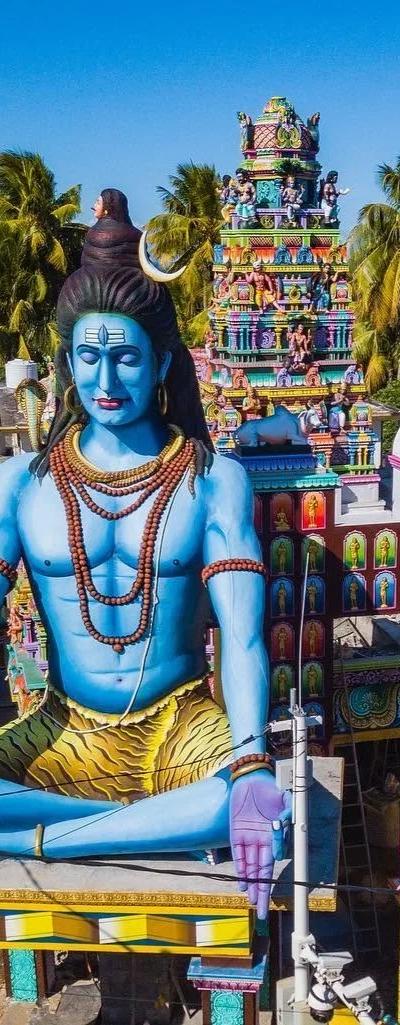
● Maha Shivaratree, reported as Saturday 6 March 2027 — avoid Grand Bassin. This is the one to plan around rather than towards. Hundreds of thousands of pilgrims walk to the sacred lake, many on foot over several days, with road restrictions across the centre of the island. It is extraordinary to witness and impossible to visit casually. If your fortnight includes it, do not put Grand Bassin on Day 8; either go to watch deliberately, with no other plan that day, or visit the lake a week either side.
● Divali, reported as Friday 29 October 2027. Worth planning towards. Houses and streets are lit across the island in the evening. Expect shops and some restaurants to close.
● Thaipoosam Cavadee, reported as Friday 22 January 2027. A Tamil observance with processions to Kovils. Respectful public viewing is normal.
● Chinese Spring Festival, reported as Saturday 6 February 2027. Centred on Port Louis Chinatown. A good reason to move Day 3.
● Eid-ul-Fitr, reported as Wednesday 10 March 2027. Moon-dependent, and the government's own notices carry a footnote confirming that the exact date is subject to confirmation.
Check the official notice yourself once published, and see our public holidays guide for the full calendar.
Markets and fairs: the distinction that matters
Day-specific market claims are usually about fairs, not markets. The government's own local-authority guidance states that markets are held every day whereas fairs are held by municipal and district councils on specific days decided by each of them, so a weekly day for a given town can change without notice. Two are reliably documented: the Port Louis Central Market hours above, and Central Flacq, where the tourism board states that Wednesdays and Sundays are the days all the stalls are open. For Mahébourg, Quatre Bornes and Goodlands, ask at your hotel the day before. Our markets guide has the detail.
Travel times and what moving around costs
Two honest caveats first. No official authority publishes airport-to-resort drive times, so the figures below combine the tourism board's island-wide distances with the indicative times in the airport taxi tariff. And no speed limits could be verified from an official source, so none are quoted here; the published penalties run from Rs 2,500 to Rs 10,000 depending on the margin.
Realistic drive times
● Across the island, east to west — about 45 kilometres, about 1 hour 15 minutes, per the tourism board.
● End to end, north to south — about 61 kilometres, about 1 hour 20 minutes, per the tourism board.
● Airport to the west (Flic en Flac, Wolmar, Tamarin) — about 1 hour to 1 hour 15.
● Airport to the north (Grand Baie, Pereybere, Trou aux Biches) — about 1 hour to 1 hour 30.
● Airport to the east (Trou d'Eau Douce, Belle Mare, Palmar) — about 1 hour to 1 hour 30.
● Airport to Blue Bay, Mahébourg or Pointe d'Esny — about 20 minutes.
● Add time for Port Louis on a weekday morning. Congestion into the capital is widely reported by residents and visitors but we can cite no official measurement, so treat it as a reason to leave early rather than a figure.
Transport costs, with dates
Prices move. Every figure here carries the source and the date it was checked, and the single most important correction is the fuel price.
● Petrol and diesel— Mogas Rs 77.70 and Gas Oil Rs 78.35 per litre, per the State Trading Corporation price structure following the Petroleum Pricing Committee decision of 28 September 2026. Any Mauritius itinerary still quoting around Rs 70 per litre is working from a superseded price and understates fuel by roughly ten per cent.
● Fuel for a fortnight — this route covers roughly 700 to 900 kilometres over fourteen days. At about 7 litres per 100 kilometres that is 49 to 63 litres, or about Rs 3,800 to Rs 4,900 of petrol at the September 2026 price.
● Car rental— the rentcar.mu price barometer gives a full economy-car range of Rs 1,200 to Rs 2,800 per day across all seasons, and states that the typical traveller pays roughly Rs 1,500 to Rs 2,500 per day. One operator's published list shows Rs 1,600 to Rs 1,900 for small cars, which sits inside that band.
● Long-hire discounts — no operator publishes a fourteen-day rate or a stated long-hire discount percentage, so budget fourteen days at the daily rate and ask for a reduction directly.
● Airport delivery and collection — not always included. One operator publishes Rs 1,400 each way for airport delivery, and up to Rs 1,500 for delivery to Flic en Flac or Tamarin. Confirm before booking; this can add more than a day's hire.
● Airport taxi — the Airport Taxi Owners Association guidance quotes Rs 3,000 to Flic en Flac or Wolmar, Rs 3,500 to Grand Baie or Pereybere, Rs 3,500 to Belle Mare or Palmar, Rs 3,200 to Trou d'Eau Douce or Tamarin, Rs 3,300 to Trou aux Biches, Rs 3,500 to Le Morne, Rs 2,500 to Port Louis and Rs 1,000 to Blue Bay, Mahébourg or Pointe d'Esny.
● Read the taxi tariff carefully. It is an operators' association document described as being for guidance only, not a government tariff. It does not state whether fares are per vehicle or per person, and does not name the currency, though the amounts are plainly rupees. It adds ten per cent for card payment and ten to twenty per cent between 23:00 and 05:00.
● Private driver by the day, August 2026 — one operator publishes an eight-hour day at €100 for a sedan, €145 for a minivan and €170 for a minibus, including fuel, with extra hours at Rs 500. A second operator's rates, last updated in October 2025, are substantially lower. Rates are per vehicle and exclude entrance fees.
● A rupee figure for driver days is not safely quotable. The rates above are published in euros, so any rupee equivalent depends on the exchange rate on the day. Ask for a quote in the currency you will pay in, in writing.
For accommodation, food and activity budgets across a fortnight, see our Mauritius holiday cost guide and the local food guide.
Where this fits
If fourteen days is more than you have, the shorter plans are built on the same logic: ten days with two bases and one rest day, seven days, five days and three days. The itinerary hub compares them, and the road trip guide covers driving the island as its own route.
Frequently asked questions
Is 14 days too long for Mauritius?
No, provided you plan it as a slower trip rather than a longer list. Two weeks suits two hotel bases, two empty days and a flex day. It becomes too long only if you try to fill every day with an excursion.
Is 14 days enough to see all of Mauritius?
Yes, comfortably. The island is about 45 kilometres across and 61 kilometres end to end. Fourteen days covers every region with time left over, which is why the extra days are better spent resting than driving.
How many hotels should I book for two weeks in Mauritius?
Two. Seven nights on the west coast and six on the east or southeast, with one move on Day 8. Three or four bases cost you packing mornings and check-ins while saving only minutes of driving.
Which coast should I start on?
The west, then the east or southeast. The west puts the southwest sights close and the sunsets on your side, and finishing in the southeast means a twenty-minute airport run on departure day.
Do I need to hire a car for 14 days in Mauritius?
Not strictly, but most people should. Without one you will need organised tours for Port Louis, the southwest and the Wild South, and taxis for the rest, which usually costs more than the rental would.
Can I drive in Mauritius on my own licence?
For a two-week trip, yes. The US State Department states that a US licence is valid for up to four weeks and recommends an International Driving Permit only for longer stays. Driving is on the left.
What is the minimum age to rent a car in Mauritius?
Rental companies generally require drivers to be 21 or over, and some set a higher minimum or add a young-driver charge. This is a company and insurer rule rather than a published statutory limit, so confirm with your operator.
How much is fuel in Mauritius?
As of 29 September 2026, Mogas petrol is Rs 77.70 and Gas Oil diesel Rs 78.35 per litre, per the State Trading Corporation price structure. Prices are revised periodically, so check before you budget.
How much does a taxi from the airport cost?
The Airport Taxi Owners Association guidance effective January 2026 quotes Rs 1,000 to Blue Bay or Mahébourg, Rs 3,000 to Flic en Flac, Rs 3,300 to Trou aux Biches and Rs 3,500 to Grand Baie or Belle Mare, plus ten per cent for card payment.
What is the best month for a two-week trip?
October or May. They are the transition months between the warm humid summer and the cool dry winter, October is the driest month of the year, and both sit outside the strongest winter wind and the main cyclone period.
Is the east or the west better in winter?
Neither is ideal. The east and southeast are windward in winter, but the met service's own winter outlook names the southern and western shores as the high-swell coasts and its station data gives the west the highest winter wind speeds. For July and August, the north is the more sheltered base.
How many rest days should I build into 14 days?
Two completely unbooked days plus one flex day held for weather. That is the structural difference between fourteen days and ten, and it is the first thing most self-planned fortnights leave out.
What should I do if a boat trip is cancelled?
Move it, do not lose it. The northern catamaran swaps with the first rest day, and the Île aux Cerfs crossing swaps with the flex day. Keeping Day 13 unbooked until Day 11 is what makes this work.
Should I visit Grand Bassin during Maha Shivaratree?
Only deliberately. Reported as Saturday 6 March 2027, it brings hundreds of thousands of pilgrims and road restrictions across central Mauritius. Either set the whole day aside to witness it respectfully, or visit the lake a week either side.
Can I add Rodrigues to a 14-day trip?
It is possible but it changes the trip. Rodrigues needs at least three or four nights to be worth the flight, which means dropping one mainland base. For a first visit to Mauritius, two weeks on the main island is the better use of the time.
Is two weeks in Mauritius better than ten days?
It is a different trip rather than a fuller one. Ten days covers the same ground. Fourteen removes the compression: arrival and departure stop being half-days, the southeast becomes a region rather than a stop, and weather stops being able to ruin a plan.
Изучить тему
Получайте новые гиды по Маврикию на email
Подпишитесь на Mauritius Explored, чтобы получать идеи поездок, практические обновления и материалы для планирования.

Написано редакцией Mauritius Explored, маврикийским путеводителем по пляжам, активностям, местным местам и практическому планированию.
Локальное исследование Маврикия, планирование маршрутов и материалы о направлении с 2011 года.